

Marker training is a communication method that uses a precise signal-a specific word, click, or gesture-to tell your dog the exact moment they performed a correct behavior, followed immediately by a reward. Rather than hoping your dog connects a treat with something they did several seconds ago, a marker creates a crystal-clear link between action and consequence, making the entire training process faster and more reliable.
This guide covers the foundational concepts behind marker training, the different markers available, practical implementation techniques, and troubleshooting strategies for dog owners in the Greenville, SC area who want effective, humane obedience results. Whether you have a puppy just learning the basics, an adult dog with behavior issues, or a dog you’re preparing for advanced off-leash work, marker training provides the framework for clear communication that gets lasting results.
In short: Marker training uses specific words, sounds, or signals to pinpoint the exact moment your dog performs a desired behavior, then pairs that marker with a reward. This proven method accelerates learning by removing guesswork from the dog’s experience.
Here’s what you’ll gain from this article:
- A solid understanding of marker training fundamentals and the science that supports them
- Knowledge of different markers-verbal, mechanical, and visual-and when each makes sense
- Step-by-step techniques for charging your marker and implementing precise timing
- Strategies for building reliable communication that leads to off-leash obedience
- Solutions for common challenges that slow down progress
Understanding Marker Training Fundamentals
A marker is a precise communication tool-a short word, a clicker sound, or a hand signal-that bridges the gap between the moment your dog performs a behavior and the moment you can deliver a reward. Think of it as a camera shutter for behavior: it captures the exact moment your dog did something right and tells them, “That’s it. Reward incoming.”
The power of this approach lies in operant conditioning, the learning principle that behaviors followed by reinforcing consequences get stronger. Positive reinforcement is an essential component of marker training, and the marker itself becomes what behavioral scientists call a conditioned reinforcer-something neutral that gains meaning through consistent pairing with rewards your dog values.
The Science Behind Marker Training
Marker training works because it creates unmistakable cause-and-effect associations. When your dog sits and immediately hears “YES,” followed by a food treat, the dog learns that sitting produced both the marker and the reward. Without a marker, the dog might associate the treat with whatever they happened to be doing when it arrived-looking sideways, shifting weight, sniffing the ground.
The timing of the marker should be within 1 to 2 seconds of the behavior for maximum learning. Research confirms that rewards must come within half a second of behavior for the dog to make a strong connection. Delayed rewards confuse dogs about what behavior is being rewarded. A marker solves this by capturing the moment instantly, then allowing a brief delay while you reach into your treat pouch-the dog already knows what earned the reward because the marker told them.
A 2025 study with 28 detection dogs compared marker training (using a clicker) versus reward-only training. Dogs trained with a marker completed final training stages in significantly fewer trials-approximately 36 trials compared to 68 in the non-marker group. They also showed greater precision in alert behavior and better resistance to extinction, meaning they continued performing well even when rewards were temporarily removed.
Marker Training vs Traditional Methods
Studies comparing reward-based training methods, including marker systems, to correction-based approaches show meaningful differences in welfare outcomes. Dogs in correction-based programs display more stress signals-drawn-back ears, lip-licking, avoidance behavior-while dogs trained with markers show increased engagement and joy. A dog’s emotional state can be influenced by reward markers, and dogs trained with markers learn faster than those without.
Traditional methods often rely on punishing undesired behavior rather than reinforcing correct behavior, which can create confusion and anxiety. Clear feedback through markers helps reduce frustration in dogs because the dog understands precisely what they did right. Marker training improves communication between dog and handler, replacing ambiguity with precision.
Why Professional Trainers Choose Marker Systems
Many trainers adopt marker training because it produces clear communication that translates directly to advanced work. When a dog understands the marker system, you can shape behaviors at distance, build duration, and proof against distractions-all essential for off-leash reliability.
A marker word tells the dog what behavior earned a reward, eliminating the need for physical guidance or luring. Using a marker word helps prevent bribing the dog-you’re not waving a treat around to get behavior; instead, the dog offers behavior because they understand the game. This is why marker training increases engagement and motivation in dogs, turning the training session into something the dog actively wants to participate in.
Types of Markers and Their Applications
Understanding different markers helps you choose the right tool for your training goals, environment, and your dog’s individual needs. Each marker type has specific strengths, and many trainers use combinations as training advances.
Verbal Markers
A marker word is typically a short word delivered in a consistent, upbeat tone. Common marker words include “yes,” “good,” and even “nope” (as a negative marker to indicate a non-rewarded behavior). The biggest advantage of a spoken word is convenience-you always have your voice; no equipment required.
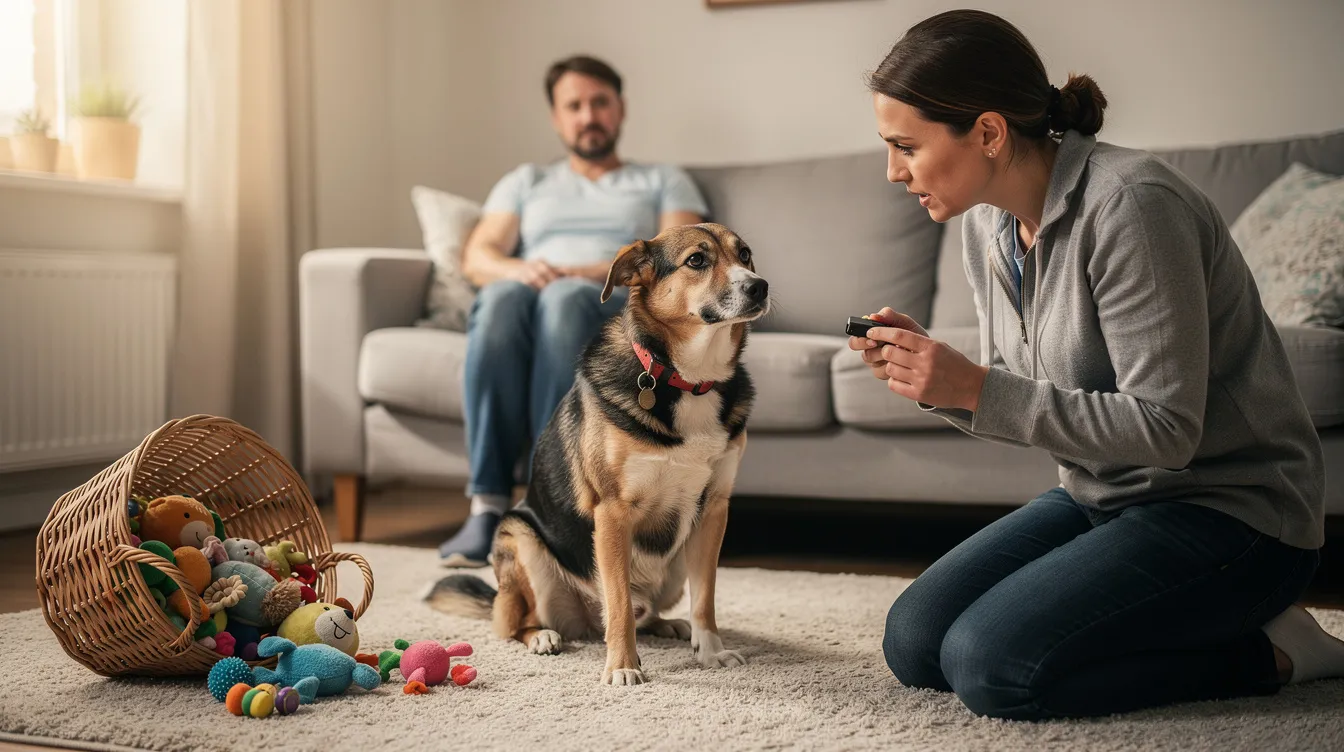
When you say the word “YES” at the exact moment your dog makes eye contact, holds a sit, or returns on recall, you’re giving them precise information. Voice tone and consistency matter significantly: the marker word must sound the same regardless of your mood, the environment, or who’s handling the dog. If one family member says “yes” enthusiastically and another mumbles it, the dog receives mixed signals. Dogs thrive on clear communication, which improves the training process, so every handler should agree on the same marker word and delivery style.
Mechanical Markers
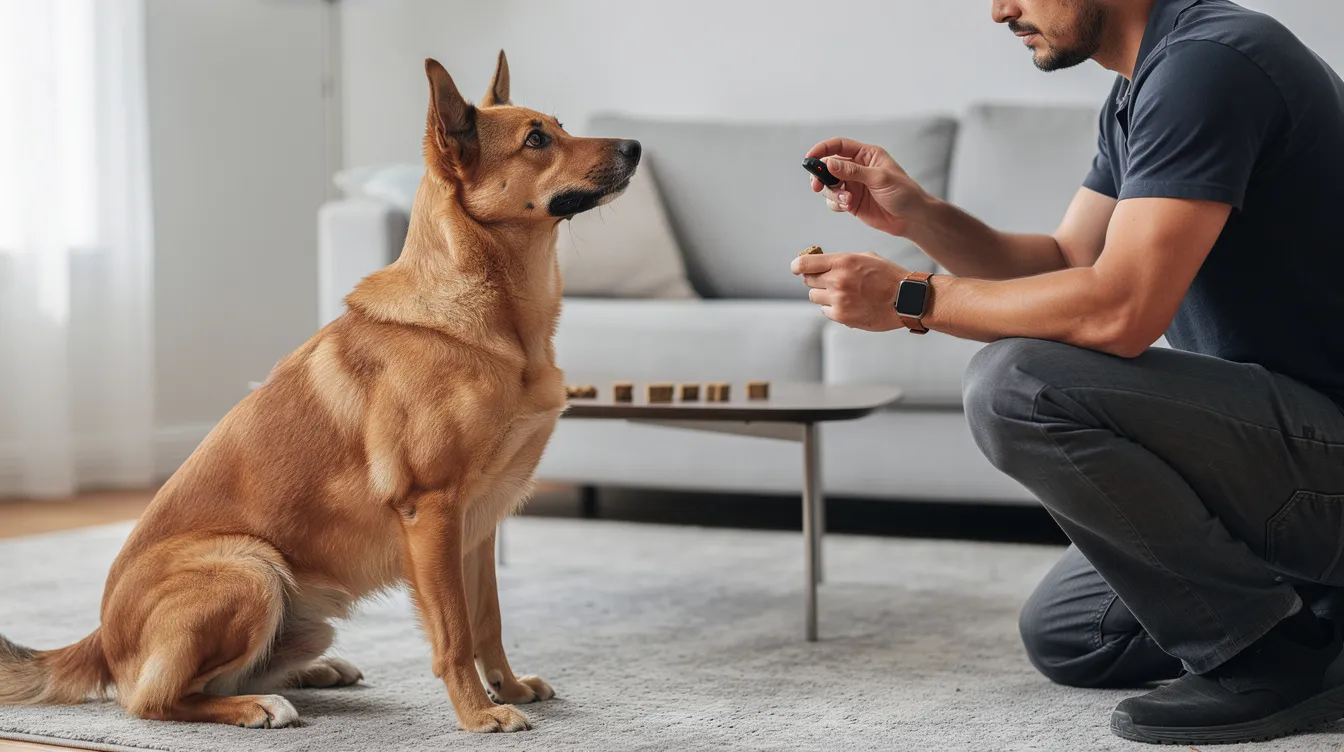
Clickers and whistles produce identical sounds every time, regardless of the trainer’s emotional state or fatigue level. This consistency is what makes clicker training so effective-the click sounds the same whether you’re excited, frustrated, or calm.
Mechanical markers shine in distance training and outdoor environments. In the detection dog study, clicker use allowed trainers to mark behavior immediately even when the food reward had to be delivered from a distance. For dog owners working toward off-leash obedience in open areas like parks or trails around Greenville, a clicker or whistle carries clearly and keeps the dog engaged without requiring close proximity. The limitation is practical: you need the device in hand, and losing a clicker mid-session disrupts the flow.
Visual Markers
A visual marker-hand signals, specific gestures, or even light signals-serves deaf dogs or training environments with heavy ambient noise. If your dog can’t hear a click or a spoken word over traffic, construction, or a crowded dog sports event, a visual marker fills that gap.
Visual markers require the dog to be looking at you, which means they’re best paired with strong eye contact foundations. They’re also used extensively in therapy dog preparation and specialized service work where silence matters. For dog owners with hearing-impaired dogs, visual markers aren’t optional-they’re the primary communication channel.
Advanced Marker Training Techniques
The techniques below represent the professional methods used in board and train programs and advanced obedience training. They build on the fundamentals and turn marker training into a sophisticated communication system.
Charging Your Marker
Before a marker means anything to your dog, you need to “charge” it-create the association between the marker signal and the reward. Charging a marker teaches dogs that “YES” means a reward. The word “YES” should be said before delivering a treat, establishing a predictive relationship: marker first, then reward.
Here’s how to start marker training:
- Choose your marker word (or click)-pick a short word like “YES” that you don’t commonly use in conversation
- Pair the marker with a high-value treat 10-15 times-say yes, then immediately deliver a food reward; no behavior required yet
- Test the association-say the marker when your dog isn’t looking; if they orient toward you expecting a treat, the marker is charged
- Begin marking actual behaviors-start with simple behaviors like sit or eye contact before progressing
Dogs typically learn the charged marker within one or two sessions. Charging a marker can be done anywhere, like your kitchen or yard-no special setup required. The marker word should not be used when the dog is misbehaving; reserve it exclusively for marking good behaviors you want to reinforce.
Timing and Delivery Methods
The correct mark timing is the instant the dog meets criteria. If you’re teaching sit, the marker happens the moment the dog’s rear touches the ground-not as they’re lowering, not after they’ve been sitting for two seconds. Rewards should be delivered within half a second of the behavior, and consistent timing improves the dog’s learning speed.
Reward delivery strategies matter as much as the mark itself. Keep your treat pouch loaded and accessible. Vary where you deliver-sometimes to the dog’s nose, sometimes tossed to encourage movement, sometimes placed in the correct position to reset for another repetition. Dogs perceive training as a game when rewards are varied, and using toys can increase a dog’s speed in exercises. High-value rewards include food, toys, or playtime-use whatever your dog finds most motivating. Dogs respond better to rewards they find reinforcing.
Trainers like Michael Ellis emphasize that when rewards are delivered quickly and precisely after the marker, the dog learns to problem-solve and actively offer behaviors. Marker training fosters problem-solving skills in dogs because they begin experimenting-“What can I do to make that click happen again?” Dogs become problem-solvers when allowed to make mistakes and figure out what earns the marker.
Marker Training Comparison
| Criterion | Verbal Marker | Mechanical Marker (Clicker) | Visual Marker |
| Consistency | Varies with tone/mood | Identical every time | Depends on gesture clarity |
| Distance Capability | Limited by voice carry | Moderate (click carries well) | Limited by line of sight |
| Ease of Use | No equipment needed | Requires device in hand | Hands must be visible |
| Best For | Daily training, pet owners | Precision work, shaping | Deaf dogs, quiet environments |
| Portability | Always available | Can be lost/forgotten | Always available |
| Learning Curve | Low | Low-moderate | Moderate |
For most dogs and most dog owners, starting with a verbal marker makes sense for everyday training your dog at home, while adding a clicker for precision shaping work and teaching complex behaviors. Dogs working at distance in off-leash environments benefit from mechanical markers or whistles. The key is that whatever marker system you choose, you use it consistently-the dog understands the marker only when it reliably predicts reward.
Shaping is the process of reinforcing successive approximations toward a target behavior. Marker training can be effective for shaping complex behaviors like loose leash walking, where you mark and reward small improvements-first for not pulling, then for walking beside you, then for maintaining correct position through turns. Each marker tells the dog exactly which piece of the behavior you’re rewarding. This same approach lets you teach dogs everything from a reliable recall to a duration marker for extended stays.
Common Challenges and Solutions
Even with solid technique, pet owners and trainers encounter obstacles. Here’s how to troubleshoot the most frequent issues Greenville area dog owners face when working with dog training markers.
Poor Timing Issues
If your marker arrives too late, the dog connects the reward with whatever they were doing at the moment of the click-not the behavior you intended. If it’s too early, you mark an incomplete behavior. Many dogs develop sloppy sits or partial downs because of mistimed markers.
Solutions: Record your training session on video and review your timing. Practice marking with simple behaviors first-ask for a sit, and focus entirely on clicking the instant the rear hits the ground. Slow your criteria down: don’t try to mark complex behavior chains until your timing on basics is reliable. Some trainers practice “mechanical skills” by clicking when a ball bounces-no dog required-to build reaction speed.
Low Food Motivation
Some dogs don’t seem interested in standard dog treats during training. This doesn’t mean marker training won’t work-it means you need to find what your dog enjoys and finds reinforcing. A dog engaged by a toy reward may respond better to a tossed ball than a piece of kibble.
Strategies: Experiment with high-value options-real meat, cheese, or novel treats your dog hasn’t tried before. Train before meals when motivation is naturally higher. Incorporate play as the reward: mark the behavior, then throw a toy or initiate a quick tug game. Positive reinforcement fosters a fun training environment for dogs, and many dogs find play more motivating than food. The marker still serves its purpose-it tells the dog responds correctly-regardless of whether the reward is a food treat, a toy, or an enthusiastic “good boy” combined with body language that communicates genuine excitement.
Inconsistent Results
When a dog makes progress and then seems to regress, the issue is often marker dilution-the marker has been overused, applied to wrong moments, or used differently by different family members. If the marker loses its precision, the dog stops trusting it as a reliable signal.
Solutions: Agree on a single marker per household. Make sure every person who handles the dog uses the same word or device with the same timing standards. Avoid marking behaviors you’re indifferent about-be selective so the marker remains a clear signal of “that specific behavior is what I want.” If the marker has become “muddy,” go back to basics and re-charge it: 10-15 clean pairings of marker plus treat with no behavior criteria, then rebuild. When the dog learns that the marker is once again a reliable predictor, their focus and drive will return. Engagement is crucial for a dog’s emotional state during training, and a well-maintained marker system keeps the dog motivated and willing to work. Also consider a release command to clearly mark the end of behaviors like stays, so the dog understands duration expectations.
Conclusion and Next Steps
Marker training is a powerful technique that gives you and your dog a shared language. It turns vague praise into precise communication, accelerates learning, reduces stress, and builds the kind of reliable behavior that makes off-leash training and advanced obedience genuinely achievable. Dogs trained with markers don’t just comply-they actively participate, offering behaviors because they understand exactly how the system works.
To get started today:
- Choose your marker-a short word like “YES” or a clicker
- Charge it-pair the marker with high-value treats 10-15 times until your dog responds to the marker alone
- Begin with simple behaviors-mark and reward a sit, eye contact, or orientation toward you
- Practice timing-aim to mark within half a second of the desired behavior
- Build gradually-shape more complex behaviors as your dog masters each step
For dog owners in Greenville looking to accelerate results, Off Leash K9 Training offers private lessons and training packages that build on marker training fundamentals. Whether you’re working through reactive dog challenges, preparing for therapy dog certification, or pursuing reliable off-leash obedience, professional guidance ensures your marker system is tight, your timing is sharp, and your dog’s progress is consistent.
Happy training starts with clear communication-and that starts with a single, well-timed marker.