
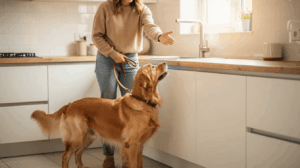
To stop a dog from counter surfing, prevent access to food, manage the kitchen when you cannot supervise, and teach a behavior that gives your dog something else to do. Clearing counters matters because finding food even occasionally can reinforce the habit. Training works best when the counter stops paying off, and your dog is rewarded for staying on the floor, going to a mat, or leaving food alone.
The American Kennel Club recommends prevention, access management, and alternative behaviors as the core strategy.
The goal is not perfect kitchen behavior overnight. It is a repeatable system that removes rewards, prevents unsafe access, and teaches better choices.
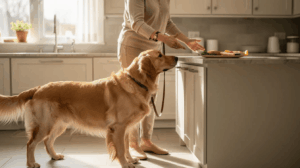
Why Dogs Counter Surf
Counter surfing usually has a simple explanation: the dog has learned that counters sometimes contain food or other interesting items.
A successful grab can make checking the counter worth repeating. Best Friends Animal Society similarly explains that dogs are more likely to repeat counter surfing when the behavior produces a reward.
Step 1: Make the Counter Stop Paying Off
Management comes first.
When you cannot actively supervise:
- Put food in cabinets, the refrigerator, or sealed containers.
- Wipe away crumbs and food residue.
- Move dishes, utensils, medications, and food packaging out of reach.
- Use a baby gate, closed door, crate, or safe room when appropriate.
- Keep trash secured.
Counter surfing is also a safety issue. Kitchens may contain hot pans, sharp utensils, cooked bones, medications, and foods that are unsafe for dogs. The FDA lists foods and household items that can be dangerous to pets, including chocolate, grapes, raisins, onions, garlic, and xylitol-containing products.
Step 2: Teach a Place or Mat Behavior
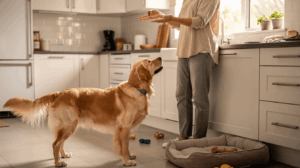
A useful alternative is teaching your dog to settle on a bed or mat while food is being prepared.
Start away from the kitchen:
- Reward your dog for stepping onto the mat.
- Build toward standing, sitting, or lying calmly there.
- Gradually increase duration.
- Add distance between you and the mat.
- Introduce mild distractions before practicing during meal preparation.
Keep the exercise easy enough that your dog can succeed. Reinforce mat behavior during real cooking.
Greenville’s dog obedience training programs currently include Place, impulse-control work, waiting politely for meals, and leaving unwanted objects.
Step 3: Teach Leave It and Off
“Leave it” is useful before your dog grabs something. “Off” can help when paws are already on a surface.
The AKC’s Leave It training guide recommends beginning with easy food exercises, rewarding the dog for disengaging, and gradually practicing around more realistic distractions.
Practice at a difficulty where your dog can respond, then build toward the kitchen.
If your dog grabs something dangerous, a previously trained “Drop It” or “Out” cue may help you recover the item safely. Avoid chasing your dog or forcibly grabbing objects from their mouth, especially if they show resource-guarding behavior. If your dog swallows a toxic food, medication, or foreign object, contact your veterinarian or an emergency veterinary clinic immediately rather than waiting for symptoms.
Step 4: Be Consistent When You Are Not Watching
Many dogs counter surf only when people leave the room. That does not mean the dog is being deceptive in a human sense. It means the dog has learned when access is available.
Use management whenever supervision ends. If the kitchen still produces occasional jackpots, the behavior can remain worthwhile.
Everyone in the household should follow the same rules. Avoid feeding the dog directly from counters or leaving snacks where the dog can reach them.
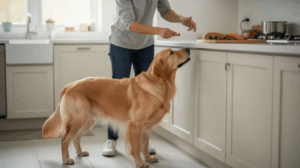
What Not to Do
Avoid relying on punishment, yelling, or startling devices as the main strategy.
Punishment may stop behavior in the moment without teaching what the dog should do instead. Startle-based methods can also create unnecessary risk around hot surfaces, cookware, or sharp kitchen objects.
Instead, prevent access, reinforce four paws on the floor, and teach a reliable alternative behavior.
When Counter Surfing Becomes a Safety Concern
Get professional or veterinary help when your dog:
- Repeatedly steals toxic foods or dangerous objects
- Guards stolen food or growls when approached
- Swallows packaging, utensils, bones, or other foreign material
- Shows a sudden major increase in hunger or scavenging
- Is difficult to manage safely around food
A sudden increase in appetite or food-seeking can sometimes warrant a veterinary evaluation, especially when accompanied by weight, thirst, urination, medication, or other health changes.
Professional Training in Greenville
Owners who need help with household manners can review Off Leash K9 Training of Greenville.
Current Greenville obedience programs include Place, Off, impulse-control skills, meal manners, and leaving unwanted objects. Board and Train programs may also address obedience and household manners depending on the selected program and dog.
Professional obedience training can help improve impulse control, Place, Off, and other household manners. However, preventing counter surfing also requires consistent management at home. Keep food and unsafe items out of reach, reinforce appropriate behavior, and continue practicing the skills your dog learns during training.
Owners can review current training programs and pricing or schedule a free consultation.
Frequently Asked Questions
Why Does My Dog Counter Surf Only When I Leave?
Your dog has probably learned that unattended counters sometimes provide access to food. Keep counters clear and block kitchen access when you cannot supervise.
Should I Punish My Dog for Counter Surfing?
Punishment is not necessary to teach better kitchen behavior. Prevent access and reward behaviors such as staying on the floor, going to a mat, or leaving food alone.
How Long Does It Take to Stop Counter Surfing?
There is no universal timeline. Progress depends on how established the habit is, how consistently access is managed, and how often alternative behaviors are practiced.
Can Place Training Stop Counter Surfing?
Place training can help by giving your dog a clear behavior to perform during cooking and meals. It works best alongside counter management rather than as a substitute for it.
Final Takeaway
Stopping counter surfing requires two things at the same time: make stealing unsuccessful and make appropriate behavior worthwhile.
Keep food and dangerous items out of reach, block unsupervised access, teach Place, Leave It, Off, or another clear alternative, and reward your dog for making better choices around the kitchen.
For Greenville owners who want help with household manners and obedience, start with the dog obedience training programs or schedule a free consultation to discuss your dog’s behavior and training goals.