
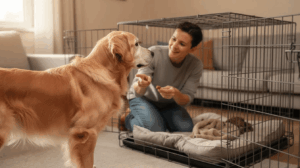
Crate training an older dog is possible, but the process should be driven by comfort rather than a fixed timeline. Start with the crate door open, reward voluntary investigation, feed meals or offer treats inside, then add short door closures only after the dog enters comfortably.
Older dogs may bring previous confinement experiences, routines, mobility limits, or medical needs that change the pace. A senior dog with arthritis may need a lower entry and supportive bedding. A dog that panics when confined may need professional support.
Purina’s guide to crate-training an older dog also recommends gradual introduction, positive associations, and slowly increasing closed-door time.
Why Crate Train an Older Dog?
Older dogs may benefit from crate familiarity for travel, veterinary recovery, or other situations where short-term confinement is useful.
The crate should not become a full-time living space. The dog should enter willingly, rest calmly, and leave without panic.
Never use the crate as punishment. If it predicts scolding or long confinement, the dog may become reluctant to enter.
Choose and Set Up the Right Crate
Select a crate large enough for your dog to stand, turn around, lie down, and rest comfortably. Place it in a calm part of the home without isolating the dog from normal family activity. Before leaving your dog in a crate, remove collars, harnesses, or accessories that could catch on the crate, unless your veterinarian has advised otherwise. Make sure the crate is stable, well ventilated, and comfortable for your dog’s mobility needs.
For senior dogs, consider mobility. Easy entry and comfortable bedding may help dogs with stiffness or joint pain.
Secure the door open during early introductions so it cannot swing and startle the dog.
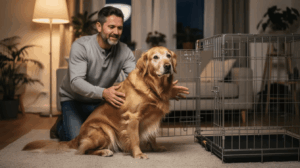
How to Crate Train an Older Dog
Step 1: Make the Open Crate Positive
Start with no pressure to enter. Place treats near the crate, then at the entrance, and eventually just inside.
Let your dog approach and leave freely. Do not push, drag, or trap the dog inside. Reward voluntary investigation and calm behavior.
If your dog is comfortable eating nearby, gradually move meals inside with the door open.
Step 2: Reward Full Entry
Once your dog willingly steps inside, reward all four feet in the crate and allow them to come back out.
Repeat until entering looks routine. You can add a cue such as “crate” or “kennel” immediately before entry.
Step 3: Introduce the Door
When your dog is relaxed inside, close the door briefly, then open it before stress develops.
Build duration slowly. If the dog begins pawing, pacing, panting, drooling, vocalizing intensely, or trying to escape, the exercise has become too difficult.
Return to an easier step rather than waiting it out.
Step 4: Add Distance
After your dog can remain calm with the door closed while you are nearby, begin moving around the room.
Next, step out of sight briefly and return before distress develops. Increase distance and duration based on relaxation, not a calendar.
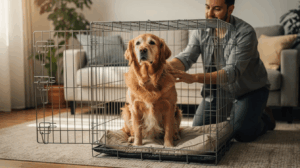
How Long Does Crate Training Take?
There is no universal timeline.
Purina notes that older dogs may need weeks or months to adjust, particularly when they have negative crate history. Other dogs progress more quickly.
Advance when your dog enters willingly, remains relaxed with the door closed, and recovers easily.
Avoid promises such as “fully crate trained in one week.” Learning history, health, temperament, and previous confinement experiences all matter.
How Long Can an Older Dog Stay in a Crate?
Do not turn bladder capacity into a target for confinement.
Adult dogs still need bathroom breaks, water, movement, exercise, social interaction, and time outside the crate. Seniors may need more frequent breaks because of mobility changes, medications, or incontinence.
For long absences, consider a dog-safe room, exercise pen, caregiver, or another arrangement rather than extending crate time.
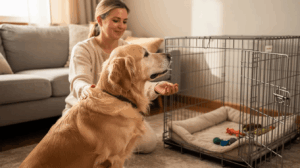
What If My Older Dog Cries or Refuses the Crate?
First, rule out basic needs such as a bathroom break, pain, temperature discomfort, thirst, or illness.
Mild hesitation calls for easier practice. Frantic escape attempts, drooling, self-injury, or escalating panic are different.
The ASPCA’s separation-anxiety guidance notes that crates can increase distress for some dogs with separation anxiety. If confinement triggers panic, stop increasing crate duration and speak with your veterinarian or a qualified behavior professional.
Sudden crate accidents in a previously house-trained older dog deserve veterinary attention, especially with urinary changes, diarrhea, pain, or mobility problems.
Greenville Training Support
Greenville’s current adult obedience programs focus on commands, manners, leash skills, and distraction work. The site specifically lists crate training within puppy programming, not as a separate adult crate-training package.
Do not assume an adult Board & Train automatically includes dedicated crate conditioning unless the trainer confirms it for your dog.
Owners can review dog obedience training in Greenville, current training programs and pricing, or schedule a free consultation to discuss an older dog’s needs.
Frequently Asked Questions
Is It Too Late to Crate Train an Older Dog?
No. Adult and senior dogs can learn new routines. Progress depends on health, history, comfort, and training pace more than age alone.
Should I Crate My Older Dog at Night?
Only if the dog is comfortable and the arrangement suits their health and routine. Do not begin with an entire night if the dog has not learned to relax behind a closed door.
Can Crate Training Fix Separation Anxiety?
No. Crate training is not a treatment for separation anxiety, and confinement can worsen panic in some dogs.
Should I Let My Dog Cry It Out?
Do not ignore escalating distress. Brief mild protest and panic are not the same. If vocalizing builds alongside panting, drooling, frantic scratching, or escape attempts, reduce the difficulty.
Final Takeaway
Crate training an older dog should be gradual, voluntary, and comfortable.
Start with an open crate, build positive associations, reward full entry, introduce the door for short periods, and add distance only after the dog remains relaxed.
Watch senior-dog comfort and sudden behavior changes. If the crate triggers panic or new accidents, involve your veterinarian rather than treating the problem as disobedience.
For Greenville-area support, learn more about Off Leash K9 Training of Greenville, review dog obedience training options, check current pricing, or schedule a free consultation.