Introduction
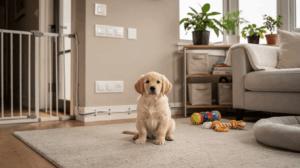
A puppy-proofing home checklist is one of the most practical tools you can create before bringing a new puppy into your house. Puppies explore the world using their mouths, and an unprepared home may contain hazards that can cause choking, poisoning, electrical shock, or other injuries. This guide walks you through every room and outdoor space, giving you a clear, actionable puppy proofing checklist to follow.
This article covers comprehensive indoor and outdoor puppy proofing for new dog owners in Greenville, SC, and surrounding areas. It addresses kitchen safety, living spaces, bathrooms, yard perimeter security, toxic plants, and weather-related hazards specific to South Carolina’s climate. Advanced behavioral modification and breed-specific medical protocols fall outside this scope.
Direct answer: Puppy proofing your home involves systematically securing hazardous items, blocking dangerous areas with baby gates or pens, removing toxic substances, and creating designated safe spaces indoors and outdoors to reduce the risk of injuries and accidents.
By following this checklist, you will:
- Create a safe environment in every room of your home
- Secure your outdoor space against escapes, toxic exposures, and weather hazards
- Develop skills to identify and eliminate hazards as your puppy grows
- Reduce the risk of emergencies through proactive planning and supervision
- Build confidence in managing your new pup’s daily exploration safely
Understanding Puppy Safety Fundamentals
Puppy proofing isn’t guesswork. It’s informed by how puppies develop and behave. Understanding why your curious pup chews, climbs, and investigates everything helps you anticipate dangers before they become emergencies.
Puppy Exploration Behavior
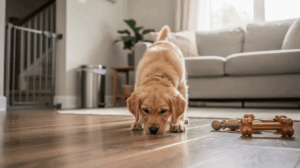
Puppies explore the world using their mouths. This isn’t misbehavior. It’s normal development. Deciduous teeth begin erupting around three weeks of age, and permanent teeth begin replacing them at approximately 12 weeks, with the process typically finishing by around six months. Chewing may become more noticeable during teething, but inappropriate chewing can occur before and after this period, making supervision important throughout puppyhood.
Many puppies are energetic and curious as they grow, with mouthing and chewing often becoming more noticeable during teething. A young puppy doesn’t distinguish between a safe chew toy and an electrical cord, so you and your family need to make that distinction. Research suggests that scent may increase a dog’s engagement with appropriately selected chew toys, but the study did not establish that scented toys reduce destructive chewing or foreign-body ingestion. Choose toys suited to your puppy’s size and chewing style, supervise their use, and remove toys that become damaged.
From a training perspective, managing puppy behavior through environmental design is as important as teaching commands. Removing hazards prevents a puppy from practicing dangerous behaviors while appropriate training introduces safer alternatives.
Critical Safety Periods
Young puppies need close supervision as they explore a new environment, but household hazards can remain dangerous throughout puppyhood. Early routines and controlled, positive exposure can help puppies adjust to their surroundings. A longitudinal Generation Pup study found an association between overnight crate or room restriction, at least nine hours of sleep during the first 16 weeks, and lower odds of separation-related behaviors at six months. Because the study was observational, these findings do not prove that those practices directly prevented the behaviors.
Supervision is crucial when puppies explore new areas. Consistent household rules reduce opportunities for puppies to practice unsafe behavior and make boundaries easier to understand. Safety and socialization can work together through controlled exposure, predictable routines, and positive experiences.
This developmental reality is why a room-by-room approach to puppy proofing is a practical strategy. Let’s walk through every area of your home.
Essential Indoor Puppy Proofing Areas
Since puppies use their mouths to investigate everything and can reach more than you might expect, a systematic approach to each room helps eliminate blind spots. Puppy proofing should include a thorough inspection from puppy eye level. Get down on your hands and knees and look for anything a pup could grab, chew, or swallow.
Kitchen and Dining Areas
The kitchen contains several common hazards for a new puppy. Secure trash cans with locking lids to prevent access. Puppies are drawn to food scraps, and ingesting wrappers, bones, or plastic wrap can cause gastrointestinal obstructions. Install locks or safety latches on lower cabinets to protect puppies from cleaning supplies, concentrated household cleaners, and rat poison.
Toxic foods include chocolate, grapes, raisins, onions, garlic, and products containing xylitol. The risk from chocolate depends on the type and amount consumed and the puppy’s body weight, while grapes and raisins can cause acute kidney injury and do not have a reliably established safe dose. Xylitol, found in some sugar-free gum, candy, toothpaste, and peanut butter, can cause severe hypoglycemia and liver injury. High-fat foods may also contribute to pancreatitis. Avoid feeding food from the table, and keep countertops clear of anything within your puppy’s reach. Review the FDA’s list of potentially dangerous items for pets for additional guidance.
If you have cats, place their food bowls where your puppy cannot reach them. Keep the litter box behind a secure gate or in another location inaccessible to your new dog. Eating cat feces may expose a puppy to bacteria or parasites, while swallowing a substantial amount of litter can cause gastrointestinal irritation or an obstruction.
Living Spaces and Bedrooms
Unplug electrical cords when practical or use cord concealers to prevent chewing. Puppies can suffer burns or electrical shocks from damaged cords. Cover wires running along baseboards, secure wires behind furniture, and run exposed cords through protective tubing. Don’t overlook fish-tank tubing, phone chargers, or low-hanging curtains and blind cords, which can create chewing or entanglement hazards.
Remove or secure sharp and potentially swallowable objects. Items such as coins, buttons, rubber bands, batteries, and craft supplies must be kept well out of reach. Small objects can create choking or gastrointestinal obstruction risks. Batteries are particularly dangerous because they can cause internal chemical burns. Keep these items in closed containers inside secure cabinets, not in open storage at ground level.
Anchor heavy furniture to walls using anti-tipping kits for tall bookshelves, dressers, and entertainment centers. Lamps, electronics, and decorative items should be stable enough to withstand bumping from an excited puppy. Secure windows and doors with reliable latches, and do not rely on an ordinary insect screen to restrain a puppy. Use baby gates or dog gates to block stairways and establish off-limits rooms, checking that each barrier is secure and appropriately sized for your puppy.
Store human and veterinary medications in secure cabinets that your puppy cannot reach. Nightstand drawers, handbags, backpacks, and bathroom counters may still be accessible to a determined puppy. Keep cleaning supplies and medications in high or locked cabinets, and return them to storage immediately after use.
Check all indoor plants for toxicity. Sago palm ingestion can cause severe liver damage and may be fatal, while philodendron commonly causes oral pain, drooling, and swelling because it contains insoluble calcium oxalates. Cyclamen can cause gastrointestinal signs and, after larger ingestions, abnormal heart rhythms or seizures. Autumn crocus can cause severe gastrointestinal irritation and multi-organ damage. Remove toxic plants or place them in areas your puppy cannot access, and verify each plant using the ASPCA’s toxic and non-toxic plant database.
Bathrooms and Utility Areas
Bathrooms concentrate multiple hazards in a small space. Keep cleaning supplies in high cabinets or behind doors with child-resistant latches. Razors, cotton swabs, dental floss, hair ties, and other bathroom items can become swallowing or entanglement hazards. Store all medications in secure medicine cabinets, including over-the-counter products that may seem harmless.
Keep toilet lids closed to prevent puppies from drinking the water or falling inside. Toilet water may contain cleaning chemicals, and small puppies may have difficulty climbing out. Diaper pails should be latched or placed behind closed doors.
In laundry and utility areas, keep detergents, bleach, fabric softeners, and other cleaning supplies in locked or securely latched cabinets. Laundry pods can cause serious poisoning if bitten or swallowed. Keep washer and dryer doors closed, and check inside each appliance before use because a curious puppy may climb into an open drum.
Designate a consistent area for your puppy’s bathroom needs to support potty training. Keep cat litter and cat feces inaccessible. Eating cat feces may expose a puppy to bacteria or parasites, while swallowing a substantial amount of litter can cause gastrointestinal irritation or, in some cases, an obstruction.
Comprehensive Outdoor Safety Measures
With your indoor spaces secured, outdoor areas demand equal attention. Your yard may become your puppy’s playground, but it can also contain escape routes, toxic substances, water hazards, and dangerous plants.
Yard Perimeter and Fencing Assessment
Checking for gaps in fencing is important for outdoor puppy safety. Follow this inspection process:
- Walk the entire fence line at ground level. Look for gaps, rotted boards, or openings created by digging.
- Check every gate for secure latching hardware. Consider self-closing mechanisms where gates lead to streets or unfenced areas.
- Assess the fence height and design. Some puppies may climb, squeeze through openings, or begin jumping over lower barriers as they grow.
- Inspect the fence for protruding nails, sharp edges, damaged wire, or other surfaces that could cause injury.
Use secure barriers around areas containing equipment, chemicals, or tools. Keep garages and sheds closed because a curious puppy can quickly reach antifreeze, sharp tools, pesticides, or bug sprays. Antifreeze containing ethylene glycol has a sweet taste and can be fatal even after a small exposure. Clean spills immediately and contact a veterinarian or animal poison-control service if exposure is suspected.
Hazardous Substances and Plants
Remove toxic plants from areas your puppy can access. Several plants commonly used indoors or in landscaping can cause serious problems:
| Plant | Potential Effects | Non-Toxic Alternative |
| Azalea | Vomiting, weakness, abnormal heart rate, low blood pressure, or neurological signs | Camellia |
| Sago palm | Vomiting, bleeding problems, severe liver failure, or death | Ponytail palm |
| Aloe vera | Vomiting, diarrhea, or lethargy | Spider plant |
| Autumn crocus | Severe gastrointestinal irritation, bleeding, or multi-organ damage | Zinnia |
| Philodendron | Oral pain, drooling, swelling, or difficulty swallowing | Boston fern |
Verify the exact species before purchasing or removing a plant because common names can refer to different plants. Check houseplants, patio containers, and landscaping using the ASPCA’s dog-safe plant database. Store fertilizers, pesticides, rodenticides, herbicides, and other lawn chemicals in locked sheds or secure garage cabinets. Rat poison, antifreeze, and concentrated lawn chemicals should never be accessible to a puppy.
Water Safety and Weather Protection
Install a secure physical barrier around pools and use a self-closing, self-latching gate where practical. Do not assume that a puppy can swim safely or locate the pool exit. Pool covers should not replace fencing and direct supervision because some covers may collapse or trap an animal. If your pool has steps or a ramp, teach your puppy to locate and use the exit under close supervision.
Greenville’s hot, humid summers create seasonal safety challenges. Hot pavement can injure a puppy’s paw pads, so test walking surfaces and avoid outdoor activity during the hottest part of the day. Provide continuous access to fresh water and a shaded, well-ventilated rest area whenever your puppy is outside.
Heatstroke in dogs occurs when body temperature reaches dangerous levels, usually above approximately 104°F. Warning signs include excessive panting, thick drool, weakness, incoordination, confusion, vomiting, abnormal gum color, collapse, or seizures. Suspected heatstroke is a veterinary emergency. Never leave a puppy in a parked vehicle or an enclosed, poorly ventilated area, even when the weather does not feel extremely hot.
Trim grass, remove accumulated leaf litter, and limit access to brushy areas to reduce tick habitat. Tick exposure can occur year-round, although ticks are generally more active during warmer months. Ask your veterinarian which flea-and-tick preventive is appropriate for your puppy’s age, weight, and health. During cold snaps, provide a warm, dry indoor resting area rather than relying only on outdoor shelter.
Common Puppy Proofing Mistakes and Solutions
Even careful owners can miss important safety elements. Puppy proofing is not a one-time task. It requires continued attention as your puppy grows and develops.
Underestimating Puppy Reach and Climbing Ability
Regular inspections of the home are necessary as puppies grow. What was safely out of reach at eight weeks may be accessible at five months. Many dogs grow rapidly during their first year, and surfaces such as countertops, tabletops, and low shelves may become reachable. Reinspect your home regularly from your puppy’s eye level and adjust barriers accordingly. Move small objects and other choking hazards as your puppy’s reach changes.
Inconsistent Family Implementation
Establish clear house rules and ensure every household member follows the same safety protocols. If one person leaves cabinet doors open or allows access to furniture where unsafe objects are stored, the puppy can still reach the hazard. Consistent routines also support the early manners covered in puppy training programs. Write down responsibilities, including who secures dangerous items after use, checks gates before bed, and supervises outdoor time.
Neglecting Outdoor Supervision
Closely supervise your puppy outdoors, even in a fenced yard. New hazards can appear unexpectedly, including fallen branches, fence damage, standing water, wildlife, or recently applied chemicals. If you cannot supervise, bring your puppy indoors and use an appropriately introduced crate, pen, or puppy-proofed room. An outdoor playpen can create a smaller managed area during supervised time, but it does not eliminate weather, escape, or poisoning risks.
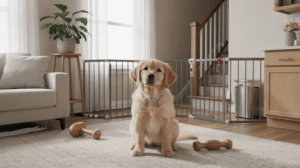
Use secure gates and pens to create safe zones, checking regularly for gaps, damage, climbing opportunities, or items your puppy could pull through the barrier. Introduce leash skills and recall gradually before giving your puppy more freedom.
Conclusion and Next Steps
Your pup’s safety depends on systematic preparation, not perfection. The core priorities are securing toxic substances, eliminating choking and electrical hazards, establishing physical barriers, and maintaining consistent supervision. Reassess these protections as your puppy grows through the teething, juvenile, and adolescent stages.
Take these immediate steps:
- Complete a room-by-room walkthrough at puppy eye level, removing or securing every hazard identified in this checklist.
- Install baby gates, cabinet latches, and cord covers before your new puppy arrives.
- Inspect your entire yard perimeter, remove dangerous plants, and verify fence integrity.
- Create an emergency contact list that includes your veterinarian, the nearest Greenville emergency animal hospital, and ASPCA Animal Poison Control at 888-426-4435. A consultation fee may apply.
Professional puppy training can support home safety by addressing bite inhibition, crate training, potty routines, early manners, and introductory commands. Greenville owners can review the available puppy training programs and request a free consultation to discuss which option may fit their puppy’s age and training needs.
Frequently Asked Questions
What does it mean to puppy-proof a home?
Puppy-proofing a home means systematically securing or removing hazards that could harm a curious puppy. This includes securing toxic substances, electrical cords, and small choking hazards while creating safe spaces with gates or pens.
How can I make my home puppy safe?
Make your home puppy safe by securing trash cans, using cabinet locks for cleaning supplies and medications, covering electrical cords with protective tubing, removing toxic plants, and supervising your puppy closely. Continue reassessing the home as your puppy grows because reach, climbing ability, and chewing behavior can change throughout puppyhood.
What types of chew toys are appropriate for puppies?
No puppy toy is completely chew-proof. Choose an appropriately sized, flexible rubber toy suited to your puppy’s chewing style, supervise every chewing session, and discard the toy if pieces loosen or the material becomes damaged. Avoid very hard nylon items, bones, and antlers because they can fracture teeth. Rope toys should be reserved for supervised interactive play and removed if they begin to fray.
How do I prevent my puppy from getting its head caught in objects?
Remove or secure plastic bags, open containers, narrow gaps, handles, cords, and other items that could trap a puppy’s head or neck. Inspect gates, furniture, laundry baskets, boxes, and outdoor barriers from puppy eye level, and block any opening that appears large enough for the puppy’s head but too small for its body.
Why is supervision so important during puppy proofing?
Supervision is vital because puppies explore with their mouths and may chew or swallow dangerous objects. Consistent supervision helps owners interrupt risky behavior, redirect the puppy to safer activities, and reinforce household boundaries.
Can I puppy-proof my yard to prevent escapes?
Yes. Check your fence for gaps, loose boards, digging areas, and low sections a puppy could crawl under, climb, or jump over. Install secure latches on gates, remove toxic plants, and use gates or pens to create smaller managed areas. Continue supervising outdoor time because fencing and training do not eliminate every escape or safety risk.