Introduction
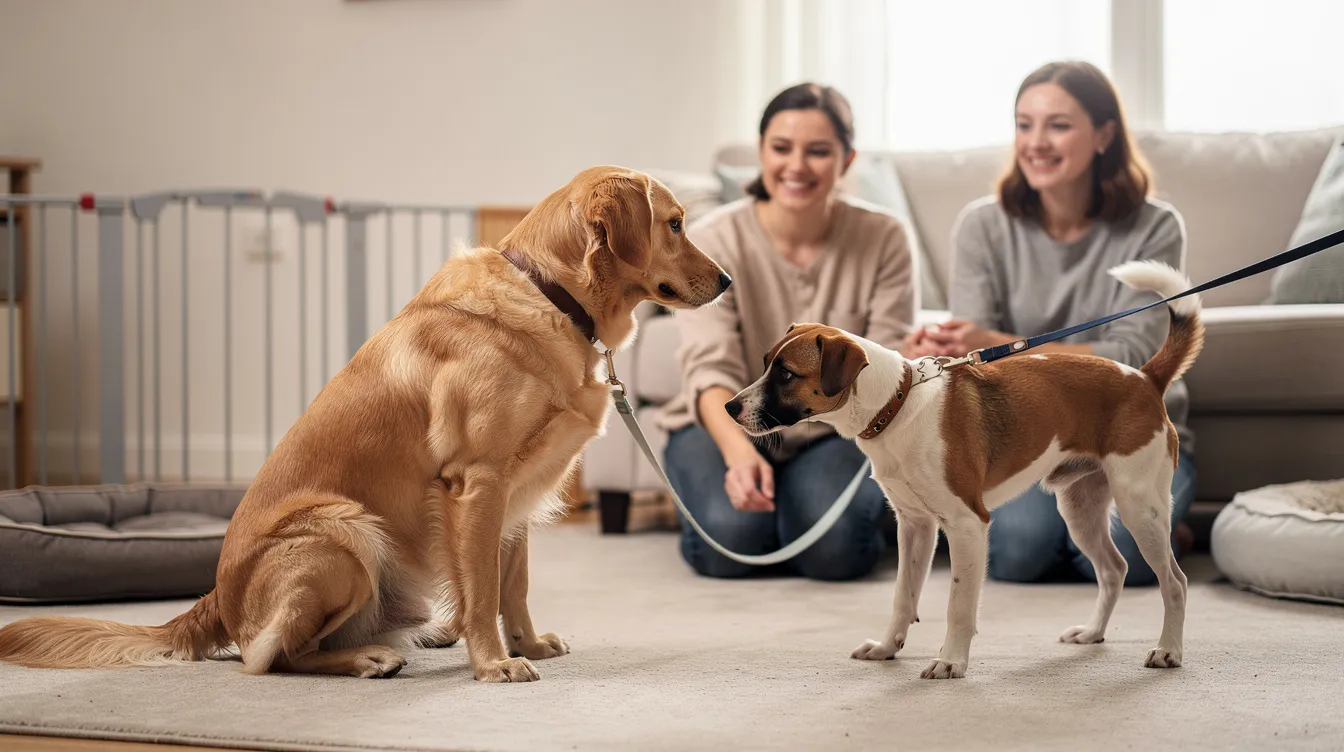
Introducing a new dog to your dog is one of the most critical steps you’ll take as a pet owner, and getting it right can mean the difference between a harmonious multi-dog household and months of stressful conflict. Whether you’re bringing a new puppy home or adopting an adult dog, the introduction process demands careful planning, patience, and a solid understanding of canine behavior.
This guide covers everything you need to properly introduce dogs at every stage – from pre-introduction preparation through progressive in-home integration. It addresses introductions between adult dogs, between puppies and older dogs, and outlines what falls outside a typical owner’s ability to manage safely. If you’re a dog owner in Greenville, Spartanburg, Greer, Mauldin, Simpsonville, Anderson, or anywhere in the surrounding Upstate South Carolina area and you’re considering adding a new family member to your pack, this content is built for you.
The short answer: a successful introduction requires meeting in a neutral location, using parallel walking techniques, providing constant supervision, and exercising patience over several weeks – or even months – as dogs build comfort and trust at their own pace.
By the end of this guide, you will:
- Understand how to read dog body language during introductions to prevent conflict
- Master a proven step-by-step dog introduction process that works for puppies and adults
- Know how to set up your home environment to reduce tension between two dogs
- Recognize the warning signs that indicate you need professional help
- Build a foundation for lasting positive interactions and a peaceful household
Understanding Dog Social Dynamics and Pack Behavior
Dogs naturally establish social hierarchies when living together. These structures, inherited from their wolf ancestors, help reduce daily conflict by clarifying access to resources like food, resting spots, and human attention. In a multi-dog household, your resident dog has already claimed the home as territory – with implicit ownership over its bed, its toys, its space, and even you.
This is exactly why introductions on home property so often fail. The newcomer triggers territorial defense in the resident dog, and what should be a calm first interaction quickly becomes a confrontation. Meeting on neutral territory removes this pressure entirely, giving both dogs the chance to assess each other without one feeling the need to guard what’s “theirs.”
Dogs use body language to communicate their feelings and intentions in every interaction. Understanding this communication system is non-negotiable for anyone attempting a dog introduction.
Canine Communication and Body Language
Reading dog body language accurately is the single most important skill you’ll need during introductions. Dogs are constantly broadcasting their emotional state – the question is whether you’re picking up the signal.
Stress and warning signals include a stiff body posture, hard stares directed at the other dog, raised hackles along the back and shoulders, whale eye (where the whites of the eyes become visible), ears pinned flat or rigid, and a tail that’s either tucked tightly or held high and rigid. Stiffening and low growling are warning signs that tension is building. Teeth baring is an escalation beyond growling and demands immediate intervention.
Friendly, relaxed signals look entirely different. A play bow – front legs stretched forward, rear end elevated – indicates an invitation to play and is always a good sign. Loose body language shows a dog is comfortable and relaxed: you’ll see a gently sweeping tail at mid-height, a soft open mouth, relaxed ears, and a curved, wiggly posture. These are precisely the signals you’re looking for during every stage of introducing dogs.
The critical point is to observe the whole picture. A wagging tail alone doesn’t mean a dog is friendly – context, speed, and height of the wag all matter. Monitor body language for signs of aggression or discomfort throughout every interaction, and never assume one positive signal means everything is fine.
Age and Personality Considerations
Introducing a new puppy to your household is a fundamentally different challenge than introducing two adult dogs. Puppies are still learning social cues and may not understand when an older dog growls to set a boundary. That miscommunication can lead the adult dog to escalate, or the puppy to develop fear-based responses that persist into adulthood.
Your current dog’s temperament is the strongest predictor of how introductions will go. A dog with extensive socialization and positive experiences around other dogs will generally adapt more easily. A dog with limited exposure, prior trauma, or a history of aggressive behavior around other dogs presents significantly greater risk. Every dog is different – energy levels, play styles, and even gender pairings influence compatibility.
Understanding these individual differences is what transforms generic advice into a plan that actually works for your specific dogs, which brings us to preparation.
Pre-Introduction Preparation and Planning
Knowing your dogs’ individual needs and communication styles is foundational – but preparation is where theory becomes practice. The work you do before the first introduction often determines whether the process succeeds or stalls.
Home Environment Setup
Resource guarding is one of the most common triggers for conflict between dogs sharing a home. Research shows that approximately 14–17% of shelter dogs display resource guarding behavior, and while most cases are mild to moderate, around 17% of guarding incidents are severe enough to involve snapping or bite risk. Remove toys and food to prevent resource guarding before any meeting takes place.
Remove food bowls, chew toys, bones, beds, and any high-value items from shared areas. Keep high-value items away during initial introductions – this isn’t permanent, but it eliminates the most predictable source of conflict during the first few weeks.
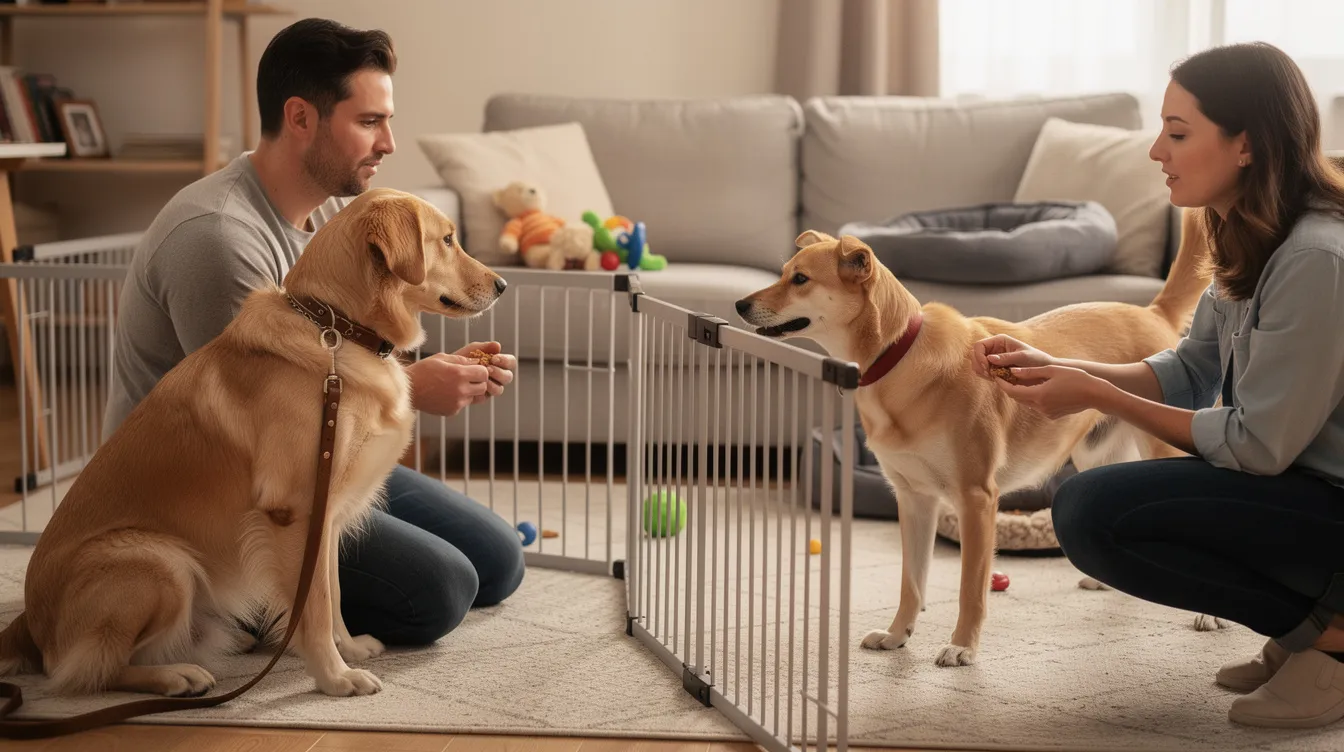
Create separate safe spaces for each dog using separate crates, exercise pens, or baby gates in different rooms. Each dog needs a retreat where it can decompress without pressure from the other. This setup also allows dogs to explore the home separately before meeting, reducing territorial anxiety. Finally, identify a neutral introduction location – a nearby park, a quiet trail, or any unfamiliar fenced area works well.
Required Equipment and Safety Gear
Proper equipment matters more than most owners realize. Use martingale collars or standard flat collars – never choke or prong collars during introductions, as pain increases reactivity. Standard 6-foot leashes provide enough space for natural movement while maintaining control. Avoid retractable leashes entirely; they offer poor control and can tangle dangerously if dogs pull toward each other.
Keep leashes loose to avoid transmitting tension between dogs. A tight leash communicates stress directly to your dog and restricts natural body language, making it harder for both dogs to read each other accurately. This is one of the most common mistakes owners make.
Stock high-value treats – real chicken, cheese, or freeze-dried liver – for reinforcing calm behavior. Use treats to reward positive interactions between dogs consistently throughout the process. And plan to have two experienced handlers available for every meeting, one per dog.
Timing and Logistics
Schedule introductions when both dogs are calm – not immediately after arriving home, not during feeding time, and not when either dog is overly excited from a walk or visitors. A dog that’s already aroused is far more likely to react impulsively.
Plan multiple short sessions rather than one extended meeting. Several 10–15 minute sessions across multiple days build familiarity without overwhelming either dog. The progressive structure – neutral territory walks first, then supervised home visits, then gradual unsupervised time – is the framework that behavior professionals consistently recommend.
With preparation complete, it’s time for the first interaction.
Step-by-Step Introduction Process
Everything covered so far – understanding body language, preparing the environment, gathering equipment – converges here. This process is designed to introduce dogs one at a time, building comfort incrementally rather than forcing a face-to-face introduction that neither dog is ready for.
Initial Neutral Territory Meeting
Choose a neutral location that neither dog has claimed as territory. A quiet section of a nearby park, a friend’s fenced yard, or any unfamiliar open area with enough space works well. Introduce dogs in a neutral location to reduce tension from the very start.
- Position dogs 30+ feet apart with separate handlers. Allow each dog to take in the environment and settle before acknowledging the other’s presence.
- Begin parallel walking in the same direction, maintaining 15–30 feet of distance. Walk parallel at a relaxed pace with loose leashes. This lets the dogs become aware of each other without the pressure of confrontation.
- Reward calm behavior immediately and consistently. Any time a dog glances at the other and remains relaxed, or focuses on the handler, deliver a high-value treat. You’re building positive associations with the other’s presence.
- Allow brief scent investigation by trading walking paths – each handler walks where the other dog just walked, so the dogs can smell each other’s scent without direct contact. Use scent swapping before face-to-face meetings to create familiarity.
- Gradually decrease distance based on positive body language. Look for signs of relaxed posture and engagement – loose tails, soft eyes, curiosity without fixation. If either dog stiffens, stares, or shows raised hackles (indicating that dog needs more space), immediately increase distance.
- End the session while both dogs remain calm and relaxed. End introductions on a positive note to build trust. Do not push for more interaction just because things are going well – leaving on a good note is more valuable than one extra minute of contact.
Allow dogs to sniff each other while on leashes during introductions only when both are showing consistently relaxed signals. Do not let dogs “fight it out” – intervene immediately if tension escalates. And critically, avoid punishment for growling, as it can suppress important communication that warns you before a bite occurs.
Progressive Integration Timeline
Gradually increase contact between dogs to build comfort and trust according to each dog’s pace. The following timeline represents a typical progression, but many introductions – especially involving senior dogs, anxious dogs, or dogs with limited socialization – take longer.
| Timeline | Activity | Success Indicators |
|---|---|---|
| Days 1–3 | Multiple neutral territory meetings, parallel walking, scent swapping | Calm walking near each other, brief mutual sniffing, loose posture |
| Days 4–7 | First supervised home introduction on leash in neutral zone of house | Relaxed coexistence in shared space, mild curiosity, minimal tension |
| Weeks 2–4 | Gradually increasing unsupervised time, shared areas with monitoring | No resource guarding, peaceful resting in proximity, ability to walk together |
Always supervise dog interactions during introductions. Do not leave dogs alone until confident they get along – and even then, use crates to separate dogs when unsupervised during the initial period. Supervise early interactions to ensure safety between new and resident dogs without exception.
Some dogs become best friends within days. Others need weeks or even months to fully accept a new friend. The timeline is less important than the trajectory – as long as interactions are trending positive, you’re on the right track.
Understanding what to do when things don’t trend positive is equally important.
Common Challenges and Solutions
Even well-planned introductions can hit obstacles. Knowing what to expect – and how to respond – prevents minor setbacks from becoming serious problems.
Resource Guarding and Food Aggression
Resource guarding is defined academically as “the use of avoidance, threatening, or aggressive behaviors by a dog to retain control of food or non-food items in the presence of another animal or person.” It’s common, predictable, and manageable.
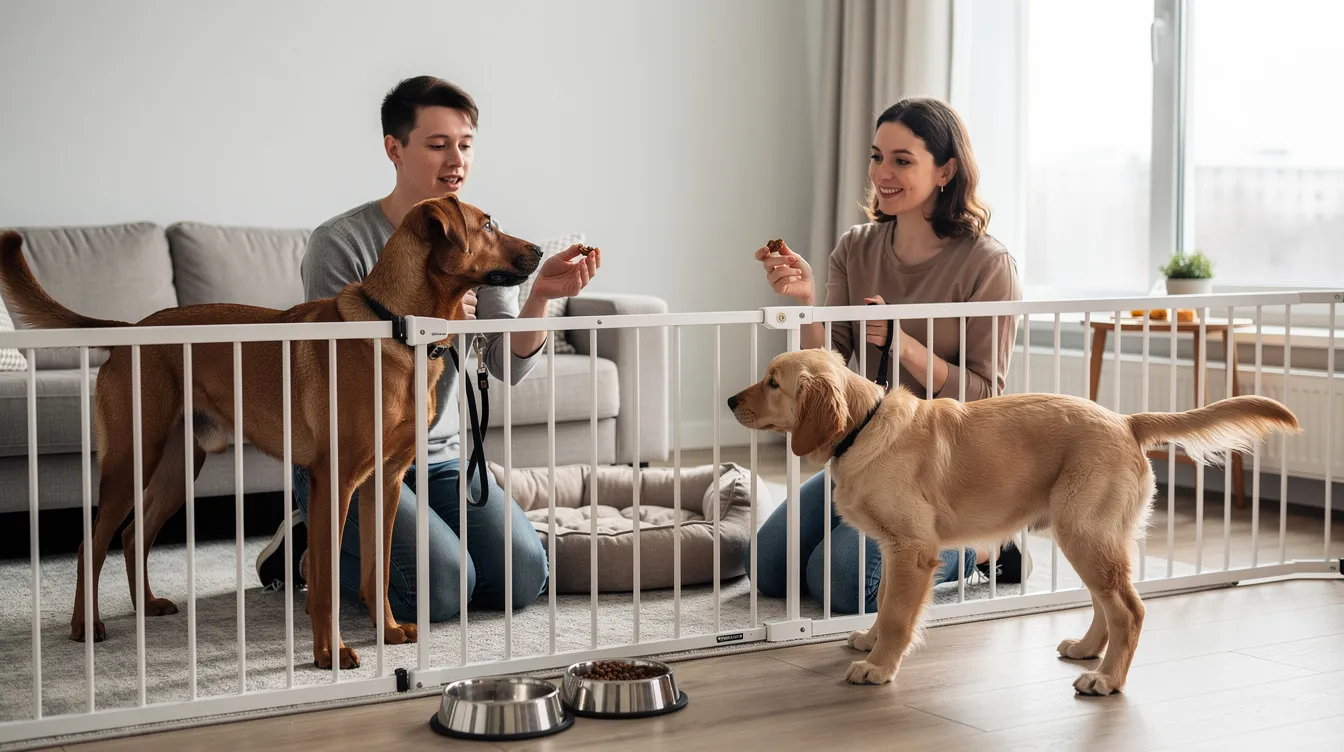
Solution: Maintain completely separate feeding areas – different rooms with closed doors or baby gates – throughout the initial weeks. Remove toys and food during initial introductions to prevent conflict entirely. Each dog should have its own food bowls, water bowl, bed, and crate. Only gradually reintroduce shared resources under direct supervision once both dogs demonstrate calm behavior around each other consistently. Crate training both dogs independently provides built-in management for feeding times and unsupervised periods.
Overstimulation and Rough Play
A new puppy or high-energy adult dog can quickly push an older dog past its tolerance threshold. What starts as play escalates when one dog becomes overly excited and stops reading the other’s signals – no pauses, intense mouthing, relentless chasing with no breaks.
Solution: Interrupt excessive energy immediately with structured breaks. Redirect each dog to its own crate or separate space for 5–10 minutes before allowing the dogs to resume interaction. Watch for the difference between healthy play (play bows, loose movements, voluntary pauses) and overstimulation (fixated staring, stiff chasing, no reciprocal breaks). Consistent intervention teaches appropriate play boundaries over time.
One Dog Showing Persistent Stress or Aggression
If one dog displays persistent fear, avoidance, escalating growling, lunging, or snapping despite gradual and patient introductions, the situation has exceeded what most owners can safely manage alone.
Solution: Immediately separate dogs into different rooms and seek professional help. A professional trainer experienced with aggression can assess the underlying cause – whether fear-based, territorial, pain-related, or rooted in prior trauma – and build a customized modification plan. Attempting to force progress with a dog showing persistent aggression risks injury to both dogs and the humans involved. Medical issues like pain or hearing loss often underlie sudden aggression, so a veterinary check should accompany any behavioral assessment.
Conclusion and Next Steps
A successful introduction between two dogs requires patience, proper technique, and ongoing supervision – there are no reliable shortcuts. The foundation is always the same: meet on neutral territory, progress gradually, monitor body language constantly, and respect each dog’s individual pace.
Your immediate next steps:
- Assess your current dog’s temperament – consider socialization history, reactivity around other dogs, and energy level
- Prepare your home environment – set up separate crates, remove high-value items, identify a neutral meeting location
- Schedule your first neutral territory meeting with two handlers, proper leashes, and high-value treats
- Follow the progressive timeline – resist the urge to rush, and end every session on a positive note
For ongoing success, explore topics like multi-dog household management, basic obedience training for both dogs to establish consistent communication, and strategies for addressing specific behavioral challenges that emerge as your dogs settle into their new dynamic.
If introductions prove challenging – or if you’re seeing signs of aggression that concern you – don’t wait for the situation to escalate. Professional intervention early is always safer and more effective than trying to repair damage after a serious incident.
Professional Training Support
Off Leash K9 Training Greenville specializes in behavior consultations for exactly these situations. Whether you’re dealing with a tense initial meeting, dog aggression between household members, or a dog with a complex behavioral history, their trainers provide hands-on assessment and structured programs designed for real results.
For households where aggression has become an ongoing concern, their 2 Week Board & Train program for aggressive dogs offers intensive professional intervention that addresses root causes rather than just symptoms.
Off Leash K9 Training serves dog owners throughout Greenville, Spartanburg, Greer, Mauldin, Simpsonville, and Anderson. View plans and pricing or contact their team directly to schedule a professional assessment before your next dog introduction – or to get help with one that hasn’t gone as planned.