A dog may begin learning a simple cue such as Sit or Down within a few short sessions, but reliable behavior takes longer.
There is no universal timeline. Progress depends on the behavior being taught, the dog’s age, learning history, temperament, health, environment, training method, and how consistently the owner practices.
Learning a Cue vs. Building Reliability
Training usually moves through several stages:
- Learning: The dog begins to understand which behavior earns reinforcement.
- Consistency: The behavior becomes easier to repeat.
- Generalization: The dog practices the behavior in different places.
- Proofing: Distance, duration, and distractions increase gradually.
- Maintenance: Important skills continue after formal training ends.
A dog may sit perfectly in your living room and struggle outside when another dog walks past. That does not necessarily mean the dog forgot the training. The environment is simply harder.
Measure progress by behavior rather than the calendar. Ask whether your dog understands the cue, can repeat it consistently, and can respond around gradually increasing distractions.
How Long Does Puppy Training Take?
Puppy training includes potty routines, handling, crate habits, leash introduction, introductory obedience, and safe socialization.
The timeline depends on age, physical development, feeding routine, supervision, and consistency. The American Kennel Club’s puppy potty-training timeline explains that a puppy who begins house training early is often dependable most of the time by around six months, although individual development varies.
The American Veterinary Society of Animal Behavior’s puppy socialization statement identifies the first three months as the primary socialization period and encourages safe, positive exposure to people, animals, environments, sounds, and other experiences.
Greenville owners can review puppy training programs for age-appropriate options.
How Long Does Basic Obedience Take?
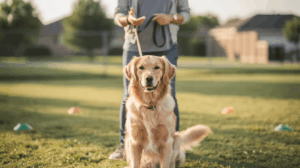
Basic obedience may include Come, Sit, Down, Place, Heel, loose-leash walking, and everyday manners.
A simple cue may take shape within several sessions, but reliable performance across different environments usually requires additional practice.
Recall deserves particular attention because responding in a quiet room is different from responding around dogs, wildlife, traffic, or other distractions.
Greenville’s current dog obedience training programs include a four-week Basic Obedience program and an eight-week combined Basic & Advanced program. Those are program durations, not guarantees that every behavior will become reliable everywhere by the final lesson.
Off-Leash Reliability Takes Longer
Off-leash reliability requires more than teaching recall. Dogs must practice around increased distance, unfamiliar locations, people, dogs, movement, smells, and changing environments.
There is no universal number of weeks that guarantees safe off-leash behavior. A dog that recalls well in a fenced yard may not be ready for a busy park.
Owners must also follow local leash laws whenever required.
Reactivity and Aggression Have No Fixed Timeline
Behavior modification is different from teaching a simple command. Fear, aggression, and reactivity may involve emotional responses, previous experiences, learned behavior, triggers, and safety concerns.
A 2024 systematic review of counterconditioning interventions found generally positive outcomes across many included studies, but differences in methods and small samples limit universal conclusions.
Progress depends on severity, triggers, bite history, previous learning, environment, management needs, and owner follow-through.
Greenville’s current aggression and reactivity training includes private instruction and a separate Board & Train option for qualifying dogs. Program length should not be treated as a guarantee that serious behavior concerns will disappear by a specific date.
What Affects Training Speed?
Age, health, temperament, previous learning, environment, and household consistency all matter.
Puppies are still developing physically and behaviorally, while older dogs may need adjustments for mobility, hearing, vision, stamina, or medical conditions.
Previous learning matters too. A dog that has practiced pulling, jumping, barking, or ignoring recall for years has a different learning history from a puppy encountering those situations for the first time.
The environment also changes difficulty. A behavior that works in the living room may become much harder on a sidewalk or in a park. Increase one challenge at a time whenever possible.
If a familiar behavior suddenly becomes difficult or your dog appears uncomfortable, veterinary evaluation may be appropriate because pain and illness can affect training performance.
How Often Should You Train?
There is no universal session schedule that is best for every dog.
A 2011 study involving 44 laboratory Beagles found better acquisition of one obedience task under less-frequent schedules than daily training. Because the study involved one breed and one controlled task, it should not be used to prescribe an exact schedule for pet dogs.
The practical takeaway is that more training is not automatically better training. Keep sessions productive, allow rest, and practice consistently.
Greenville’s current training programs and pricing outline available program structures and owner practice expectations.
Current Greenville Program Lengths
Published Greenville program structures include:
- Basic Obedience: 4 weeks
- Advanced Obedience: 4 weeks
- Basic & Advanced Obedience: 8 weeks
- Puppy Preschool: 5 weekly private classes
- Puppy Board & Train: 1 week
- Standard Board & Train: 2 weeks
- Aggression/Reactivity Private Training: 8 lessons
- Aggressive Dog Board & Train: 2 weeks
These are formal program lengths, not guaranteed behavior timelines.
Greenville’s standard adult Board & Train includes a two-hour owner transfer session. Continued owner handling and practice remain important afterward.
Frequently Asked Questions
How Long Does It Take to Train a Dog?
A dog may learn a simple cue in a few sessions, but responding consistently in different environments takes continued practice. Progress depends on the dog’s health, learning history, the skill being taught, distractions, and owner consistency. Completing a program does not mean training and maintenance are finished.
Can I Train My Dog in Two Weeks?
Two weeks can be enough time to introduce or strengthen obedience skills, especially with a structured training program. However, it does not guarantee reliable behavior in every situation or resolve every behavior concern. Owners must continue practicing and gradually introduce appropriate distractions afterward.
How Long Does It Take to Potty Train a Puppy?
Potty-training progress varies with the puppy’s age, physical development, health, supervision, and daily routine. Expect gradual improvement rather than a fixed completion date. Provide frequent bathroom opportunities and reward the puppy for eliminating in the appropriate place. Persistent accidents or sudden changes may warrant veterinary evaluation.
Does Board & Train Mean My Dog Is Completely Trained?
No. Board & Train can establish and strengthen skills, but dogs still need consistent handling and practice after returning home. Owner instruction helps you understand the cues, routines, and management strategies used during training. Skills also need practice in your home and other appropriate environments.
How Long Does Training Take for a Reactive or Aggressive Dog?
There is no fixed timeline. Progress depends on the underlying causes, severity, triggers, health, learning history, and safety needs. Some dogs require ongoing management and professional support. A program’s advertised duration describes the training format; it does not guarantee that fear, reactivity, or aggression will be eliminated.
Final Takeaway
There is no single answer to “how long does it take to train a dog?” A dog may understand a simple cue quickly, while dependable real-world performance requires continued practice.
Track learning, consistency, generalization, proofing, and maintenance instead of expecting progress by a fixed calendar.
If you are in Greenville or the surrounding Upstate South Carolina service area, learn more about Off Leash K9 Training of Greenville or schedule a free consultation to discuss your dog’s age, current skills, behavior concerns, and training goals.