
Introduction
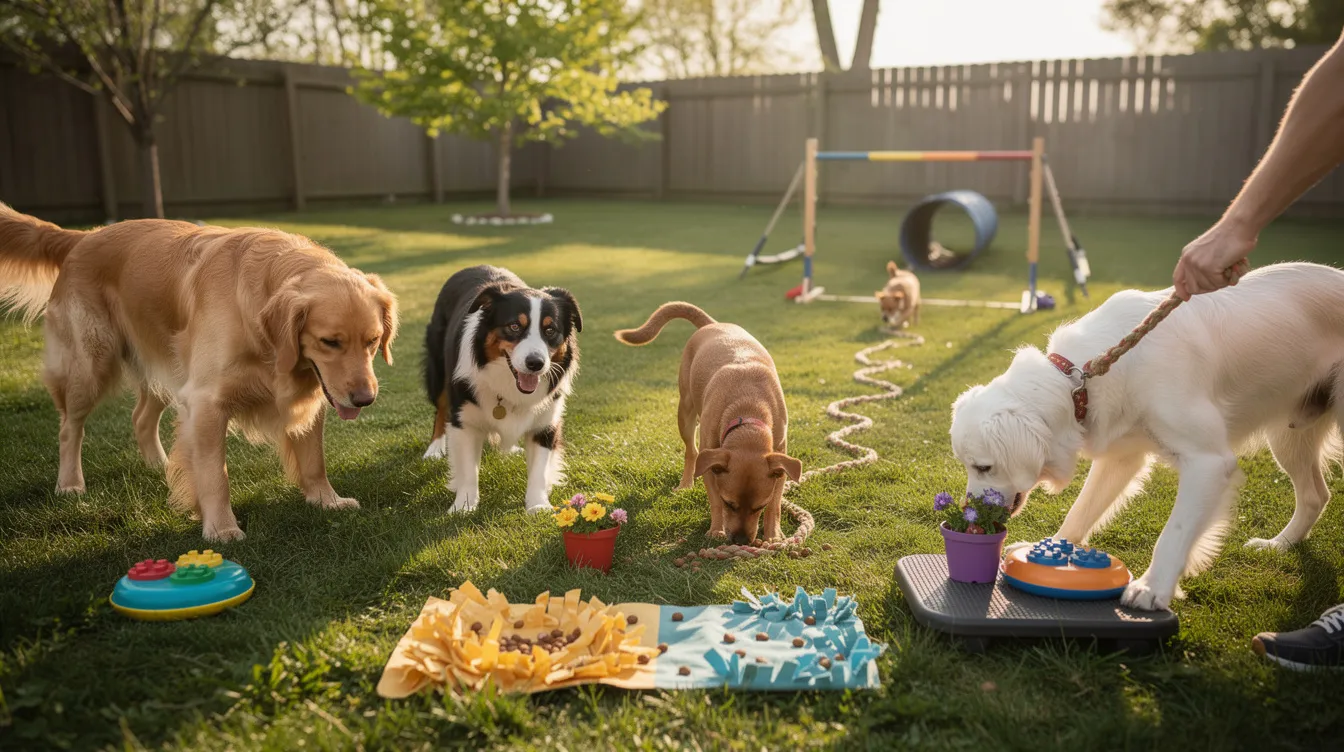
Dog enrichment activities are purposeful games, puzzles, and exercises designed to engage your dog’s mind, body, and natural instincts-going far beyond a standard walk around the block. These activities allow dogs to express natural behaviors like foraging, scenting, chewing, and exploring in safe, structured ways that keep them mentally stimulated, physically healthy, and emotionally balanced.
This guide covers indoor and outdoor enrichment activities, DIY options using common household items, and professional enrichment approaches suitable for dogs of all ages and energy levels. Whether you’re in Greenville, SC, or anywhere else dealing with a bored puppy, a reactive adolescent, or a senior dog showing signs of cognitive decline, these strategies apply. The target audience is dog lovers seeking to reduce boredom, curb unwanted behaviors, improve obedience, and genuinely enhance their dog’s quality of life through structured activities.
Dog enrichment is the practice of providing mental stimulation and physical exercise through activities that challenge a dog’s brain and body simultaneously. Rather than simply tiring a dog out, enrichment gives dogs opportunities to think, choose, and solve problems, making it incredibly important for overall well-being.
Here’s what you’ll gain from this guide:
- Reduced destructive behaviors like excessive chewing, digging, and barking through constructive outlets
- Improved mental health including lower anxiety, less boredom, and measurably reduced stress
- A stronger human-dog bond built through shared activities and positive training experiences
- Better physical fitness with improved coordination, cardiovascular health, and muscle tone
- Enhanced problem-solving skills that build confidence and slow cognitive decline in aging dogs
Understanding Dog Enrichment
Dog enrichment-formally known as environmental enrichment in animal welfare science-originated in zoo, shelter, and laboratory settings where researchers needed to mitigate the negative effects of confinement. The concept involves modifying a dog’s physical surroundings, routines, and daily interactions to allow species-typical behaviors that improve welfare. Today, enrichment has moved well beyond institutional settings and is recognized as essential for every pet dog’s everyday life.
The distinction between enrichment and basic physical exercise matters. Walking and running address large-muscle activity and cardiovascular needs, but they don’t fully engage a dog’s brain. Enrichment activities involve mental stimulation, novelty, choice, and cognitive challenge. A study of assistance dogs found that enrichment resulted in increased relaxation and reduced stress behaviors-even when physical activity was limited. Daily mental stimulation is crucial for dogs’ overall health and well-being, and remarkably, 15 minutes of cognitive work can tire a dog as much as a long walk.
What Makes an Activity Enriching
Not every toy toss or treat qualifies as enrichment. Effective enrichment activities meet specific criteria:
- Engages instincts – The activity taps into innate behaviors like foraging, scenting, chewing, or social contact
- Provides choice and control – The dog decides whether and how to engage, which builds confidence
- Offers appropriate challenge – Not so difficult that the dog becomes frustrated, not so easy that it’s boring; you should gradually increase difficulty over time
- Introduces novelty and variation – The American Animal Hospital Association recommends rotating textures, scents, and toy types to maintain interest
- Involves multiple senses – Combining smell, touch, vision, sound, and taste creates richer engagement
The connection to species-typical behaviors is central. Dogs evolved to spend hours foraging, tracking scents, and solving problems to survive. Bowl feeding and predictable routines leave these drives unmet. Enrichment activities help dogs express natural behaviors like sniffing and exploring, channeling instinctual behavior into constructive outlets rather than destructive ones.
Benefits of Regular Enrichment Activities
Mental and emotional benefits are backed by strong evidence. Enrichment reduces stress and anxiety in dogs. In a pilot study of 10 assistance dogs, seven enrichment types-including interactive toys, stuffed food toys, playhouses, and conspecific play-led to significant reductions in alertness and stress-related behaviors, with measurable increases in relaxation. Providing mental enrichment helps keep a dog calm and exhausted in the best sense. Mental stimulation prevents boredom and destructive behavior in dogs, giving owners relief from common complaints like excessive barking, chewing, and digging.
Physical benefits are equally compelling. Dogs need physical exercise to maintain strong muscles and joints. Enrichment supports physical fitness through active play, building coordination, endurance, and helping maintain a healthy weight. For senior dogs, research shows that enriched environments combined with antioxidant-rich diets improved spatial memory and decreased age-associated cognitive decline.
Relationship development rounds out the picture. Teaching new tricks provides mental stimulation and strengthens the bond with dogs. Shared enrichment activities-whether it’s a scent game in the backyard or a basic obedience training session-build communication and trust between owner and dog.
Natural Behaviors Enrichment Supports
Understanding the key instincts behind enrichment helps you choose the right activities:
- Scenting and nose work – Dogs have up to 300 million olfactory receptors compared to our 6 million. Olfactory games engage a dog’s sense of smell, requiring deep cognitive processing. Letting a dog sniff during walks isn’t wasted time-it’s essential mental work.
- Foraging – Wild canids spend hours locating food. When we pour kibble in a bowl, we skip this entire behavioral drive. Food-based enrichment restores the search-and-discover cycle.
- Chewing – A calming, self-soothing behavior that also supports dental health. Rather than punishing destructive chewing, provide appropriate outlets.
- Digging – Often a displacement behavior. Dedicated dig areas or busy boxes redirect this drive constructively.
- Social interaction – Dogs are social animals. Social enrichment includes positive interactions with other dogs or people, fulfilling pack-oriented needs.
Rather than suppressing these drives-which only creates frustration and escalates unwanted behaviors-enrichment channels them. This is the bridge between understanding why your dog does what it does and actually giving your dog what it needs. Let’s look at the specific types of enrichment you can implement.
Types of Dog Enrichment Activities
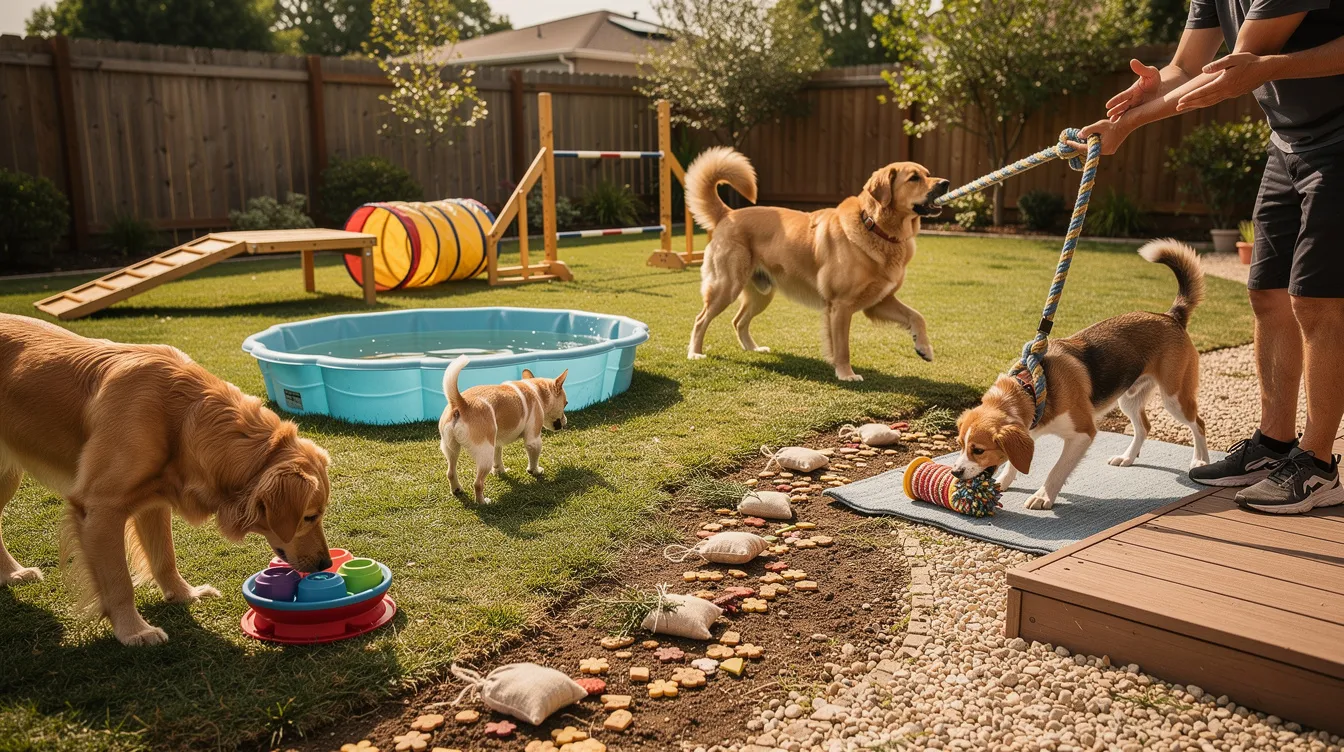
With the foundational understanding in place, enrichment activities fall into several overlapping categories. Purdue’s Canine Welfare Center identifies five types: social, nutritional, occupational, sensory, and physical. For practical purposes, we’ll organize these into mental, physical, and sensory enrichment, recognizing that the best activities engage multiple categories simultaneously. Variety in enrichment activities helps in exercising different canine instincts.
Mental Enrichment Activities
Cognitive enrichment involves problem-solving activities like trick training, and it’s one of the most efficient ways to drain extra energy. Puzzle toys stimulate dogs’ minds and slow down their eating, turning mealtime into a 20-minute cognitive workout instead of a 30-second inhale. Treat-dispensing games, food puzzles, and interactive feeders all fall into this category. Food-dispensing puzzles lower a dog’s heart rate and provide calming effects, making them excellent tools for anxious dogs.
Scent games represent perhaps the most powerful form of mental enrichment. Scent work games can be played using plastic containers with holes, hiding a smelly treat in one while leaving others empty. The dog attempts to identify the correct container using nose work alone. Engaging games like “Find It” provide effective mental and physical stimulation for dogs, and you can scale difficulty from beginner to advanced levels.
Problem-solving activities build confidence and resilience. Enrichment builds confidence by mastering new challenges. This is especially valuable for shy, fearful, or reactive dogs. An obstacle course made from household items, hide-and-seek games, or novel object exploration all strengthen a dog’s ability to cope with uncertainty. For dogs with significant reactivity or anxiety, pairing enrichment with professional behavior consultation ensures activities are matched to the dog’s current capacity.
Physical Enrichment Activities
Physical enrichment includes activities like fetch and agility-but the category extends far beyond basic ball-throwing. Active games like tug-of-war with a flirt pole, lure courses, and structured chase games burn pent-up energy while requiring focus and impulse control. DIY tug toys can be made from old T-shirts or fleece, keeping costs minimal.
Exploration activities transform routine walks into genuine enrichment. Rather than marching your dog through the same loop, let your dog sniff freely on what trainers call “sniff walks.” New routes, environments, and surfaces provide physical stimulation alongside sensory input. In the Greenville area, parks like Paris Mountain State Park offer excellent terrain for exploratory walks-though during summer months, stick to early morning or evening hours to avoid heat.
Structured physical exercise that goes beyond basic walks includes agility training, flyball, tracking, and herding exercises. These give dogs a “job,” combining physical play with cognitive engagement. For dogs ready for advanced physical and obedience work, an advanced obedience program can integrate these elements systematically.
Sensory Enrichment Activities
Sensory enrichment engages dogs’ senses through sniff walks and music, textures and tastes, and novel visual experiences. Each sense offers its own enrichment pathway:
Texture exploration involves introducing different surfaces-grass, sand, rubber mat flooring, gravel-and materials like plush, rope, and rubber for interaction. Walking across varied terrain or exploring a ball pit filled with tennis balls challenges proprioception and builds body awareness.
Sound enrichment includes calming music and environmental audio. A 2018 study found classical music calms dogs and reduces anxiety. Nature sounds, white noise machines, and gentle exposure to novel sounds (like bubble machines, which one study found significantly increased relaxation in dogs) all contribute to a richer sensory environment.
Visual stimulation through window watching, new environments, or moving toys engages a frequently overlooked sense. Even rearranging furniture or adding a new observation point in your home changes your dog’s visual landscape.
Olfactory and taste enrichment is where many dogs find the deepest satisfaction. Lick mats spread with wet food or pumpkin puree, scent trails through the house, and foraging for hidden food all activate the most powerful canine sense. Enrichment activities allow dogs to express natural behaviors like sniffing, and this category delivers that in concentrated form.
With these types clearly defined, let’s move into specific activities you can implement starting today.
Essential Dog Enrichment Activities by Category
The following enrichment ideas are practical, affordable, and adaptable to virtually any dog’s needs. Most require minimal setup and use items you already have around the house. Short sessions of mental and physical activities throughout the day are beneficial-you don’t need to block out an hour; even 10-minute bursts woven into your dog’s day make a meaningful difference.
Food-Based Enrichment Activities
Food-based enrichment is the most accessible entry point for most owners, and it works because it taps into the foraging instinct every dog carries. Here’s how to set up four core food-based activities:
- Setting up puzzle feeders and slow-eating solutions – Start with a simple puzzle feeder or muffin tin: place treats in each cup and cover them with tennis balls. The dog must nose each ball aside to access the food. Muffin tin treats encourage problem-solving and exploration. As your dog masters this, move to commercial food puzzles with sliding compartments or rotating layers. Puzzle toys stimulate dogs’ minds and slow down their eating, which also helps prevent bloat in fast eaters.
- Creating DIY snuffle mats and foraging opportunities – Cut fleece strips and tie them through the holes of a rubber mat to create homemade snuffle mats. Hide food, kibble, or small treats throughout the strips. You can also scatter feeding across your yard or living room floor, spreading kibble through grass or carpet so your dog must use its nose to locate every piece. DIY foraging games can satisfy a dog’s instinct to shred and rip-try wrapping treats in crumpled paper or tucking kibble inside a paper bag for safe shredding.
- Implementing frozen treat activities for extended engagement: Fill a KONG or lick mat with wet food, pumpkin puree, or a dog-safe mixture and freeze overnight. These frozen enrichment activities keep a dog entertained for 20–40 minutes and are especially valuable during hot Greenville summers when outdoor time is limited. Layer different textures and flavors for added challenge.
- Designing treasure hunts and scavenger games – Hide treats or your dog’s favorite toy in various spots around the house. Start with obvious locations and gradually increase difficulty. Treasure hunts leverage scent work naturally-you hide food or a smelly treat behind furniture, under cushions, or inside a large cardboard box, and the dog uses its nose to track each item. For advanced dogs, use scent detection principles: place a specific scent on a cotton ball inside one of several plastic containers and reward the dog for indicating the correct one.
DIY enrichment doesn’t need to be complicated. Busy boxes provide multiple forms of stimulation for dogs-fill a cardboard box with crumpled paper, egg cartons, a plastic bottle with small holes punched in it (punch holes before filling with kibble), and a few of your dog’s toys. The dog must dig, shred, and problem-solve to extract everything. DIY treat dispensers keep dogs entertained for extended periods, and you can assemble one in under five minutes.
Always account for dietary restrictions and total caloric intake. Treats used in enrichment should come from your dog’s daily food ration, not be added on top of it.
Interactive Play and Training Activities
The following table helps you match activities to your dog’s current level:
| Activity Type | Difficulty Level | Time Required | Best For |
|---|---|---|---|
| Basic obedience games | Beginner | 10–15 minutes | All dogs, especially puppies |
| Advanced trick training | Intermediate | 15–20 minutes | Dogs with basic training foundation |
| Scent detection games | Beginner to Advanced | 10–30 minutes | High-drive and working breeds |
| Agility exercises | Intermediate | 20–30 minutes | Active dogs with good physical health |
Cognitive enrichment involves problem-solving activities like trick training, and even simple tricks-spin, shake, roll over-provide genuine cognitive challenge. Engaging dogs in problem-solving activities builds confidence and resilience, and trick training naturally reinforces impulse control. For puppies and young dogs, a puppy training and socialization program provides the foundation these activities build upon.
Choose activities based on your dog’s temperament and experience level. A high-energy working breed may thrive with scent detection games and agility, while a calmer companion breed might prefer trick training sessions and food puzzles. Dogs learn best when activities match their current skill level and energy state-pushing too hard leads to frustration, while activities that are too easy won’t hold engagement. Many dogs benefit from a mix across categories, and varying the type throughout the week exercises different canine instincts.
The real power comes from integrating enrichment into existing routines. Practice recall commands during a game of hide-and-seek. Build impulse control by asking for a “wait” before releasing your dog to search for hidden treats. Use mealtimes for food puzzles instead of bowl feeding. These small adjustments transform your dog’s day without requiring additional time.
Common Challenges and Solutions
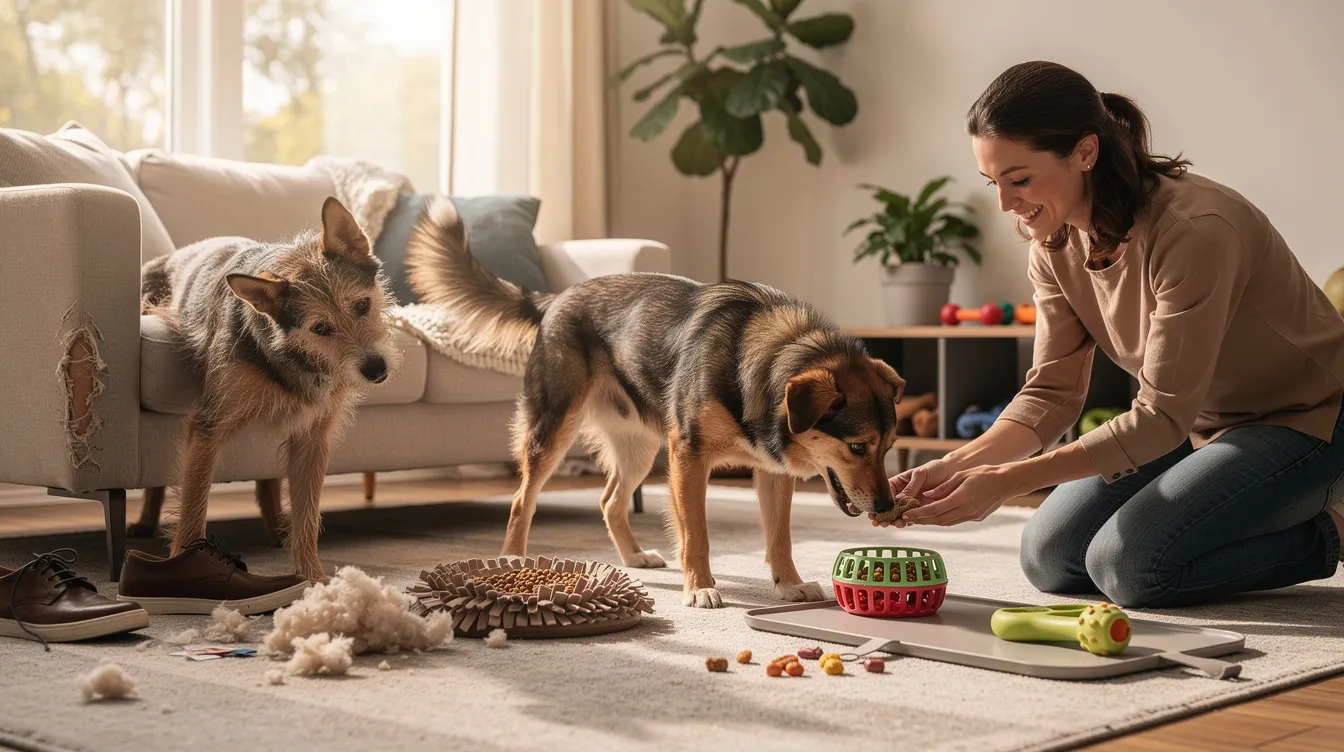
Even enthusiastic owners encounter obstacles when building an enrichment routine. Here are the most common challenges and how to overcome them.
Dog Loses Interest Quickly in Activities
Rotating toys every few days keeps them interesting for dogs-this is one of the simplest and most effective strategies. Don’t leave every enrichment item available at once. Instead, cycle puzzle toys, snuffle mats, and interactive feeders on a 3–4 day rotation. Gradually increase difficulty as your dog masters each level. In Greenville’s variable climate, seasonal rotation works naturally: more indoor puzzles and scent games during summer heat, more outdoor exploration and physical play in spring and fall.
Limited Time for Complex Enrichment Setup
Many enrichment activities require five minutes or less of preparation. Scatter feeding takes 30 seconds. A KONG stuffed with wet food and frozen overnight requires minimal active time. Lick mats can be prepared in bulk and refrigerated. Even a paper bag filled with kibble and crumpled paper creates instant enrichment. The key insight from a survey of 1,750 dog owners is that time is the most commonly cited barrier-but many owners overestimate how much setup is actually needed. Squeeze enrichment moments into daily routines: practice two minutes of trick training while waiting for coffee, scatter kibble while doing dishes, set up a frozen treat before leaving for work.
Dog Becomes Overstimulated or Frustrated
Watch for stress signals: excessive panting, yawning, avoidance, or frantic behavior. These indicate the activity is too challenging or the session is too long. Start with easier activities, provide calming breaks, and ensure activities match the dog’s current skill level and energy state. Calming enrichment encourages rest through safe resting spaces and petting-this is enrichment too, and it’s an important counterbalance to high-stimulation activities. For dogs with significant behavioral challenges like aggression or severe reactivity, pair enrichment with professional guidance from a trainer experienced in aggression and behavior modification.
Weather Limiting Outdoor Enrichment Options
Greenville’s hot summers and occasional winter cold can restrict outdoor time. Build an indoor enrichment repertoire: scent games using plastic containers with treats hidden inside, indoor obstacle course setups using chairs and broomsticks, puzzle feeders, and lick mats. A large cardboard box becomes a dig box when filled with crumpled paper and hidden treats. Egg cartons with kibble tucked inside the compartments create instant food puzzles. Short sessions of indoor mental and physical activities throughout the day can fully replace outdoor enrichment when weather demands it. Cognitive enrichment can reduce cognitive decline in aging dogs regardless of whether activities happen indoors or out-what matters is consistency.
Conclusion and Next Steps
Regular dog enrichment is not a luxury-it’s a fundamental component of responsible dog ownership. Enrichment prevents boredom and destructive behavior, reduces stress and anxiety, builds confidence, supports physical fitness, and encourages problem-solving and cognitive health. Dogs that receive consistent mental stimulation and physical exercise through varied enrichment activities are calmer, more obedient, and more deeply bonded with their owners.
Start here:
- Assess your dog’s current needs – Consider age, breed, energy level, and any behavioral issues. Senior dogs benefit from lower-impact cognitive challenges; high-energy adolescents need more physical and mental outlets.
- Begin with 2–3 simple activities – A frozen KONG, scatter feeding, and a daily 10-minute trick training session are enough to see behavioral changes within days.
- Build and rotate – Add new enrichment ideas each week. Rotate items so your dog’s toys feel fresh. Track what your dog enjoys most and what provides the best results.
- Observe and adjust – Daily mental stimulation prevents boredom and destructive behavior, but each dog responds differently. Let your dog’s enthusiasm guide your choices.
For dogs with complex behavioral needs-reactivity, aggression, severe anxiety, or advanced off-leash goals-enrichment works best alongside structured professional training. Programs like Off Leash K9 Training’s board and train options or therapy dog preparation integrate enrichment into comprehensive behavior modification, providing both the structure and expertise needed for lasting results.
Additional Resources
- Customized enrichment planning: Off Leash K9 Training Greenville offers consultations that assess your dog’s specific needs and build tailored enrichment and training programs
- Local enrichment supplies: Pet stores throughout the Greenville, Spartanburg, and Simpsonville area carry puzzle feeders, snuffle mats, lick mats, and interactive toys-though many of the best enrichment tools are DIY projects using items you already own
- Further reading on enrichment science: The Purdue Canine Welfare Center’s enrichment framework provides an excellent evidence-based foundation for understanding the five categories of environmental enrichment and how to apply them at home