

How to tell if your puppy has separation anxiety comes down to pattern, timing, and intensity. A puppy that briefly whines, follows you, or has an occasional accident may simply be adjusting to a new home or learning to be alone. Separation-related distress is more concerning when several behaviors repeatedly appear around departures or absences, such as persistent barking or howling, pacing, panting, drooling, escape attempts, exit-focused destruction, or house soiling.
The American Kennel Club’s separation anxiety guidance explains that no single behavior proves separation anxiety. What matters is whether multiple signs occur consistently when the puppy is left alone.
Separation Anxiety vs. Normal Puppy Adjustment
Young puppies naturally seek closeness. Many have recently left their littermates or previous home and may have little experience being alone.
Normal adjustment can include brief whining, restlessness, following you from room to room, or difficulty settling. A less concerning pattern is one in which the puppy gradually relaxes, explores, eats, or falls asleep.
A more concerning pattern is persistent or escalating distress tied to separation. The puppy may be unable to settle, repeatedly try to escape, or stop eating even though food normally interests them.
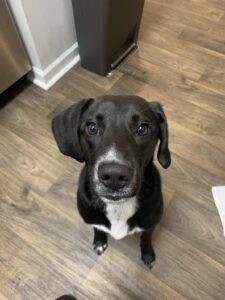
Signs Your Puppy May Have Separation Anxiety
Watch for a cluster of behaviors rather than one isolated incident.
Persistent Barking, Whining, or Howling
Vocalization that begins around departure and continues or escalates can be a warning sign. Brief protest is different from sustained distress.
Escape-Focused Destruction
Puppies chew during teething, so damaged objects alone do not prove anxiety. More concerning damage is repeatedly focused on doors, windows, gates, crate bars, or other barriers connected with escape.
Pacing, Panting, Drooling, or Trembling
Physical signs become more meaningful when they repeatedly appear as you prepare to leave or while you are gone.
House Soiling During Absences
Young puppies have limited bladder and bowel control. An accident may reflect age or incomplete housetraining. Concern increases when a puppy that is becoming reliable soils mainly during absences and shows other distress signs.
The ASPCA’s separation anxiety guidance also recommends ruling out medical causes before assuming house soiling is behavioral.
Refusing Food While Alone
A distressed puppy may ignore a food toy or treat they normally value. Food refusal is useful information, but it is not a diagnosis by itself.
Use Video to Confirm the Pattern
A pet camera or old phone can be one of the most useful tools for evaluating the problem.
Record a normal, necessary absence or a short departure that avoids prolonged panic. Watch for:
- When behavior changes
- Whether distress increases or decreases
- Whether the puppy settles
- Whether food or toys hold attention
- Whether outside noises trigger barking
- Whether the puppy tries to escape
- How quickly the puppy recovers
The Merck Veterinary Manual’s behavior guidance describes video as particularly useful for evaluating what happens after an owner leaves and distinguishing separation-related behavior from other triggers.
Crate Distress Is Not Always Separation Anxiety
Some puppies are comfortable alone in a safe room or exercise pen but panic when a crate door closes. That can indicate confinement or barrier distress rather than, or in addition to, separation anxiety.
If your puppy pants heavily, drools, bites crate bars, claws frantically, bends the crate, or injures themselves, do not keep extending crate time on the assumption that they need to “cry it out.”
VCA’s guidance on separation anxiety warns that severe escape attempts can result in injuries.
Compare how your puppy behaves when crated while you are home, behind a gate, and briefly alone in a larger safe area.
What Else Can Look Like Separation Anxiety?
Several common problems overlap with the same symptoms:
- Incomplete housetraining
- Normal puppy chewing
- Barking at people, dogs, or noises outside
- Confinement distress
- Pain or illness
- Gastrointestinal or urinary problems
A sudden behavior change deserves veterinary attention, especially with frequent urination, vomiting, diarrhea, pain, lethargy, or other health changes.
What Should You Do Next?
Start with observation rather than punishment.
First, record the behavior. Then look for a pattern tied specifically to your departure or absence.
For mild cases, gradual alone-time practice may help. Begin with separations short enough that your puppy remains comfortable and increase duration based on behavior rather than a fixed schedule.
Do not deliberately expose your puppy to long periods of panic to “teach” independence. Severe cases may require a veterinarian or veterinary behaviorist, and medication may sometimes be used alongside behavior modification.

How Greenville Puppy Training Fits In
Off Leash K9 Training of Greenville currently offers Puppy Preschool, a One-Week Puppy Board & Train, and Puppy Training Consultations.
Published puppy training programs in Greenville cover topics such as potty routines, crate-training foundations, socialization, bite inhibition, and introductory obedience.
The Greenville homepage also lists separation anxiety among concerns owners contact the team about. However, the published puppy programs do not describe separation anxiety as a guaranteed outcome.
If your puppy is showing distress when alone, use the consultation to discuss what you have observed and determine whether puppy training, veterinary evaluation, or specialized behavior support is appropriate.
You can also review the current training programs and pricing or schedule a free consultation.
Frequently Asked Questions
Does Following Me Everywhere Mean My Puppy Has Separation Anxiety?
No. Young puppies commonly follow familiar people. Following becomes more meaningful when it occurs with separation-specific signs such as departure-cue distress or panic during absences.
Is Crying in the Crate the Same as Separation Anxiety?
No. A puppy can have confinement distress without separation anxiety. Compare behavior in the crate with behavior in a larger safe area.
Can Another Dog Fix Puppy Separation Anxiety?
Do not get another dog solely as treatment. Another pet does not reliably resolve distress tied to separation from a particular person.
When Should I Call My Veterinarian?
Contact your veterinarian for self-injury, severe escape attempts, sudden house soiling, pain, illness signs, major appetite changes, or persistent panic.
How Long Does Treatment Take?
There is no standard timeline. Mild adjustment problems may improve relatively quickly, while more serious separation anxiety can require months of carefully graduated behavior work.
Final Takeaway
To tell whether your puppy may have separation anxiety, focus on repeated separation-specific distress rather than a single behavior or a stopwatch.
Video the pattern, rule out medical and confinement-related causes, and seek professional help when the behavior is severe or unsafe.
For Greenville puppy owners who need help establishing crate routines, foundational obedience, and other early training skills, start with Off Leash K9 Training of Greenville or schedule a free consultation.