

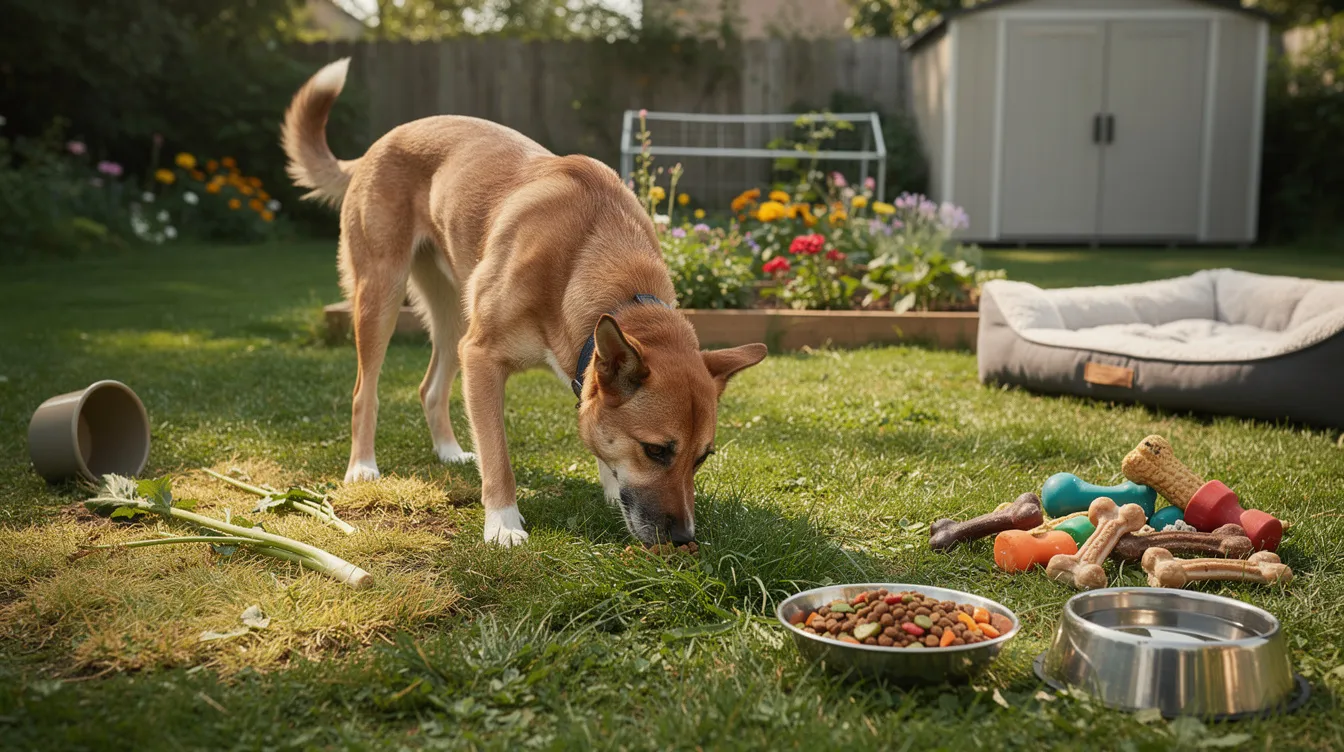
Dogs eat grass far more often than most people realize-and in the vast majority of cases, it’s completely normal behavior. A large-scale study published in Applied Animal Behaviour Science surveyed over 1,500 dogs and found that approximately 79% of healthy, well-cared-for dogs were reported by their owners to eat grass or other plants. If your pup munching on your lawn has you worried, you’re not alone, but the odds are strongly in favor of this being harmless.
This article covers the natural, behavioral, and health-related reasons behind your dog’s grass-eating habits, including when the behavior is perfectly fine and when it signals something that needs professional attention. Whether you’re a first-time dog owner or a seasoned pet parent in the Greenville, SC area, understanding the “why” behind this behavior helps you respond appropriately-and know the difference between a quirk and a red flag.
The short answer: Dogs typically eat grass due to instinct, digestive needs, boredom, or simply because they enjoy the taste and texture. Dogs eating grass is a common behavior rather than a sign of illness, and most dogs do not eat grass specifically to induce vomiting.
Here’s what you’ll take away from this article:
- How to distinguish normal behavior from concerning grass-eating patterns
- The specific physical and psychological reasons dogs consume grass
- Key safety risks including pesticides, intestinal parasites, and physical hazards
- Practical training and management strategies to curb excessive grazing
- Clear guidance on when to contact your veterinarian promptly
Understanding Dog Grass Eating Behavior
Grass eating in dogs is a natural canine behavior with deep evolutionary roots. Far from being a strange habit, it reflects dietary patterns inherited from wild ancestors who regularly consumed plant matter alongside prey. For modern dog owners, understanding this context transforms grass eating from a source of anxiety into something you can evaluate calmly and manage effectively.
Natural Instinctive Behavior
Your dog’s urge to nibble grass traces back to wild canines-wolves, foxes, and coyotes-who routinely consumed plant material either directly or through the stomach contents of prey animals. Research shows that 11%–47% of wolves eat grass in the wild, and plant matter constitutes roughly 2–10% of stomach contents in various wild canid species. Dogs are not obligate carnivores; they’re opportunistic omnivores whose digestive systems evolved to process some vegetation.
This instinct appears remarkably early. Studies have observed grass consumption in puppies as young as five to seven weeks old, with the mother’s grass-eating habits influencing the behavior-suggesting an innate drive rather than something purely learned. So when puppies eat grass alongside adult dogs, they’re expressing a behavior that predates domestication by thousands of years.
Physical vs Behavioral Needs
Understanding why your dog is eating grass requires separating physical motivations from psychological ones. Physical drivers include digestive discomfort, a need for more fiber, or mild nausea. Behavioral drivers include boredom, anxiety, attention-seeking, and simple sensory enjoyment-many dogs eat grass simply because they like the taste or texture.
This distinction matters because the appropriate response differs dramatically. A dog eating grass due to a fiber-deficient diet needs a nutritional adjustment to their dog’s diet, while a dog eating grass out of boredom needs increased mental stimulation and enrichment. In many cases, both physical and behavioral factors overlap, which is why a holistic approach to evaluation works best-and why training-based solutions often complement dietary changes.
Common Reasons Dogs Eat Grass
With the foundational understanding that grass eating is rooted in both biology and behavior, let’s examine the specific motivations. Most dogs fall into one or more of the following categories, and identifying which applies to your dog helps you choose the right response.
Digestive Relief and Stomach Comfort
One of the most common concerns among pet owners is that their dog eats grass to settle an upset stomach. There is some truth here: dogs may eat grass to soothe mild stomach discomfort, and the physical texture of grass blades can irritate the stomach lining enough to trigger vomiting in some cases. Dogs that eat grass first thing in the morning and then vomit yellow foam may be dealing with bile buildup from an empty stomach.
However, the “self-medication” theory is significantly overstated. According to VCA Hospitals, less than 25% of dogs vomit after eating grass, and fewer than 10% show signs of illness before grazing. Many healthy dogs consume grass without any digestive issues whatsoever. So while occasional vomiting after grass consumption can happen, it’s far from the rule. Most dogs do not eat grass specifically to induce vomiting-most eat grass simply because they want to.
Fiber and Nutritional Factors
Grass contains fiber, aiding in digestion for dogs-and this may explain why some dogs are eating grass regularly. Dogs need roughage in their diets for digestion, and when a commercial diet is lower in fiber or when long periods pass between meals, some dogs graze to supplement that gap. Eating grass can indicate a dog’s need for roughage, and grass may help dogs with dietary fiber deficiencies.
A compelling case report highlighted by PetMD describes an older miniature poodle with a seven-year history of plant eating and vomiting. Switching to a high-fiber commercial diet resolved the behavior entirely. That said, broader nutritional deficiency hypotheses-vitamins, minerals-have been less supported by research. The large-scale survey found no clear relationship between diet type and frequency of grass eating, suggesting that while adding more fiber can help individual dogs, nutritional imbalances aren’t the dominant driver for most dogs.
Boredom and Anxiety Triggers
Behavioral grass eating is strongly indicated by research, and it’s one of the most common concerns that brings Greenville area dog owners to seek behavior modification training. Dogs may eat grass due to boredom or anxiety, particularly when left without adequate mental stimulation or enrichment during outdoor time. Anxious dogs and those experiencing stress from separation, environmental changes, or household disruptions may develop repetitive behaviors, including excessive grazing.
Attention-seeking also plays a role: if you react strongly-positively or negatively-when your dog is eating grass, your dog may repeat the behavior to get that interaction. Younger dogs tend to eat grass and other non-food items more frequently, which aligns with developmental exploration and higher energy needs. The timing matters too: dogs that haven’t eaten recently or have had limited activity tend to consume grass more. Increasing mental stimulation can help prevent grass eating driven by these behavioral triggers, which is why training-based approaches are so effective.

Safety Considerations and Management Strategies
While occasional grass eating is generally considered harmless for dogs, certain situations turn a benign habit into a real concern. Understanding the difference-and having practical strategies ready-protects your dog’s health without overreacting to normal behavior.
Safe vs Unsafe Grass Consumption
Grass itself is generally harmless to dogs. Occasional grass eating by an otherwise healthy dog with regular appetite, normal stools, and no lethargy typically requires no intervention. The risks emerge from what’s on or in the grass:
- Avoid chemically treated lawns: Pesticides on grass can be toxic to dogs. Lawns treated with herbicides or fertilizers-common in Greenville, SC yard maintenance-can cause excessive salivation, nausea, vomiting, and diarrhea. Always ask about treatment history before letting your dog graze in unfamiliar yards or public spaces.
- Watch for parasitic contamination: Dogs may ingest intestinal parasites from contaminated grass. Areas with animal droppings increase the risk of worm eggs and other parasites. Keep your dog’s deworming schedule up to date and ask your vet for regular fecal checks.
- Monitor quantity consumed: Eating large amounts of grass can lead to digestive issues, including potential intestinal blockage when combined with other indigestible items. If your dog is eating grass compulsively rather than nibbling, that’s a health concern worth investigating.
- Supervise for physical hazards: Foxtails, sharp grass blades, and toxic plants can cause injury to the mouth, throat, or digestive tract. Monitor dogs for symptoms after eating grass, including gagging, pawing at the mouth, or irregular bowel movements.
Training-Based Prevention Methods
Training can redirect dogs from eating grass during walks and during yard time. Consistent training improves long-term prevention of grass eating, and the right method depends on your dog’s specific triggers. Here’s a comparison of effective approaches:
| Method | Best For | Training Technique | Expected Timeline |
| Redirection / Distraction | Dogs who graze out of habit during yard time | At the first sign of grass focus, redirect to a toy, sniff activity, or play. Reward when the dog ignores grass. | 2–4 weeks of consistent application |
| “Leave It” Command | Dogs who try to eat on walks or in public areas | Teach “leave it” with increasing distraction levels; practice indoors → yard → public settings. | 4–6 weeks for reliable outdoor response |
| Environmental Management | Owners with pesticide concerns or high-risk grass zones | Block access to treated areas; designate a safe grassy patch; supervise outdoor time. | Immediate risk reduction |
| Increased Exercise & Mental Stimulation | Dogs eating grass due to boredom or anxiety | More frequent walks (especially sniff-walks), puzzle feeders, interactive toys, and scheduled play sessions. | 1–2 weeks before reduction; plateau at 4–6 weeks |
Providing safe chewing alternatives can reduce grass-eating behavior, and environmental management can limit grass eating in dogs by controlling where they have access. For persistent behavioral issues-especially compulsive patterns-professional training through a structured program like a 2 Week Board & Train can deliver faster, more reliable results than owner-managed training alone.
Common Challenges and Solutions
Even with a solid understanding of why dogs eat grass, certain patterns can frustrate Greenville area dog owners. Here are the most common concerns and practical solutions.
Excessive or Compulsive Grass Eating
When your dog’s grass eating takes up a large portion of outdoor time-nearly daily, seemingly automatic-it may have crossed from normal behavior into compulsive territory. Excessive grass eating can indicate an underlying health problem, or it may reflect insufficient stimulation. The solution starts with structured daily routines: frequent walks (especially enrichment-focused “sniff walks”), dedicated training sessions, and indoor activities that reduce boredom. Interactive toys and puzzle feeders help channel the same oral fixation into productive engagement. If the behavior persists despite increased exercise and enrichment, consult a certified trainer or explore basic obedience training to build better impulse control.
Grass Eating Followed by Vomiting
If your dog eats grass and vomits repeatedly-particularly producing yellow bile-this pattern may point to gastric reflux or bile gastritis rather than simple grazing. Adjust feeding schedules by offering smaller, more frequent meals, especially early in the morning or before outdoor time. Evaluate your dog’s diet for adequate fiber content; sometimes switching to a food with more fiber resolves the cycle entirely. Dogs that eat grass along with symptoms like vomiting may need veterinary attention to rule out underlying medical conditions such as inflammatory bowel disease or pancreatitis. Don’t dismiss frequent grass eating followed by consistent vomiting as “just something dogs do”-it warrants a vet visit.
Anxiety-Driven Grass Consumption
Some dogs consume grass as a displacement behavior when showing signs of stress-separation anxiety, noise sensitivity, or changes in household routine. These anxious dogs often exhibit other symptoms alongside grass eating, including pacing, whining, or destructive behavior. Building confidence through consistent training, desensitization to triggers, and establishing predictable daily routines can significantly reduce this pattern. Creating safe spaces indoors, using pheromone diffusers, and rewarding calm behavior all contribute. For dogs whose anxiety is deeply ingrained, professional anxiety management and behavior modification programs provide structured protocols that address the root cause rather than just the grass-eating symptom.
Conclusion and Next Steps
In most cases, your dog’s grass-eating habits are a normal behavior rooted in evolutionary instinct and natural dietary patterns. With 79% of dogs engaging in this behavior and only a small minority experiencing health problems as a result, occasional grass eating shouldn’t keep you up at night. The key is knowing the difference between harmless nibbling and patterns that signal digestive issues, nutritional gaps, or behavioral needs requiring intervention.
Here are your immediate next steps:
- Assess your dog’s current diet and exercise routine-look specifically at fiber content and whether your dog gets enough mental stimulation and frequent walks throughout the day.
- Monitor grass-eating patterns and triggers-note frequency, timing relative to meals, whether your dog vomits afterward, and any other symptoms like lethargy or irregular bowel movements.
- Implement appropriate training techniques-start with “leave it” commands and redirection for dogs who graze on walks, and increase enrichment for dogs driven by boredom.
- Seek professional evaluation for persistent issues-if your dog vomits repeatedly, shows signs of digestive discomfort, or eats grass compulsively, consult your veterinarian promptly and consider working with a professional trainer.
If your dog’s grass eating connects to broader behavioral challenges-anxiety, impulse control, or obedience gaps-structured training can make a measurable difference. Explore our training packages to find the right fit for your dog’s specific needs, or visit our FAQ page for answers to common training questions Greenville area dog owners ask most.
