

Dogs get the zoomies to release pent-up energy, express excitement, or relieve stress through sudden bursts of frenetic running, spinning, and leaping. If you’ve ever watched your dog tear around the house at full speed for no apparent reason-running in crazy eights, ears pinned back, tail flying-you’ve witnessed one of the most entertaining and completely normal canine behaviors.
This article covers the biological and behavioral reasons behind dog zoomies, when and why they occur, and what specific situations trigger them. Whether you’re a new puppy owner in Greenville, SC dealing with daily episodes or a seasoned dog owner wondering why your older dog still occasionally loses it after bath time, this guide will help you understand what’s happening and how to manage it. The practical importance is straightforward: understanding zoomie triggers helps you provide better exercise routines, more effective training, and smarter behavioral management for your furry friends.
The medical term for zoomies is Frenetic Random Activity Period (FRAP)-a short, spontaneous explosion of intense movement that serves as a natural outlet for accumulated physical and emotional energy. Zoomies are often a sign of a happy dog, and they are generally harmless when performed in a safe environment.
By the end of this article, you’ll be able to:
- Recognize the difference between normal and concerning zoomie behavior
- Identify your dog’s specific triggers and timing patterns
- Implement practical safety and management strategies
- Understand when zoomies signal a need for more exercise or mental stimulation
- Know when to seek professional training help
Understanding Dog Zoomies
Zoomies are sudden, intense bursts of wild running and spinning that most dogs experience at some point in their lives. Formally known as frenetic random activity periods (FRAPs), these episodes are a well-recognized phenomenon in veterinary behavior science, though surprisingly little formal research has been conducted to quantify their exact physiological mechanisms. What we do know-from veterinary experts, ethologists, and extensive owner observation-paints a clear picture of a behavior that is natural, functional, and deeply rooted in canine biology.
What Are Frenetic Random Activity Periods
FRAPs describe short, spontaneous bursts of intense physical activity where a dog sprints, runs in loops, makes sharp directional changes, spins, leaps, and sometimes vocalizes-all without any obvious external cause. According to Cornell University’s veterinary behavior experts, observable characteristics typically include a loose, exaggerated gait, play bows, a “butt-tuck” posture with lowered hindquarters, and energetic tail wagging.
Zoomies typically last only a few moments-anywhere from a few seconds to several minutes, though most episodes resolve in under five minutes. The intensity varies considerably based on the dog’s age, breed, and the context that triggered the episode. After zooming, dogs generally settle into a noticeably calmer, more relaxed state, which supports the theory that FRAPs serve a genuine regulatory function.
It’s worth noting that zoomies aren’t unique to dogs. Cats, rabbits, ferrets, and other mammals display similar bursts of frenetic activity, suggesting that these intermittent energy releases are a broader mammalian pattern likely connected to play development, alertness, and tension regulation.
Normal Zoomie Behavior vs Warning Signs
Healthy zoomies are easy to spot once you know what to look for. A dog’s posture during normal FRAPs is loose and exaggerated-you’ll see play bows, wide circular runs, and a body that looks fluid rather than tense. The dog appears joyful, feeling happy, and the episode resolves naturally without escalation. The dog slows down on its own and resumes calm behavior.
Warning signs, however, deserve attention. Though common, excessive or repetitive zoomies can signal underlying issues. Watch for episodes accompanied by fear indicators: cowering, a tucked tail, ears pinned flat, or excessive panting and shaking beyond what a sprint would cause. Destructive behavior during zoomies-crashing into furniture, knocking over fragile items, or self-injury-is also a concern. If your dog seems unable to settle after zooming, or if frequent zoomies are paired with nipping, barking, or aggression, the behavior may reflect incomplete emotional regulation or chronic under-stimulation rather than simple joy.
Understanding where your dog falls on this spectrum leads directly to the question of why these episodes happen in the first place.
Primary Biological and Behavioral Causes
Now that you can recognize what zoomies look like, the natural next question is why dogs get the zoomies at all. While no single peer-reviewed study has definitively pinpointed the cause, veterinary behaviorists and ethologists have identified several compelling and overlapping explanations.
Energy Release and Physical Needs
The most widely accepted explanation is that dogs build up excess energy during periods of rest, confinement, or inactivity, and FRAPs serve as a rapid discharge mechanism. Zoomies help dogs release pent-up energy and excitement in a concentrated burst that restores equilibrium. This is particularly evident after a dog has been crated, confined during a grooming session, or kept still for any extended period-the “rebound effect” kicks in the moment restraint ends.
Lack of exercise can lead to increased zoomies in dogs. If a pup isn’t getting enough exercise relative to its breed and energy levels, the frequency and intensity of FRAPs tends to increase. High-energy breeds- Border Collies, shepherds, spaniels, retrievers-tend to accumulate extra energy faster and show more intense episodes of zooming. But even well-exercised dogs can experience zoomies because physical activity alone doesn’t always address the full picture. Dogs need both physical and mental exercise to prevent zoomies from becoming excessive or disruptive.
Emotional and Stress Response Triggers
Zoomies aren’t purely about physical energy. They frequently follow emotionally arousing events, whether positive or negative. Excitement, relief, and stress can all manifest as the same high-energy behavior. A dog might zoom after an owner returns home (excitement), after finishing a bath (relief), or after a vet visit (stress release). Zoomies often occur after stressful events like vet visits, serving as a physical discharge of accumulated tension.
Common triggers for zoomies include excitement, post-rest relief, and stress release. On the neurochemical side, these episodes likely involve dopamine, endorphins, and adrenaline activating the sympathetic nervous system, followed by a parasympathetic “cool down” that explains why dogs feel relief and relax afterward. However, direct physiological measurement during FRAPs remains absent from the scientific literature, meaning much of this is informed hypothesis rather than confirmed fact.
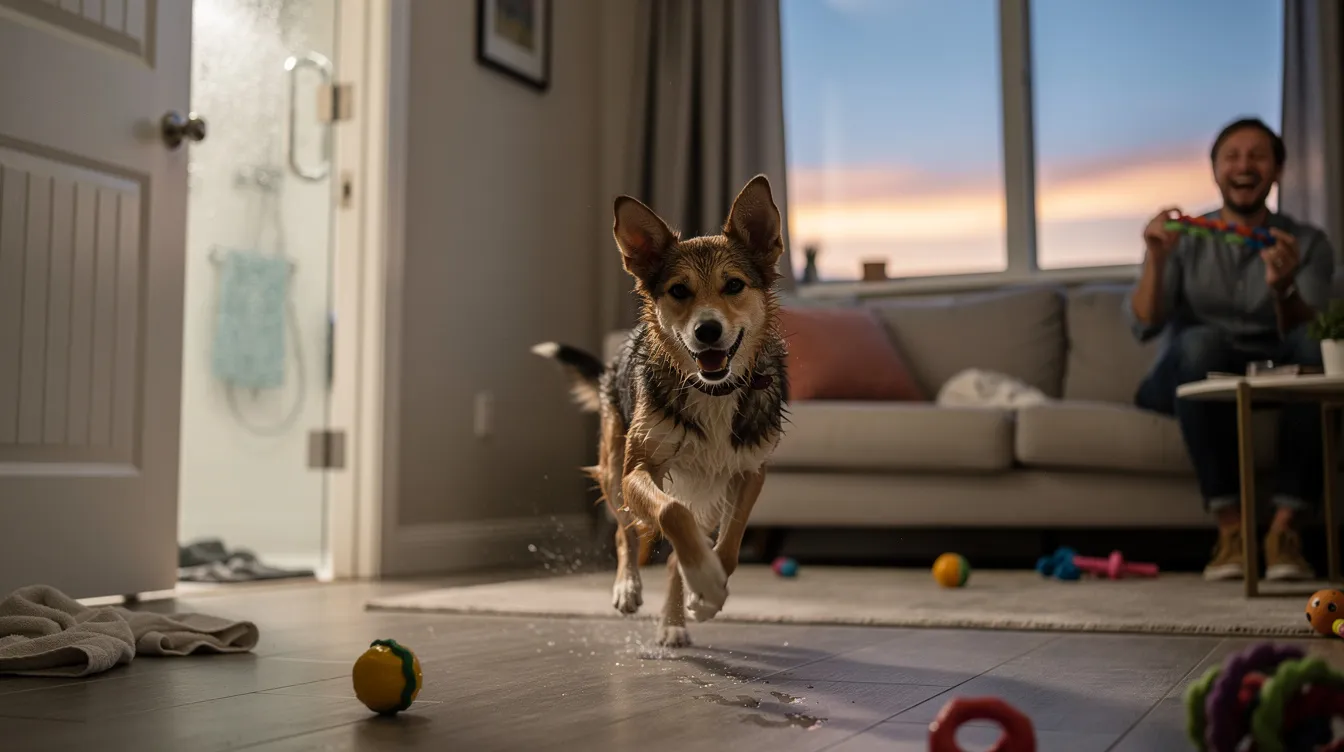
Dogs may get zoomies after a bath to release stress-the combination of sensory overload from wet fur, unfamiliar shampoo smells, and physical restraint creates a perfect storm. Post-bath zoomies are among the most commonly reported episodes by many dog owners.
Age and Developmental Factors
Puppies are more prone to getting zoomies than older dogs. Puppies are more prone to zoomies due to high energy levels, less developed impulse control, higher baseline arousal, and less experience managing their emotional states. Puppy zoomies can occur multiple times daily, especially in puppies in their first six months. The neurological explanation is straightforward: younger dogs are still developing the prefrontal neural circuits that govern inhibition and arousal regulation, making their FRAPs more intense and less predictable.
As dogs mature, zoomie episodes typically become less frequent, shorter in duration, and more self-regulated. Many older dogs may only zoom in response to strong triggers-a particularly exciting homecoming or the aftermath of bath time. Senior dogs or those with limited mobility might exhibit more restrained versions, and for these dogs, environmental safety becomes especially important due to joint and orthopedic concerns.
This developmental trajectory connects directly to understanding when and why specific triggers produce zoomies at particular moments.
Specific Triggers and Timing Patterns
Building on the biological and emotional causes, recognizing your individual dog’s trigger patterns allows you to anticipate episodes and manage them proactively.
Most Common Zoomie Trigger Situations
Many dogs follow remarkably predictable patterns. Here are the most frequently reported trigger situations:
- After baths or grooming – Post-bath zoomies are nearly universal. The combination of restraint, wet fur, and sensory discomfort creates a need for immediate physical release. Many dog owners report that bath time reliably produces the most dramatic episodes.
- After periods of rest or confinement – Waking from a nap, being released from a crate, or finishing a long car ride. The transition from stillness to freedom triggers an abrupt energy surge.
- After elimination – Going to the bathroom often produces an immediate sprint. This appears to combine physical relief with emotional release.
- Excitement events – Zoomies can be triggered by excitement, like seeing a leash before a walk, the arrival of family members, or the anticipation of play. Zoomies can occur after exciting events like playtime and often occur after high-energy activities like playtime.
- Late afternoon and evening – Many dogs exhibit what’s often called midnight madness or the “witching hour,” typically between late afternoon and early evening when household routines shift, dinner approaches, and energy levels peak after a day of relative calm.
- Environmental stimulation – Weather changes, loud noises, or sudden exposure to an open yard or dog park space after indoor confinement can prompt zooming dogs to cut loose.
Trigger Comparison and Response Patterns
| Trigger Type | Typical Timing | Underlying Cause | Recommended Response |
| Post-bath/grooming | Immediately after release | Stress relief + sensory discomfort | Provide a safe space; let it run its course |
| After confinement/rest | Upon waking or crate release | Pent-up energy rebound | Schedule brief play or walk immediately after |
| Excitement (owner arrival, leash) | Event-dependent | Emotional arousal overflow | Redirect with toys or a treat; limit overstimulation |
| Post-elimination | After bathroom trips | Physical and emotional relief | Allow outdoor space; keep area dog safe |
| Evening “witching hour” | Late afternoon–early evening | Cumulative daily energy build-up | Add evening physical exercise or training sessions |
| Environmental triggers | Variable | Sensory stimulation overload | Ensure enough space; remove hazards |
By tracking which triggers consistently produce zoomies in your dog, you can adjust routines-scheduling more exercise before predictable episodes, preparing safe spaces, or using redirection techniques during training sessions.
Common Concerns and Professional Solutions
While zoomies are typically harmless and even beneficial, there are real situations where they become problematic. Knowing the line between fun and concerning-and having practical solutions ready-makes all the difference.
Safety Management During Zoomies
The primary risk during zoomies is injury, particularly in environments not suited for a dog running at full speed. Slippery floors and hardwood floors are common culprits-dogs lose traction during sharp turns and can slide into walls, furniture, or down stairs. Create a safe space free of obstacles for zoomies. Remove fragile items from low surfaces, block off stairways, and provide enough space for your dog to run without collision risk.
Outdoors, ensure your yard is fenced, or your pup is on a secure leash. Avoid chasing your dog during zoomies to prevent accidents-pursuit often escalates the behavior and increases unpredictability. Instead, watch calmly and let the episode resolve naturally. For senior dogs or those with joint issues, consider using carpet runners or non-slip mats to reduce strain during any residual episodes.
Providing a safe space helps prevent injuries during zoomies, whether that means clearing a room, using a fenced yard, or designating a specific area around the house for zooming.
Excessive or Destructive Zoomie Behavior
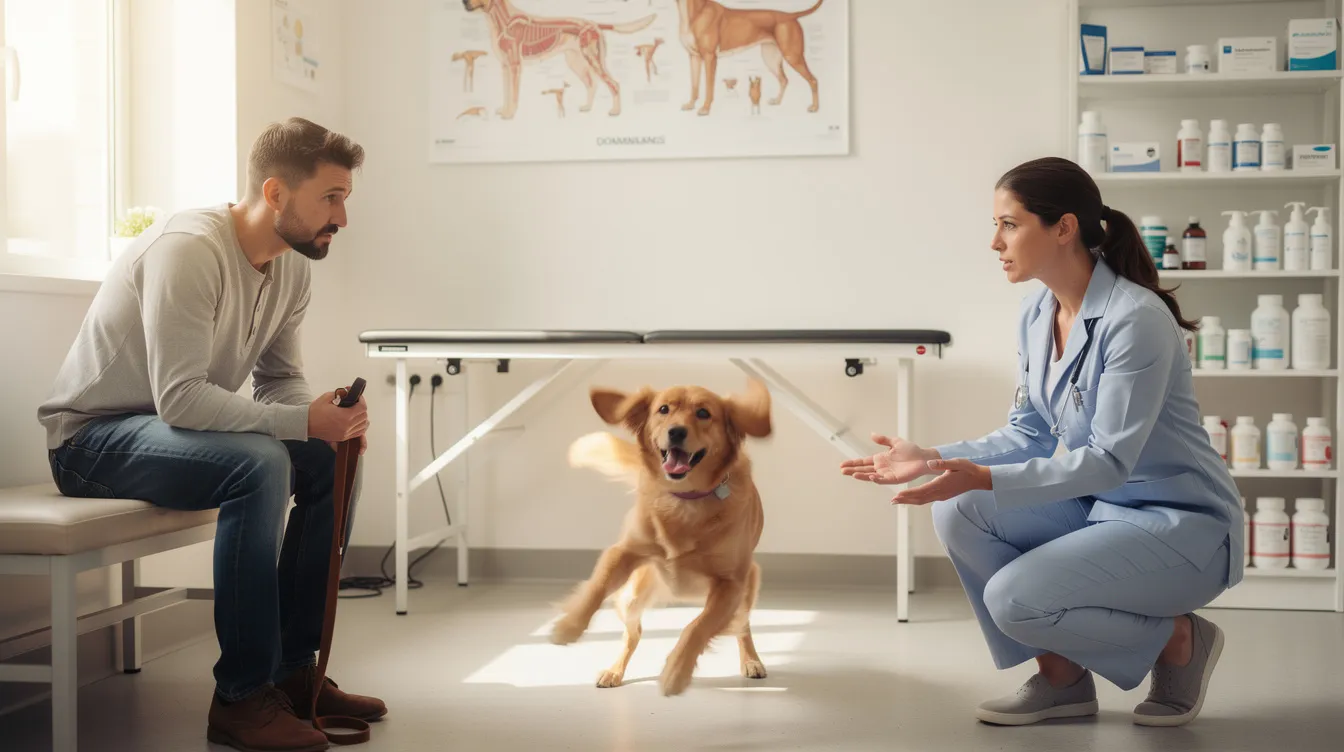
If your dog’s zoomies have crossed from entertaining to destructive-consistently knocking things over, injuring themselves, or escalating into nipping and uncontrollable behavior-it’s worth evaluating what’s driving the episodes. Frequent zoomies paired with inability to settle, aggression, or signs of anxiety may indicate that your dog needs behavior modification beyond simple exercise adjustments.
Signs that warrant a consultation with a professional dog trainer in the Greenville, SC area include:
- Zoomies that consistently include biting, snapping, or aggressive posturing
- Episodes that happen in unusual contexts (during sleep, with minimal triggers)
- Destructive behavior that poses a safety risk to the dog, other pets, or family members
- An inability to calm down after episodes, suggesting chronic hyperarousal
A free consultation with a professional trainer can help determine whether the behavior stems from inadequate stimulation, anxiety, or a deeper behavioral issue requiring structured intervention.
Training and Prevention Strategies
The most effective long-term approach combines increased physical activity with targeted mental stimulation. Regular exercise reduces the frequency of zoomies in dogs-structured daily walks, fetch sessions, and active play go a long way. But physical exercise alone isn’t always sufficient. Provide mental stimulation through puzzle toys, scent work, and obedience training to address cognitive energy that builds up alongside physical restlessness.
Redirect zoomies with toys or calming petting when you see the onset. Limit overstimulation to manage zoomies effectively-if you know your dog zooms after specific events, schedule a brief structured activity immediately afterward to channel the energy productively. Over time, impulse control exercises taught during training sessions help dogs develop better self-regulation, reducing the intensity and unpredictability of FRAPs.
For especially puppies or high-energy breeds, puppy training programs that emphasize impulse control and energy management can make a measurable difference in how your dog handles arousal throughout the day.
Conclusion and Next Steps
Dog zoomies are a natural, typically harmless expression of energy, emotion, and joy. Most dogs experience them at some point, and understanding the behavior-rather than trying to eliminate it-puts you in a much better position to manage your dog’s well-being effectively.
Here are your immediate next steps:
- Assess your dog’s exercise routine – Is your pup getting enough physical activity and mental exercise for its breed and age? Increase physical activity to reduce zoomies frequency.
- Identify your dog’s triggers – Track when zoomies happen and what precedes them. Patterns will emerge quickly.
- Create a safe environment – Clear obstacles, address slippery floors, and designate a safe space where your dog can zoom without risk.
- Monitor for warning signs – If zoomies become excessively frequent, destructive, or accompanied by anxiety, seek professional guidance.
- Invest in training – Structured obedience and impulse control training provides long-term benefits for managing high-energy behavior.
If your dog’s zoomies have become unmanageable or you’re working with a high-energy breed that needs more structured guidance, exploring behavior modification programs or therapy dog preparation can provide the framework your dog needs to channel that energy productively.
Additional Resources
For Greenville, SC dog owners looking for hands-on support, Off Leash K9 Training offers free consultations to assess your dog’s behavior and recommend appropriate training programs. Whether you’re dealing with puppy zoomies, reactive behavior at the dog park, or an adult dog that needs more exercise and structure, their training packages are designed to address the full spectrum of energy management and obedience challenges.
To track your dog’s zoomie patterns, keep a simple log noting the time of day, preceding event, duration, and your dog’s body language during and after each episode. Over two to three weeks, this data will reveal clear patterns that inform both your management strategy and any conversations with a professional trainer.
Did you find this article helpful? Understanding why dogs get the zoomies is just one piece of building a stronger relationship with your dog-consistent training, adequate physical and mental stimulation, and a safe home environment work together to keep your furry friends healthy, balanced, and yes, still occasionally zooming with pure joy.
