

Introduction
The puppy socialization window, commonly described as beginning around 3 weeks and extending through approximately 12 to 14 weeks of age, is one of the most influential periods for shaping adult temperament, confidence, and behavioral stability. During these weeks, puppies are especially receptive to learning about people, animals, environments, and sounds. Genetics, prenatal development, health, later experiences, and training also influence adult behavior, but incomplete or negative early socialization can increase the risk of fear, avoidance, and reactivity that may require more time and support to address later.
This article covers the development behind the socialization window, explains how puppies’ responses can change as they mature, provides evidence-based strategies for safe and effective puppy socialization, and addresses common challenges Greenville-area dog owners face, particularly the tension between vaccination timelines and early socialization. Whether you’ve just brought home a new puppy, are preparing for a litter, or want to understand why your adult dog struggles with certain situations, this content will give you the knowledge to act during the weeks that matter most.
The puppy socialization window is generally described as beginning around 3 weeks and continuing through approximately 12 to 14 weeks, although the timing varies among puppies and sources. Safe, positive socialization should begin during this period and continue through 16 weeks, adolescence, and adulthood to help maintain confidence and adaptability.
After reading this, you will understand:
- The approximate timeline of the socialization window and how puppies’ responses change
- How to support puppies as their receptivity and caution levels develop
- Safe socialization strategies that work before the vaccination series is complete
- How to identify and respond to fear signals that indicate overwhelm
- When and why to seek professional puppy training help
Understanding the Puppy Socialization Window
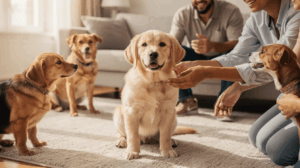
The socialization window is a sensitive developmental period during which puppies form important impressions about their world. It is not simply a training phase owners choose to implement. It unfolds as the puppy develops, whether or not planned socialization occurs. Puppies given safe, varied, and positive experiences during this period may develop stronger coping and social skills, while insufficient or negative experiences can increase the risk of fear and avoidance later.
During early development, puppies are especially receptive to learning about social relationships, environmental features, and sensory experiences. As puppies mature, avoidance of unfamiliar people, objects, and environments can increase, making careful early exposure especially valuable. Learning does not stop when the sensitive period ends, but introducing unfamiliar experiences may require more gradual conditioning and repetition later.
The connection between early experience and adult behavior is well documented. The landmark 1961 study by Freedman, King, and Elliot found that puppies first exposed to people at approximately 14 weeks showed greater avoidance and more difficulty forming social responses than puppies exposed earlier. The study helped establish the importance of early human contact, although breed, genetics, health, environment, and later experiences also influence individual outcomes.
Why This Window Exists
From an evolutionary standpoint, early social development helps young animals learn which people, animals, environments, and experiences are familiar or potentially threatening. Puppies need opportunities to gather this information while they are dependent on their mother and caregivers and before they begin exploring the broader environment more independently.
The sensitive period begins around 3 weeks of age as puppies’ eyes and ears open, mobility improves, and interaction with their environment increases. During the following weeks, puppies generally become more capable of exploring and forming social attachments. Caution toward unfamiliar stimuli tends to increase as puppies mature, but the timing varies by breed, development, temperament, and previous experience. The transition is gradual rather than a fixed neurological switch.
Puppies generally become more cautious as they mature, but the timing and intensity vary among individuals. Early positive experiences provide an important advantage, yet dogs remain capable of learning throughout life. Later training, desensitization, and carefully managed positive experiences can still produce meaningful improvement, although progress may require more time.
Consequences of Missed Socialization
Dogs that receive insufficient socialization during this sensitive period may face behavioral and emotional challenges. Possible outcomes include fearfulness around unfamiliar situations, noise sensitivity, veterinary fear, avoidance of unfamiliar people, or discomfort around other dogs. Early socialization can help reduce the risk of fear-related behavior, but genetics, health, pain, trauma, and later experiences also influence whether a dog develops anxiety, reactivity, or aggression.
Insufficiently socialized dogs may struggle with unfamiliar environments, changes in routine, handling, or obedience around distractions. Some may display avoidance, leash reactivity, or other fear-related behavior, although genetics, health, pain, previous learning, and later experiences can also contribute. Addressing these concerns may require veterinary assessment, structured behavior modification, desensitization, management, and professional training based on the individual dog’s needs.
Behavior problems are an important contributor to shelter relinquishment and can weaken the relationship between dogs and their owners. Missed socialization opportunities may contribute to persistent behavior concerns that affect the dog’s welfare and the owner-dog relationship, making early, carefully managed socialization an important part of responsible puppy raising.
Developmental Changes Within the Socialization Window
The socialization period is not uniform. Puppies’ receptivity, emotional responses, and learning capacity change as they mature. These changes do not follow an exact schedule for every puppy, but understanding the general progression allows breeders, puppy raisers, and owners to match each experience to what the puppy can comfortably process.
Early Breeder-Led Socialization From 3 to 7 Weeks
This is an important period of early exploration. Puppies become increasingly able to see, hear, move, play, and interact with their surroundings, although their sensory and motor abilities continue developing throughout these weeks. Many puppies approach unfamiliar stimuli readily, but fear and recovery responses vary. Introductions should remain brief, gentle, and appropriate for each puppy’s developmental stage.
During these weeks, puppies should generally remain with their mother and littermates. Interactions with the dam and siblings contribute to canine communication, play skills, and bite inhibition. For breeders and puppy raisers, frequent, brief, and positive handling during this phase can also help build familiarity and trust with people.
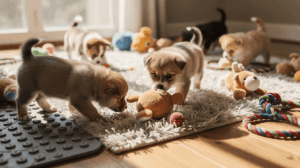
Mild, developmentally appropriate exposure may include varied surfaces such as carpet, tile, and grass; ordinary household sounds; different textures; safe toys; and brief handling by different people. These experiences may help puppies recover from manageable challenges and provide a foundation for continued socialization.
Socialization During the Transition to a New Home From 7 to 11 Weeks
This is an important phase for family integration and controlled exposure to the broader world. Puppies often transition to their new homes around 8 weeks, subject to their health, development, breeder practices, and applicable laws. At this age, novelty may trigger curiosity, caution, or a startle response, and the puppy’s reaction depends partly on how the experience is introduced.
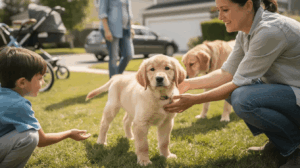
This is an appropriate time to introduce your puppy to a manageable variety of people, animals, environments, and everyday experiences. Introductions may include adults, supervised children, people with different appearances, and people using mobility aids or carrying common objects. Focus on the quality of each experience rather than reaching a fixed number of people. Carefully managed interaction with healthy, appropriately vaccinated dogs can also support social development when your veterinarian considers it safe.
Every introduction should be managed to support a positive or neutral association by using food, play, calm praise, and enough distance from the stimulus. Reward-based training methods are appropriate for puppy training at this stage and beyond. If the puppy shows stress signals, reduce the intensity or increase the distance immediately. Socialization is about helping the puppy feel safe, not simply exposing it to as many stimuli as possible.
Continued Socialization as Caution Increases From 11 to 14 Weeks
As puppies mature, many become more cautious around unfamiliar experiences. A temporary increase in fearfulness is often observed around 8 to 10 weeks, although its timing and intensity vary among puppies. During any period of increased caution, introductions should remain gradual, positive, and easy enough for the puppy to process without being forced.
Puppies remain receptive to positive experiences throughout this phase. Consistent, manageable exposure can continue building confidence, but overwhelming experiences should be avoided at every age. Puppies may also begin showing more independence or testing familiar boundaries, making calm guidance, clear routines, and consistent reinforcement important.
Maintaining positive exposure remains valuable. Greenville’s Puppy Consultation program offers private, one-on-one sessions covering intro-level obedience, potty training, crate training, and socialization for puppies under 5 months old. Because sessions are private, owners should not assume the program includes direct interaction with groups of unfamiliar puppies — confirm exactly what’s included with your trainer before enrolling.
Practical Implementation of Puppy Socialization
Safe, systematic exposure is the foundation of proper socialization. The goal is to build confidence through positive experiences at the puppy’s pace. Never force encounters or flood a puppy with intense stimuli. Monitor body language and adjust each experience when the puppy shows discomfort.
Essential Socialization Experiences
Effective puppy socializing follows a deliberate process that covers multiple categories of exposure:
People: Introduce your puppy to people of different ages, appearances, and activity levels. These may include supervised children, older adults, people in uniforms, and people using mobility aids. Positive experiences with different people can reduce the risk of later fearfulness.
Animals: Arrange supervised interactions with healthy dogs whose temperament and vaccination status are known. Introductions to cats or other animals should be carefully managed and appropriate for both animals. Avoid unknown dogs and uncontrolled interactions.
Environments: Expose your puppy to varied surfaces such as grass, gravel, tile, and stable metal surfaces. Include car rides and calm indoor or outdoor environments with different activity levels. Avoid contaminated or high-risk public ground until your veterinarian considers it safe.
Sounds: Gradually introduce household appliances, traffic noise, music, and recordings of storms or fireworks. Begin at a low intensity and increase only when the puppy remains relaxed.
Handling: Practice gentle handling of the paws, ears, mouth, collar, and body. Help the puppy become comfortable with the types of nonpainful handling it may experience during grooming and veterinary examinations.
Use food, play, praise, and appropriate distance to support positive associations. Progress from low-intensity experiences to more challenging ones while watching the puppy’s body language. Early positive exposure can support confidence, but experiences should always remain appropriate for the individual puppy.
Vaccination Safety Protocols
One of the most common concerns is how to socialize a puppy while its initial vaccination series is still underway. WSAVA vaccination guidelines recommend repeating core puppy vaccinations until at least 16 weeks of age, with later doses sometimes recommended in higher-risk situations. Because the main socialization period begins earlier, owners should work with their veterinarian to balance behavioral development with the puppy’s vaccination status and local infectious-disease risk.
The American Veterinary Society of Animal Behavior supports safe socialization before the vaccination series is complete. One observational study of vaccinated puppies attending socialization classes found that they were at no greater observed risk of canine parvovirus infection than vaccinated puppies that did not attend. This finding supports carefully controlled socialization, but owners should still follow veterinary guidance, maintain vaccination and deworming schedules, and avoid high-risk environments.
Practical protocols include:
- Consult your veterinarian before attending group settings
- If attending a suitable puppy class, confirm its vaccination, deworming, health, cleaning, and disease-prevention requirements
- Arrange playdates with healthy, appropriately vaccinated dogs in private, clean environments
- Avoid dog parks, pet-store floors, and high-traffic areas used by dogs of unknown health or vaccination status
- Keep your puppy current on all veterinarian-recommended vaccinations and parasite prevention
- Adjust the socialization plan based on local parvovirus risk and the puppy’s individual health
Puppies can receive carefully managed socialization before completing their initial vaccination series. The key is controlling the environment, avoiding unnecessary disease exposure, and following veterinary guidance.
Professional Puppy Training Integration
Well-managed group puppy classes can provide structured exposure to people, puppies, and new experiences. In general, AVSAB states that puppies may begin suitable classes around 7 to 8 weeks after receiving at least one set of vaccines at least seven days before class and an initial deworming. Requirements vary by provider, so owners should confirm class policies and consult their veterinarian before attending.
Professional trainers can help owners identify puppy stress signals, adjust exposure intensity, and develop gradual plans based on the puppy’s temperament, previous experiences, and comfort level. One study involving guide-dog puppies found that puppies receiving an enhanced, standardized socialization program from birth through 6 weeks of age later received better handler-reported scores for general anxiety, body sensitivity, distraction, and separation-related behavior at 8 months. Because the study involved a specific population and breeder-managed program, the results do not prove that every puppy class will produce the same outcome.
Greenville’s Puppy Consultation is a private, positive-reinforcement program built for puppies under 5 months old, covering intro-level obedience training, potty training, crate training, and socialization. Because sessions are private, owners should not assume the program includes direct interaction with groups of puppies or unfamiliar dogs. The trainer can instead help owners plan safe, age-appropriate exposure based on the puppy’s comfort and training needs.
For puppies adopted later in the sensitive period, professional support may help owners use the remaining time appropriately and create a continued socialization plan for adolescence and adulthood. Review the current Greenville dog training plans and pricing or request a free consultation to determine whether the Puppy Consultation program fits your puppy’s age, behavior, and training needs.
Common Challenges and Solutions
Even well-intentioned puppy owners encounter obstacles during the socialization window. Here are some of the most common challenges Greenville puppy owners face, along with practical solutions.
Vaccination Timeline Conflicts
The initial core vaccination series generally continues until at least 16 weeks, while the main socialization period begins much earlier. The Merck Veterinary Manual notes that insufficient exposure during the socialization period increases the risk of fearful adult behavior. AAHA guidance also supports carefully managed social exposure before the vaccination series is complete when sick animals are excluded and appropriate hygiene is maintained.
Solution: Work with your veterinarian to identify safe opportunities based on your puppy’s health, vaccination status, and local disease risk. If selecting a group class, confirm its health and sanitation requirements. Private homes, clean indoor areas, car-based observation, and interaction with known healthy dogs may provide controlled opportunities. Avoid dog parks and high-traffic areas used by unknown dogs until your veterinarian considers them appropriate.
Puppy Showing Fear or Overwhelm
Watching body language helps prevent overwhelming experiences. Possible stress signals include cowering, lip licking, repeated yawning, freezing, a tucked tail, turning away, or attempting to retreat. These signals must be interpreted in context, but they may indicate that the experience is too intense.
Solution: Reduce the intensity immediately. Move farther from the stimulus, lower the volume, or remove some of the new elements. Pair manageable exposure with high-value treats or play to support a more positive association. Let the puppy observe or approach at its own pace and never force an interaction. If fearful behavior persists, escalates, or appears suddenly, consult your veterinarian or a qualified behavior professional. Greenville owners may also request a free consultation to discuss appropriate puppy training options.
Limited Exposure Opportunities
Greenville’s mix of suburban and semi-rural environments offers both advantages and constraints. Hot, humid South Carolina summers can limit outdoor time, and not every neighborhood provides convenient access to varied stimuli.
Solution: Use car rides through different neighborhoods to introduce varied sights and sounds. Drive-throughs, car-based observation, and public areas where the puppy can remain in your arms, in a carrier, or on a clean barrier can provide controlled people-watching. Before visiting pet-friendly stores or allowing your puppy onto public ground, ask your veterinarian about local parvovirus risk.
Recorded sounds can provide controlled indoor exposure when played at a low volume. Small gatherings with friends and family can introduce different people without overwhelming the puppy. During thunderstorms, provide a safe resting area and avoid forcing the puppy to remain close to frightening sounds.
Inconsistent Family Approach
When family members handle socialization differently, such as one person pushing the puppy toward scary objects while another avoids all unfamiliar experiences, the puppy receives inconsistent guidance that can undermine the process.
Solution: Educate all household members on the fundamentals. Do not force the puppy into frightening situations. Use treats, play, distance, and calm praise consistently. Let the puppy move at a manageable pace and teach everyone to recognize possible stress signals. Family training sessions can also help caregivers practice the same handling techniques and routines.
Conclusion and Next Steps
The early socialization period, commonly placed between approximately 3 and 12 to 14 weeks, provides an especially valuable opportunity to help puppies develop positive associations. Early experience matters, but it does not determine every behavioral outcome. Dogs that received limited early socialization can still build confidence through patient training, management, veterinary support, and carefully controlled positive experiences.
Positive exposure during these weeks can support social skills, emotional resilience, and the ability to navigate unfamiliar environments. Socialization should continue throughout the dog’s life, with experiences adjusted to the dog’s age, health, history, and comfort level.
Take these steps now:
- Assess your puppy’s age and socialization history: Determine where your puppy currently falls in its development and which experiences have already occurred.
- Create a structured exposure plan: Include people, animals, environments, sounds, surfaces, and gentle handling without relying on fixed exposure quotas.
- Schedule your puppy’s veterinary visit: Confirm vaccination timing, parasite prevention, health status, and safe socialization strategies for your area.
- Explore an appropriate puppy training program: Greenville’s Puppy Consultation can provide age-appropriate guidance for puppies under 5 months. Confirm exactly what’s included before enrolling.
- Watch your puppy’s body language: Adjust every encounter to match the puppy’s comfort level and avoid forced interaction.
For Greenville-area owners wanting professional support, the Puppy Consultation program is built specifically for puppies under 5 months old. Review the current pricing and program details or request a free consultation to determine whether it fits your puppy’s age and needs.
You can also view examples of documented dog training results.
Related topics worth exploring as your puppy grows include building basic obedience foundations during adolescence, responding to periods of increased caution, and supporting behavioral development through the first two years of your dog’s life.
Frequently Asked Questions
When is the best time to start socializing my puppy?
The sensitive socialization period generally begins around 3 weeks of age while the puppy is still with its breeder or caregiver and continues through approximately 12 to 14 weeks. Safe, positive socialization should continue through 16 weeks, adolescence, and adulthood.
Is it safe to socialize my puppy before all vaccinations are complete?
Yes, carefully managed socialization can begin before the initial vaccination series is complete. AVSAB states that suitable puppy classes may begin around 7 to 8 weeks when a puppy has received at least one vaccine set at least seven days earlier and an initial deworming. Ask your veterinarian to recommend safe activities based on your puppy’s health and local disease risk.
What types of social experiences should I include during the socialization window?
Introduce your puppy gradually to different people, healthy animals, environments, surfaces, sounds, car rides, and gentle handling. Positive or neutral experiences with these stimuli can help build confidence and reduce the risk of fear-related behavior. Quality and the puppy’s response matter more than reaching a fixed number of exposures.
How can I tell if my puppy is overwhelmed during socialization?
Watch for possible stress signals such as cowering, repeated lip licking, yawning, freezing, a tucked tail, turning away, or trying to retreat. If these appear, reduce the intensity or increase the distance from the stimulus. Use food, play, and calm praise to support positive associations, and never force interaction.
What if I missed the socialization window with my puppy?
Early socialization is valuable, but dogs continue learning throughout life. Patient training, gradual desensitization, environmental management, and professional guidance may help an older puppy or adult dog become more comfortable. Progress may be slower, and outcomes vary based on the dog’s genetics, health, history, and existing behavior.
How do puppy socialization classes help during this period?
Well-managed group puppy classes can provide controlled exposure to puppies, people, and new experiences under professional supervision. Greenville’s Puppy Consultation is a private program, however, so owners should confirm which socialization experiences are included and continue veterinarian-approved exposure outside the lessons.
