
Introduction
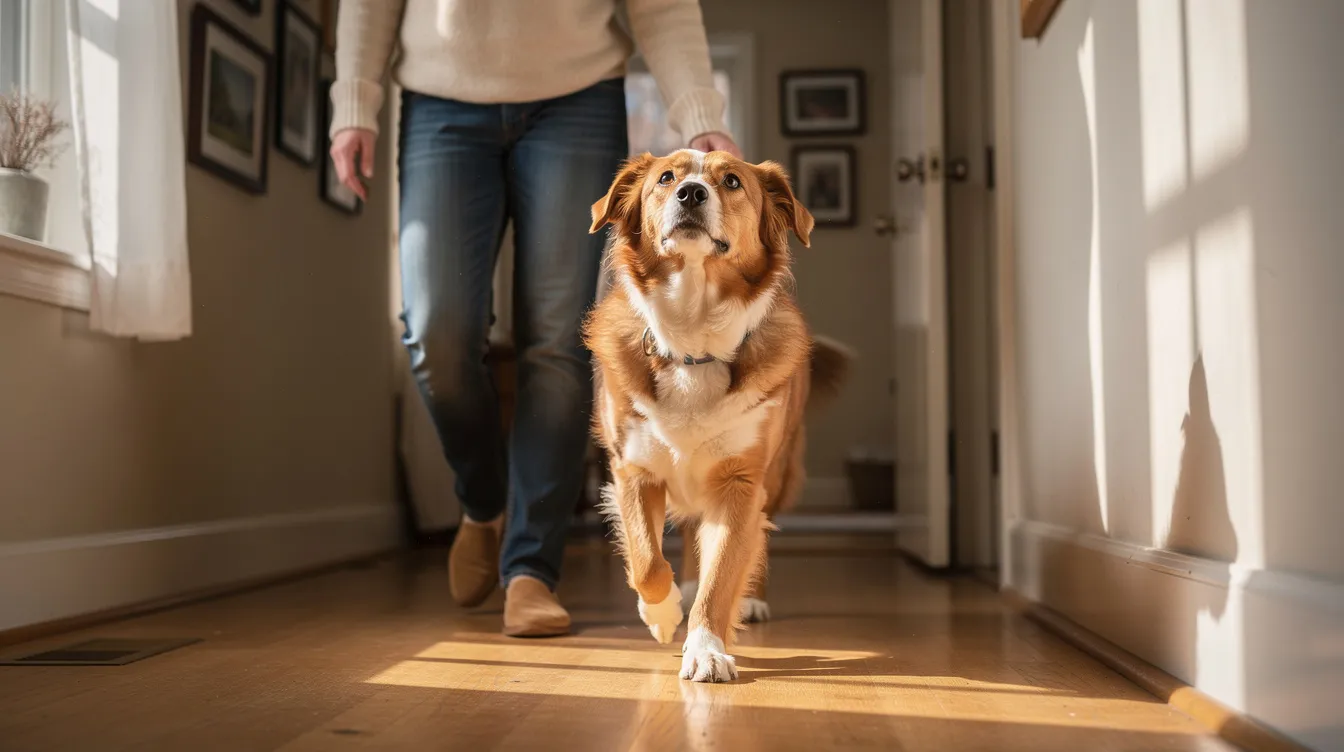
Dogs follow their owners everywhere because of a combination of pack instincts, genuine affection, learned reinforcement, anxiety, and anticipation of rewarding activities like walks and meals. If your pup trails you from the kitchen to the bathroom door and back again, you’re far from alone-this “Velcro dog” behavior is one of the most common concerns among dog owners in Greenville, Spartanburg, and surrounding Upstate South Carolina communities.
This article covers the full spectrum of canine following behavior: what’s perfectly normal, what patterns should make you concerned, and what training solutions can restore a healthy balance in your household. Whether you’re dealing with a puppy that won’t let you out of sight, an older dog that suddenly started shadowing you around the house, or a breed that was born to be your constant companion, you’ll find actionable guidance here. We won’t cover aggression-related following or resource guarding-those are distinct behavioral categories that require specialized intervention.
In most cases, dogs follow me everywhere because humans represent safety, food, emotional support, and social connection. Dogs evolved from wolves, which are pack animals, and domestication redirected that deep social drive toward human family members. Your dog’s behavior is usually a sign of a healthy bond-but when following becomes constant, frantic, or accompanied by signs of stress, it may point to separation anxiety, a health issue, or insufficient mental stimulation.
By reading this article, you’ll gain:
- A clear understanding of the root causes and reasons dogs follow their owners
- The ability to distinguish normal attachment from problematic clinginess
- Knowledge of breed-specific tendencies that influence following intensity
- Practical training solutions you can implement immediately
- Guidance on when professional help from a trainer or veterinarian is warranted
Understanding Canine Following Behavior
Before diving into specific motivations, it helps to understand the foundational instincts and learning patterns that drive your dog to stick close. Three interconnected forces shape this behavior: inherited social instincts, reinforcement from daily interactions, and your dog’s remarkable ability to read and anticipate your actions.
Pack Instincts and Social Bonding
Dogs are social animals that crave companionship-a trait inherited directly from their wolf ancestors. In wolf packs, staying near the group ensures access to food, protection from threats, and coordinated movement across territory. When humans domesticated dogs thousands of years ago, that pack mentality didn’t disappear; it simply transferred to the human family unit. Your dog views you as the pack leader-or more accurately, as their secure base.
Research confirms this secure-base effect is measurable. In studies where dogs and owners moved freely in a room, dogs spent roughly 80% of their time in close proximity to their person and adjusted their behavior to match the owner’s within about 3.4 seconds. Domesticated dogs maintain social bonds with their owners the same way a young child gravitates toward a parent in an unfamiliar environment: proximity provides comfort and safety in stressful situations.
Learned Behavior and Reinforcement Patterns
Beyond instinct, following becomes a deeply ingrained habit through everyday reinforcement. Dogs learn that following leads to rewards like treats, meals, walks, petting, and verbal praise. Even small, unintentional responses-glancing back at your dog, talking to them as you move through the house, dropping a piece of food in the kitchen-reinforce the pattern.
Daily routines amplify this effect. Your pup quickly connects specific sequences (you picking up keys, putting on shoes, walking toward the front door) with outcomes they value. Over time, following behavior becomes automatic. The dog doesn’t need a reward every time; the association is strong enough that shadowing feels like the natural default. This is why many dogs follow their primary caregiver more than other family members-that person is the most reliable source of positive outcomes.
Communication and Anticipation
Dogs are remarkably skilled at reading human body language. Research on attention cues found that dogs obeyed commands more reliably when their owner was facing them, making eye contact, and displaying attentive body posture. Your dog monitors your every movement not just out of affection but as a form of communication-checking in, gauging your mood, and anticipating what comes next.
Following also serves as your dog’s way of “asking” for something. Dogs may follow to monitor their owner’s actions for excitement, whether that’s the rattle of a treat bag or the opening of a closet where the leash is stored. This anticipatory behavior is a normal, healthy expression of canine intelligence and social awareness-and it sets the stage for understanding the specific reasons your dog shadows you.
Primary Reasons Your Dog Follows You Everywhere
Now that the foundational concepts are clear, let’s break down the specific motivations. Most dogs experience more than one of these simultaneously, which is why the behavior can feel so persistent.
Love and Attachment
Dogs have a deep emotional bond with their owners, and following is one of the most direct expressions of that connection. Dogs release oxytocin-the same bonding hormone that strengthens parent-child relationships in humans-when they interact with loved ones through eye contact, physical touch, and proximity. A 2024 study comparing Akitas and Labrador Retrievers during attachment tests found that Labradors displayed more overt attachment behavior, while Akitas were more passive, yet both breeds formed genuine bonds with their owners. The study also found higher cortisol in breeds genetically closer to wolves and a stronger oxytocin correlation with attachment behavior in Labradors.
For your dog, following you from room to room may simply be the canine equivalent of wanting to be near their favorite person. Normal attachment looks like a dog that rests nearby, checks in periodically, and settles comfortably when you’re present. Excessive attachment-where the dog cannot relax or function independently-crosses into territory that warrants attention.
Attention-Seeking and Social Needs
Dogs follow owners to seek attention and companionship, and this drive intensifies when a dog lacks sufficient mental stimulation. Boredom can lead dogs to follow their owners around simply because there’s nothing else engaging to do. If your dog’s environment offers few toys, limited play opportunities, and minimal interaction, following becomes the primary source of stimulation.
Research comparing pet dogs and working detection dogs illustrates this dynamic well. When presented with an unsolvable task, pet dogs quickly looked to their owners for guidance, while detection dogs persisted independently. This suggests that many pet dogs develop a heightened reliance on owner interaction, making dog attention a core need rather than a bonus. Dogs may follow out of curiosity or fear of missing out on whatever you’re doing.
Anxiety and Insecurity
Separation anxiety is a common problem in dogs, and excessive following is often its earliest and most visible sign. Dogs with separation anxiety panic when left alone, displaying signs like panting, pacing, drooling, barking, and destructive behavior. According to a large-scale C-BARQ analysis, approximately 9.3% of U.S. pet dogs show moderate to severe separation-related behaviors-a significant number that underscores how widespread this issue is.
Anxious dogs follow because proximity to their owner is the only thing that reduces their distress. If your dog suddenly becomes clingy-especially after a move, a schedule change, or a traumatic event-anxiety is a likely driver. Signs that distinguish anxious following from normal attachment include an inability to settle even when you’re home, destructive behavior when left alone, and visible stress when you simply walk to another room. Separation anxiety can lead to long-term health issues if untreated, including chronic stress, weight changes, and gastrointestinal problems.
Anticipation of Activities
Following behavior triggered by expectations of walks, feeding, or play is among the most benign reasons dogs follow their owners. Dogs may follow their owners to monitor their actions and routines, interpreting subtle preparation cues that humans don’t even realize they’re giving off. Reaching for your coat at 6 PM, filling a water bottle, or glancing at the leash rack-these become reliable predictors of exciting outcomes.
Seasonal or situational changes often amplify anticipatory following. During holidays when family members are home more, or after a vacation where daily routines were disrupted, dogs pick up on the increased activity and shadow their owners more closely. This type of following typically resolves once the routine stabilizes.
Health and Age Considerations
When a dog suddenly starts following you more than usual, a health issue should be on your radar. Senior dogs may develop Canine Cognitive Dysfunction (CCD), which causes disorientation, increased anxiety, and loss of previously learned skills. Older dogs with CCD follow their owners as a coping mechanism-staying close provides a sense of security when their cognitive map of the world becomes unreliable.
Pain from conditions like arthritis or dental disease, sensory loss from declining vision or hearing, and metabolic disorders can all make dogs more dependent on their owner’s physical presence. Dogs experience heightened vulnerability during illness, and post-illness attachment shifts are well-documented in veterinary literature. If your dog’s behavior changed suddenly, consult a veterinarian to rule out underlying medical causes-especially for older dogs, who benefit from checkups twice per year.
Breed-Specific Following Tendencies and Training Considerations
Genetics play a substantial role in how intensely your dog follows you. Understanding your dog’s breed background helps set realistic expectations and guides your training approach.
Velcro Dog Breeds and Companion Dogs
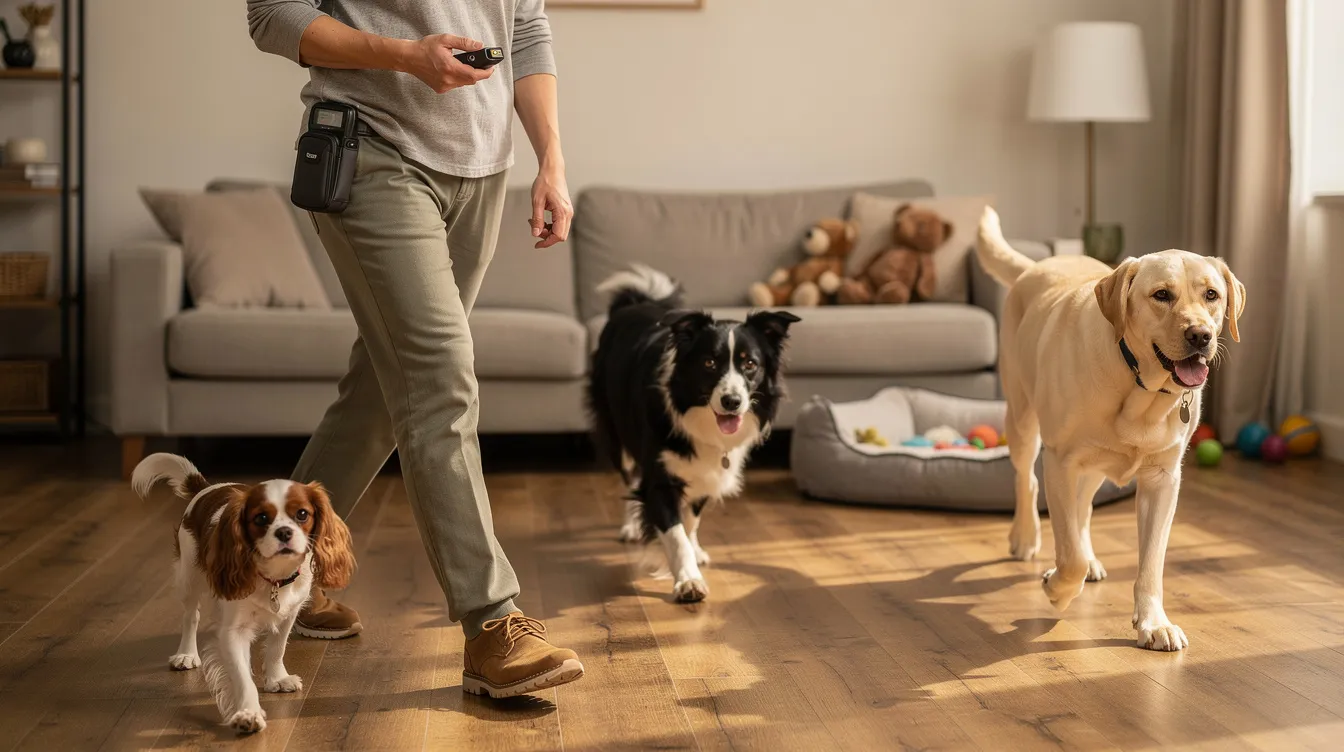
Certain breeds are genetically predisposed to be clingy companions. Velcro dog breeds like Labradors, Golden Retrievers, Chihuahuas, and Maltese were selectively bred for human companionship over centuries. C-BARQ behavioral analyses confirm that these modern companion breeds consistently score higher on attachment and attention-seeking metrics than ancient or spitz-type breeds.
Toy breeds in particular tend to form intense bonds with a single person, often becoming a constant shadow. If you own one of these breeds, some level of following is hardwired-training won’t eliminate it, but it can channel it into manageable patterns. Strong reward motivation and consistent boundaries make a big difference with naturally clingy canine companions.
Working and Herding Breeds
Border Collies, German Shepherds, Australian Shepherds, and other herding and working dog breeds follow their owners for fundamentally different reasons. Their following is often job-oriented-they’re monitoring you for cues, awaiting instructions, and staying ready to work. This attentiveness is a feature, not a bug, but it can become problematic in a household where the dog has no productive outlet.
Channeling a herding breed’s following instincts into structured obedience training is one of the most effective strategies. These breeds thrive when given tasks, commands, and clear expectations. Without purposeful exercise and mental engagement, their attentive following can morph into anxious hovering.
Age-Related Following Patterns
Young puppies follow as a normal developmental behavior tied to imprinting. During their first weeks and months, staying close to their mother-and later their human caregiver-ensures survival and learning. As puppies mature, growing independence is expected and healthy.
Adult dogs settle into stable following patterns largely shaped by reinforcement and environment. In most cases, adult following is moderate and predictable. Senior dogs, however, may revert to increased following as cognitive decline, sensory changes, or chronic pain create insecurity. Regular veterinary checkups are essential for older dogs to distinguish between normal aging and treatable conditions like CCD.
Following Intensity Comparison
Understanding the difference between normal and concerning following behavior helps owners assess their dog’s behavior objectively:
| Factor | Normal Following | Concerning Following |
|---|---|---|
| Duration near owner | Intermittent-dog rests nearby but explores independently | Follows constantly, cannot settle without owner in sight |
| Response to separation | Calm or mild signs; able to stay alone for short periods | Extreme panic, barking, destructive behavior when owner leaves |
| Activity level when alone | Relaxed-naps, chews toys, self-entertains | Pacing, alertness, inability to relax |
| Anxiety signs | None or mild attention-seeking | Panting, trembling, drooling, elimination, loss of appetite |
If your dog’s patterns fall consistently in the “Concerning” column, it’s time to implement structured training or seek professional guidance.
Common Challenges and Training Solutions
When following behavior crosses from endearing to disruptive, targeted training strategies can restore balance. Here’s what works for the most common scenarios dog owners in the Greenville area encounter.
Excessive Clinginess and Over-Attachment
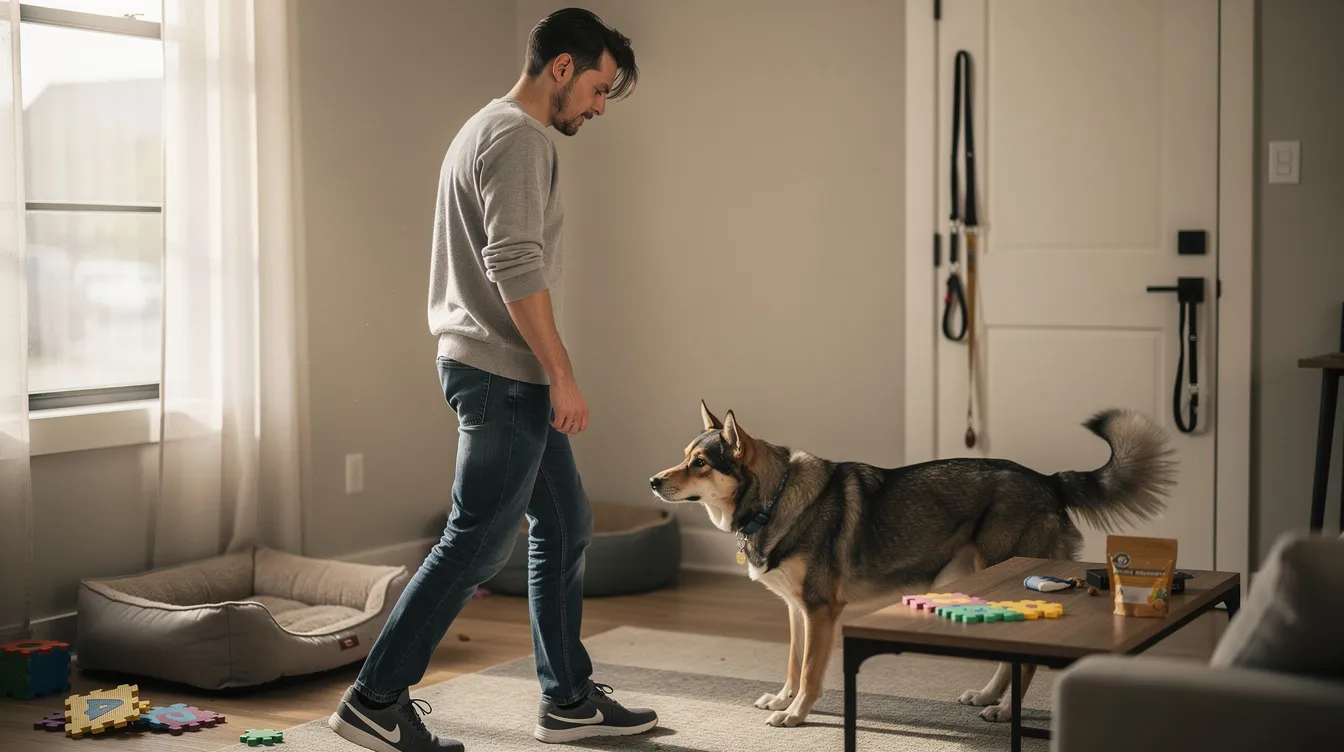
Teaching independence starts with building your dog’s confidence to be alone. Training commands like “stay” and “place” (sending your dog to a designated dog bed or mat) fosters a dog’s confidence and establishes healthy boundaries. Start with very short periods-just seconds of distance-and gradually increase duration.
Providing engaging activities reduces following behavior significantly. Food puzzles, long-lasting chews, and interactive toys give your dog a rewarding alternative to shadowing you. Structured alone time, where the dog is in a separate room with enrichment, helps them learn that being away from you isn’t a threat-it’s actually enjoyable. Ignoring following behavior (not making eye contact or speaking to the dog when they trail you) encourages dogs to be independent by removing the reinforcement loop.
For breeds that lack confidence or dogs that need comprehensive obedience foundations, professional programs like board and train options can accelerate progress dramatically.
Separation Anxiety Management
For dogs experiencing genuine separation anxiety, systematic desensitization is the gold-standard behavioral approach. The process involves leaving the dog alone for very brief durations-short enough that anxiety doesn’t activate-then gradually extending the time. Short separations with fun activities help dogs feel secure alone; for example, giving a stuffed Kong just before departure shifts the emotional meaning of your exit.
Clinical research demonstrates this approach works: after 12 weeks of behavior modification, 56% of owners reported significant improvement and 25% reported slight improvement, while untreated dogs showed no change. For severe cases, consult a veterinarian for a diagnosis of separation anxiety-medication may be recommended alongside behavioral therapy to reduce the dog’s baseline stress enough for training to take hold. Remote behavioral consultations have been shown to be as effective as in-person sessions, making professional support accessible even for owners in Greer, Mauldin, Simpsonville, and Anderson.
Safety and Household Management
A dog that’s always underfoot creates real tripping hazards, particularly in kitchens and on stairs. Training an alternative behavior, like “go to spot,” redirects the dog to a designated safe space where they can observe you without interfering. Creating these safe spaces with familiar bedding, water, and toys helps dogs view them as positive environments rather than punishment.
Crate training, when done correctly, gives dogs a secure den-like retreat. Combined with consistent daily routines-regular walk times, feeding schedules, and structured play-these management strategies reduce the impulse to follow while strengthening the overall bond between you and your dog.
Conclusion and Next Steps
Your dog follows you everywhere for reasons that range from deep evolutionary instincts and genuine love to learned habits, anxiety, and health-related changes. In most cases, following is a normal expression of the strong bonds between humans and their canine companions. But when it becomes constant, frantic, or paired with stress signs, it deserves attention.
Start with these immediate steps:
- Observe and document triggers-note when, where, and how intensely your dog follows to identify patterns
- Increase mental stimulation-add food puzzles, interactive toys, and daily exercise to reduce boredom-driven following
- Practice short separations-build your dog’s comfort with alone time gradually, pairing absences with positive experiences
- Establish consistent routines-predictable schedules reduce anticipatory anxiety
- Schedule a veterinary checkup-especially if your dog suddenly changed behavior or is a senior pet
For dog owners in Greenville, Spartanburg, Greer, Mauldin, Simpsonville, and Anderson who need professional support, structured behavior modification programs can address everything from mild clinginess to severe separation anxiety. Commonly asked questions about program structure and what to expect can be found on our FAQ page.
Related topics worth exploring include basic obedience foundations for dogs that follow people excessively and specialized anxiety management programs for pets that cannot cope with being alone.
Additional Resources
Off Leash K9 Training in Greenville offers professional behavior consultations designed to assess why your dog follows you everywhere and build a customized training plan. Our programs range from basic obedience packages to intensive board-and-train options for dogs with deeply ingrained anxiety or over-attachment patterns.
If your dog’s following behavior has you concerned-or if you simply want to build a healthier, more balanced relationship with your pup-reach out for a professional assessment. A trained behaviorist can identify whether your dog’s shadowing is normal bonding, attention-seeking, or a sign of something that needs targeted intervention, and help you take the right next steps.
