

Introduction
Puppies are born without teeth, but within just a few months they develop a full set of 42 permanent adult teeth through a predictable teething timeline that runs from birth to approximately 6–7 months of age. Understanding this puppy teething process helps pet parents navigate the chewing, mouthing, and discomfort that come with each developmental phase.
This guide covers the four distinct stages of puppy teething-from pre-teething through complete adult dentition-along with behavioral changes you can expect, stage-appropriate management strategies, and clear guidance on when to seek veterinary help. While this article addresses normal dental development and common challenges, severe dental issues, infections, or persistent pain should always be evaluated by a veterinarian.
Whether you’re a first-time new puppy owner dealing with shredded shoes or an experienced dog person looking for a structured approach to teething management, this resource is designed to give you confidence through every milestone. Many pet parents find the teething months overwhelming, but knowing what’s ahead makes the entire experience far more manageable.
The direct answer: Puppies start teething at around 12–16 weeks of age when baby teeth begin to loosen and fall out. Baby teeth start erupting around 2 to 4 weeks of age, with all 28 baby teeth present by 8 weeks old. Puppies develop 42 adult teeth after losing 28 baby teeth, and puppies typically finish teething by 6 months of age.
What you’ll gain from this article:
- The exact teething timeline broken into four clear stages with specific age markers
- How to recognize normal puppy teething symptoms versus signs that require veterinary attention
- Stage-specific management strategies to help a teething puppy and protect your home
- Guidance on when professional training support can address persistent chewing behavior
- Understanding of breed-related variations in dental development
Understanding Puppy Teething
Puppy teething is the natural process through which a puppy’s 28 temporary deciduous teeth-also called milk teeth-are gradually replaced by 42 permanent adult teeth. This transition is a fundamental part of every puppy’s development, similar in concept to how human babies lose their first teeth, though the timeline is compressed into just a few months rather than years.
This teething process directly impacts puppy behavior, household management, and training progress. Recognizing where your puppy falls on the teething timeline allows you to respond appropriately to destructive chewing, mouthing, and apparent defiance-behaviors that are often rooted in dental discomfort rather than disobedience.
The Biological Process
Deciduous teeth are the smaller, sharper set of tiny teeth that serve puppies during their first weeks of life, primarily for nursing and initial chewing as they transition to solid food. These baby teeth are temporary by design-they lack the size and durability needed for an adult dog’s jaw.
The transition happens through a process called root resorption. As adult tooth buds develop beneath the gumline, they gradually dissolve the roots of the baby teeth above them. This causes the puppy’s baby teeth to loosen and eventually fall out, making room for the larger permanent teeth to push through. The pressure of adult teeth erupting through the puppy’s gums creates the soreness, inflamed gums, and discomfort that drive increased chewing behavior during the most intense teething stages.
Why Teething Affects Behavior
When developing teeth push through gum tissue, the resulting inflammation and puppy teething pain trigger a strong instinct to chew. Puppy chewing during this phase isn’t misbehavior-it’s a natural pain relief mechanism. The pressure from gnawing on objects helps soothe sore gums and can actually assist teeth as they erupt through the surface.
This is where many pet parents run into training challenges. A teething puppy that mouths hands, destroys furniture, or seems unresponsive to correction is often simply seeking relief from discomfort. Understanding this biological drive is essential for effective puppy training during these months, because punishment-based approaches miss the root cause entirely. Redirecting chewing to appropriate outlets, rather than trying to eliminate it, produces far better results.
With this biological foundation in place, let’s break down exactly when each teething stage occurs and what to expect.
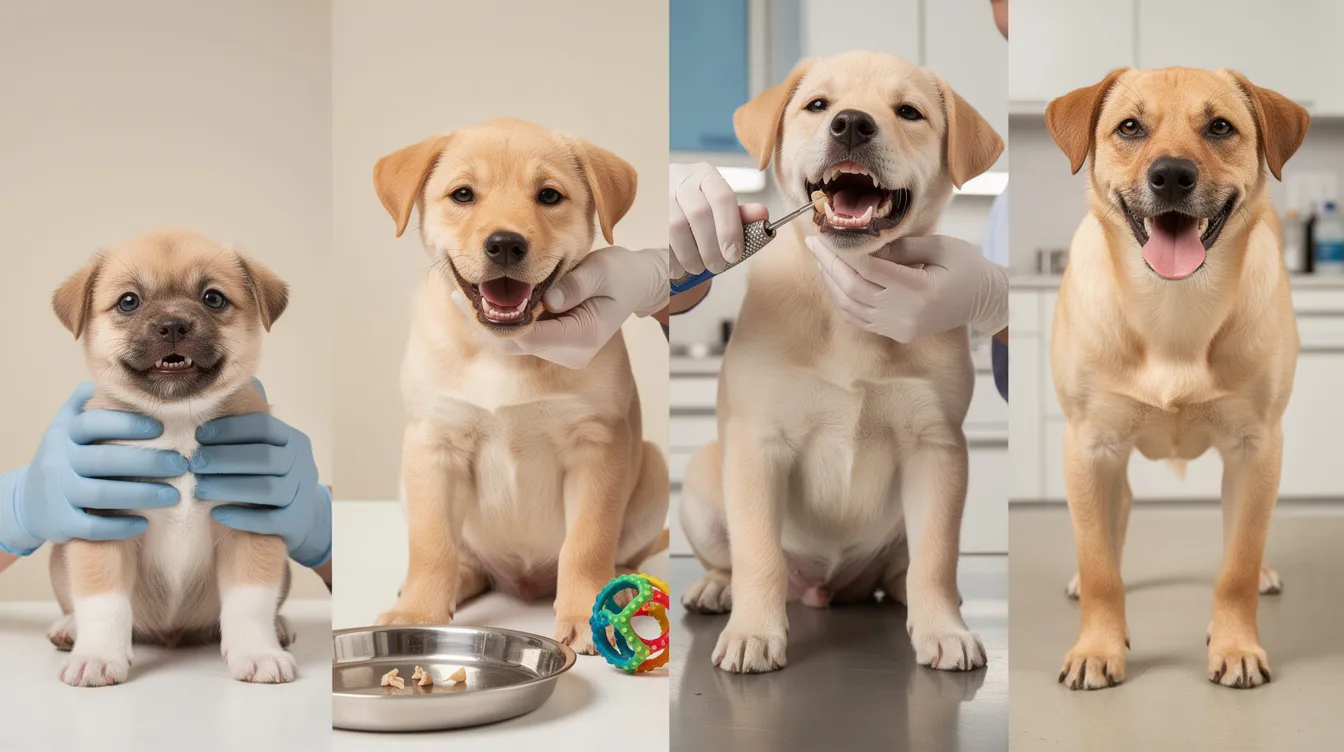
The Four-Stage Puppy Teething Timeline
The puppy teething phase follows a remarkably predictable pattern across breeds, though individual timing can vary by several weeks. Here’s what happens at each stage of your puppy’s dental development.
Stage 1: Birth to 3 Weeks (Pre-Teething)
Puppies are born without teeth. During their first two to three weeks of life, they are entirely focused on nursing, staying warm, and basic sensory development-their eyes and ears don’t even open until around three weeks. There are no teething symptoms during this stage, and no intervention is needed from owners.
What’s happening beneath the surface, however, is significant. Tooth buds are already forming in the puppy’s jaw, preparing for the rapid eruption that’s about to begin. This stage is primarily the breeder’s responsibility, focused on ensuring proper nutrition through the mother’s milk, which supports the foundational dental development to come.
Stage 2: 3 to 8 Weeks (Baby Teeth Eruption)
Baby teeth start erupting around 2 to 4 weeks of age, beginning with the front teeth-the incisors. By 3 to 4 weeks, the sharp canine teeth (fangs) start to emerge, followed by premolars over the next few weeks. Puppies have 28 baby teeth by 8 weeks old, comprising 12 incisors, 4 canines, and 12 premolars. Notably, puppies have no baby molars.
During this teething stage, puppies begin their first chewing explorations. These razor-sharp tiny teeth serve an important developmental purpose: interactions with littermates teach early bite inhibition as siblings yelp and withdraw when bitten too hard. By 5–6 weeks, many puppies start nibbling on soft solid food, and mild gum sensitivity is completely normal.
Stage 3: 3 to 6 Months (Adult Teeth Transition)
This is the most intense puppy teething phase and the period most owners find challenging. Puppies start teething at 12–16 weeks of age, when baby teeth begin to loosen and fall out. The teething process lasts about 4 months, beginning with incisors falling out around 12 weeks to 4 months and concluding as the final adult molars emerge.
The progression follows a front-to-back pattern. Adult incisors replace baby front teeth first, followed by premolars between 4 and 6 months. Permanent adult teeth replace baby teeth between 4 and 6 months of age, with canine teeth typically shifting over between 5 and 6 months. Adult molars-which have no baby tooth predecessors-begin erupting around 4 to 7 months.
Peak behavioral challenges occur during this stage. Expect significantly increased chewing, persistent mouthing and puppy biting, swollen gums, drooling, occasional bleeding gums, and sometimes decreased appetite. Puppies may occasionally swallow baby teeth safely-this is completely normal, and many puppies lose teeth without owners ever finding them. Mild bleeding can occur from lost baby teeth, which is expected. Teething can also cause bad breath due to gum inflammation in the puppy’s mouth.
Puppies can experience sore gums during teething, and this discomfort drives much of the destructive behavior that frustrates owners. This is when a structured approach to puppy training becomes most valuable.
Stage 4: 6 to 7 Months (Completion)
By approximately 6 months of age, most puppies have all or nearly all of their 42 permanent teeth in place. Puppies develop 42 adult teeth after losing 28 baby teeth-the adult set includes 12 incisors, 4 canines, 16 premolars, and 10 adult molars. Some breeds, particularly large and giant breeds, may not complete this process until 7–8 months of age.
As the final teeth settle in, behavioral stabilization follows. The intense chewing drive decreases, puppies stop teething in terms of active tooth eruption, and training becomes notably easier. This is an excellent window to establish long-term foundations in obedience and dental care routines.
Key takeaway: The 3-to-6-month window is the critical period. Understanding this helps you prepare before peak teething hits and recognize that the most challenging behaviors are temporary.
Stage-Specific Management Strategies
Knowing the teething timeline is only useful if you match your management approach to each phase. Here’s how to help a teething puppy at every stage.
Early Stage Management (Birth to 8 Weeks)
This foundational period is primarily the breeder’s domain, but owners bringing home a puppy at 8 weeks should already be prepared:
- Prepare puppy-safe spaces by removing accessible cords, shoes, and small objects that could become a choking hazard
- Introduce soft, age-appropriate chew toys as baby teeth emerge-nothing too hard that could damage developing teeth
- Begin gentle mouth handling by touching the puppy’s gums and lips to prepare for future dental care and getting teeth brushed
- Establish consistent feeding routines with quality nutrition that supports healthy dental development
Intensive Stage Management (3 to 6 Months)
This is where active intervention matters most. Teething puppies may experience increased chewing behavior, and your job is redirecting chewing rather than eliminating it:
- Implement structured redirection by offering safe chew toys immediately when inappropriate chewing begins-frozen rubber toys, chilled wet washcloths, and cold treats work especially well to soothe sore gums
- Increase exercise and mental stimulation to reduce boredom-driven destructive behavior, which compounds teething-driven chewing
- Puppy-proof your home systematically: secure electrical cords, store shoes behind closed doors, and use bitter-tasting deterrent sprays on furniture legs
- Frozen baby carrots can soothe a teething puppy’s gums and serve as a nutritious cold treat-though always supervise to prevent choking. Ice cubes and cold objects also provide temporary pain relief for the puppy’s gums
- Avoid hard bones and raw hides for teething puppies, as these can fracture developing teeth or splinter into dangerous fragments
- Inspect puppies’ mouths periodically to ensure proper tooth development-look for retained baby teeth, crooked teeth, or missing teeth
- Begin brushing with pet-safe toothpaste to establish dental care habits, even before all permanent teeth have erupted
- Consider professional puppy training consultation if persistent puppy biting or destructive chewing isn’t responding to home management
Teething Stage Comparison
| Criterion | Stage 1: Birth–3 Weeks | Stage 2: 3–8 Weeks | Stage 3: 3–6 Months | Stage 4: 6–7 Months |
|---|---|---|---|---|
| Teeth Development | No teeth visible | 28 baby teeth emerge | Adult teeth erupt, replacing baby teeth | 42 adult teeth complete |
| Behavioral Signs | Normal nursing | Mild chewing, exploration | Intense chewing, mouthing, sore gums | Stabilizing behavior |
| Management Priority | Safe environment | Appropriate chew toys | Active redirection & supervision | Maintenance & dental care |
| Training Focus | Foundation building | Basic handling | Structured bite inhibition | Advanced obedience |
| Common Symptoms | None | Mild gum sensitivity | Bleeding gums, drooling, bad breath, decreased appetite | Residual chewing, occasional retained teeth |
Use this table to identify your puppy’s current teething stage and prioritize the interventions that matter most right now. If your furry friend is between 3 and 6 months of age, you’re in the most management-intensive window-but it won’t last forever.

Common Teething Challenges and Solutions
Even with good preparation, the puppy teething phase throws curveballs. Here are the most frequent issues and how to address them.
Destructive Chewing of Furniture and Personal Items
When your teething puppy targets table legs, baseboards, or your favorite shoes, the solution isn’t punishment-it’s environmental management combined with immediate redirection. Keep several appropriate chew toys and teething toys within reach at all times. Frozen rope toys and rubber chew toys designed to soothe the puppy’s gums are particularly effective. Rotate toys regularly to maintain novelty, and praise your puppy enthusiastically when they choose the right target. Strategic placement of acceptable chewing alternatives near problem areas catches the behavior before it starts.
Excessive Mouthing and Puppy Biting
Mouthing during the teething phase is a natural process driven by discomfort-but it still needs boundaries. Use consistent bite inhibition training: when your puppy’s teeth contact skin, give a brief, high-pitched “ouch,” withdraw attention for 15–30 seconds, then re-engage. This mirrors the feedback puppies receive from littermates. Combine this with positive reinforcement for gentle mouth behavior and always have a chew toy ready to redirect onto. For puppies whose biting escalates despite consistent home training, a structured puppy training program can address the behavior comprehensively.
Retained Baby Teeth Beyond 7 Months
Retained baby teeth can occur when adult teeth emerge but the deciduous teeth fail to fall out on their own. This is particularly common with canine teeth and occurs more frequently in small breeds. When baby teeth fall out normally but a retained deciduous tooth remains alongside its permanent replacement, the result can be crowding, misalignment, and increased risk of periodontal disease. Puppies may retain baby teeth, requiring veterinary removal-typically performed during spay or neuter surgery. If your puppy still has visible baby teeth alongside adult teeth at 7 months of age, schedule a veterinary evaluation promptly.
Signs Requiring Veterinary Attention
Consult a vet if your puppy has excessive bleeding or pain during teething. While mild bleeding and discomfort are part of normal dental development, the following symptoms warrant professional evaluation: persistent refusal to eat for more than a day or two, swelling or pus around the gums, fever, excessive bleeding that doesn’t stop quickly, or adult teeth that haven’t appeared by 7–8 months of age. Puppies may experience mild pain during teething, but severe or prolonged distress is not typical and should be assessed.
Conclusion and Next Steps
The puppy teething timeline follows a predictable arc: teething typically lasts from 3 weeks to 6 months of age, progressing through four distinct stages from no teeth to a complete set of 42 permanent adult teeth. Puppies lose 28 baby teeth during teething, and the entire natural process, while sometimes messy and frustrating, is a temporary developmental phase that every puppy passes through.
Your immediate next steps:
- Assess your puppy’s current teething stage using the timeline and comparison table above
- Implement the stage-appropriate management strategies-especially if you’re in the intense 3-to-6-month window
- Stock up on safe chew toys, frozen carrots, and cold treats to manage puppy teething pain
- Begin brushing your puppy’s teeth with pet-safe toothpaste to establish lifelong dental care habits
- Schedule a veterinary dental check if your puppy is past 7 months, and you suspect retained deciduous teeth or missing teeth
For owners navigating both teething challenges and broader behavioral training, topics like basic obedience foundations and early socialization build directly on the management skills you’re developing now. Puppy training programs that account for your puppy’s development stage can make these months significantly smoother-check out our FAQ for common questions about getting started.
Additional Resources
Recommended chew toys by teething stage:
- 3–8 weeks: Soft rubber puppy toys, small plush toys for gentle mouthing
- 3–6 months: Frozen rubber teething toys, chilled wet washcloths, frozen carrots, rope toys (supervised), puzzle toys for mental stimulation
- 6+ months: Durable rubber chew toys, dental chews appropriate for your puppy’s size, interactive toys
Signs requiring immediate veterinary consultation:
- Retained baby teeth visible alongside permanent teeth after 7 months of age
- Excessive bleeding from the gums that persists beyond a few minutes
- Swelling, pus, or signs of infection in the puppy’s mouth
- Refusal to eat lasting more than 24–48 hours
- Adult teeth that appear crooked, misaligned, or absent past expected timelines
