
Introduction
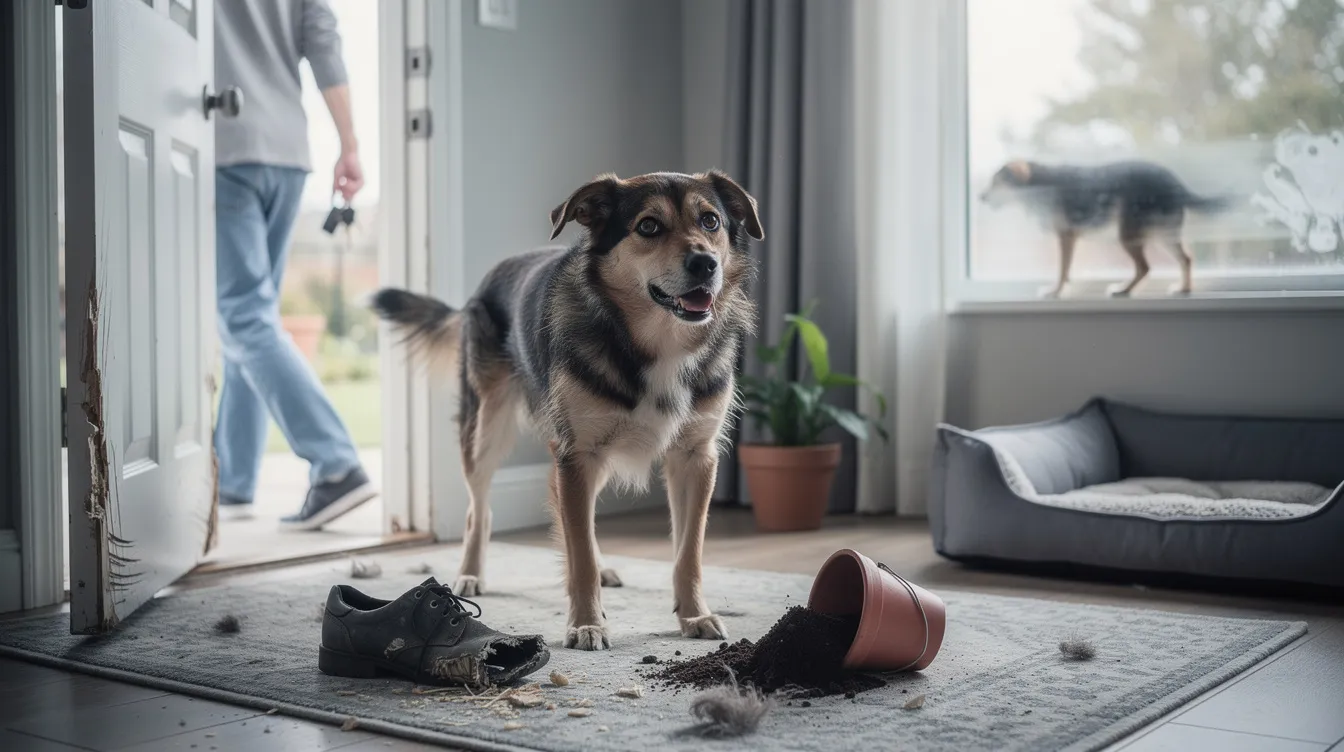
Separation anxiety in dogs is a panic response rather than simple distress when left alone – and recognizing the signs early helps address the condition before distress escalates. If your dog destroys door frames, barks for hours, or has indoor accidents only when you leave, you’re likely dealing with more than misbehavior. This guide will help you identify exactly what’s happening and determine your next steps.
This article covers the behavioral and physical indicators of dog separation anxiety, how to assess severity, and when to seek professional help. It is written for pet parents in the Greenville, SC area who are experiencing concerning behaviors when leaving their pets alone, though the information applies to dog owners everywhere. Medical conditions that mimic anxiety require veterinary diagnosis, which falls outside the scope of this guide – but we’ll explain how to tell the difference.
Dogs with separation anxiety typically show destructive behavior, excessive barking, house soiling, and clingy behavior that occurs specifically when left alone. Common signs of canine separation anxiety include excessive vocalization and destructive behavior concentrated around exit points like doors and windows.
By the end of this guide, you will be able to:
- Distinguish true anxiety signs from normal dog behavior and boredom
- Understand severity levels from mild cases to severe separation anxiety
- Recognize pre-departure cues and triggers that set off your dog’s anxiety
- Know exactly when to consult a veterinarian or veterinary behaviorist
- Take immediate, practical action steps to begin helping your furry friend
Understanding Separation Anxiety in Dogs
Separation anxiety is a clinical behavioral syndrome – not a dog being spiteful or “acting out.” It functions as a panic disorder triggered by owner departure or the absence of a preferred family member. When an owner leaves, the dog experiences genuine emotional distress comparable to a panic attack in humans. This is why punishment never works: you cannot discipline away panic.
Dogs form deep attachments to their owners, and disruption of that bond triggers emotional dysregulation. Between 14% and 20% of dogs seen in general veterinary practice show signs of separation-related problems of clinical concern. Research using the mini C-BARQ survey suggests about 9.3% of dogs in the U.S. show moderate to severe separation-related behavior. These numbers make it one of the most common behavioral complaints among dog owners – and separation-related problems account for 14% to 40% of referrals at veterinary behavior clinics.
Behavioral Manifestations vs Normal Reactions
Anxiety-driven behaviors are fundamentally different from boredom or attention-seeking. The key differentiator: distress behaviors occur specifically during departure cues or owner absence, not when the owner is present. A dog that chews shoes whether you’re home or not is likely bored. A dog that exclusively shreds the door frame when you leave is showing anxiety.
Not every dog showing destructive behavior has separation anxiety; other issues should be considered. Anxiety in dogs produces a stress response – elevated cortisol, rapid heart rate, panting – that is physiologically distinct from what happens when a dog is simply under-stimulated. Boredom behaviors tend to be casual and scattered. Anxious behaviors are intense, focused, and panic-driven. A bored dog might lazily gnaw a pillow. A dog with separation anxiety will frantically scratch through a wooden door.
Medical vs Behavioral Causes
Many common symptoms of separation anxiety – particularly house soiling, restlessness, and excessive panting – can stem from medical problems. Urinary tract infections, incontinence, Cushing’s disease, diabetes, kidney disease, and cognitive dysfunction in older dogs can all produce behaviors that look like anxiety. A consultation with a veterinarian is recommended if severe distress behaviors develop suddenly or involve self-injury.
When medical conditions exist alongside anxiety, they compound each other. A dog with bladder issues may soil the house during periods of stress, creating a confusing picture for owners. The ASPCA recommends ruling out medical causes through physical exams, urinalysis, and relevant lab work before pursuing behavior modification. Only after medical screening should behavioral treatment begin – a principle that applies whether you’re dealing with a puppy or an older dog.
This medical-behavioral distinction is precisely why documenting your dog’s behavior matters before any professional consultation.
Physical and Behavioral Warning Signs
With a solid understanding of what separation anxiety is (and isn’t), let’s examine the specific, observable signs. These are the obvious signs – and the less obvious ones – that many pet parents notice when their dog is left alone.
Destructive Behaviors
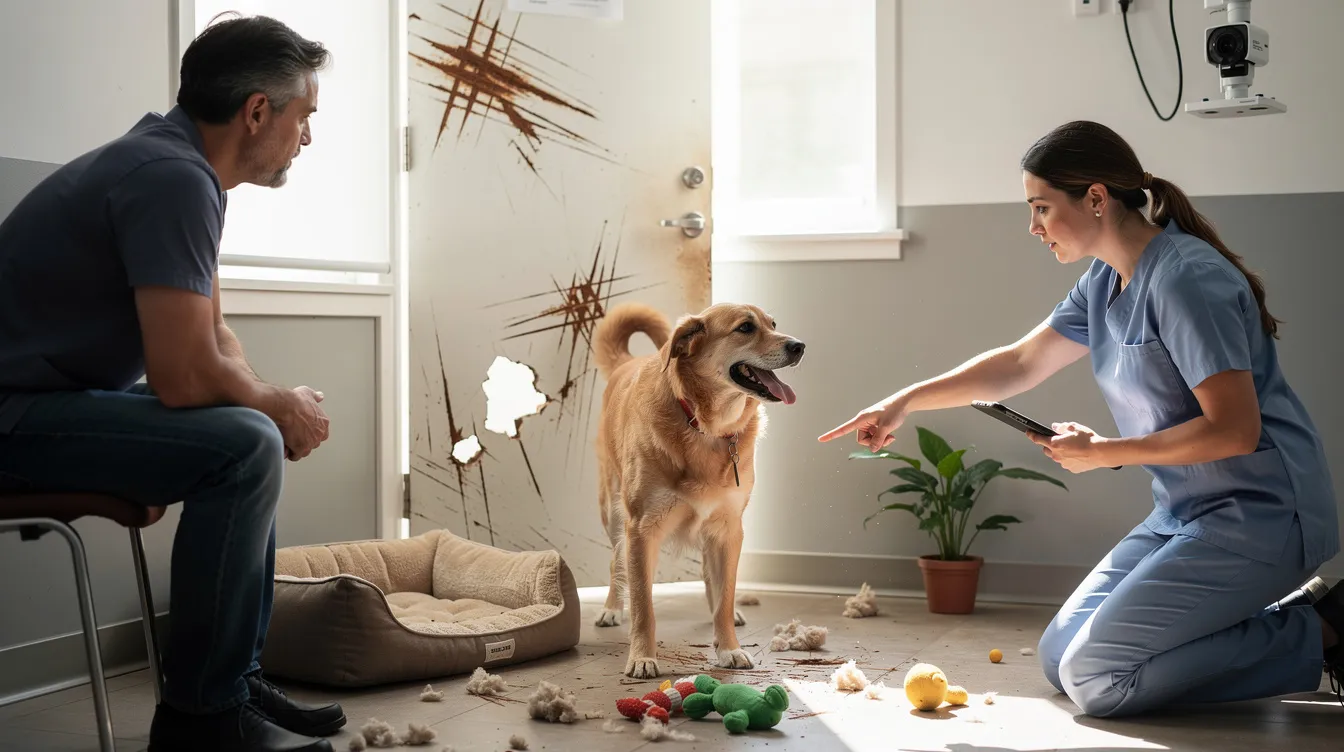
Destructive behavior includes chewing door frames and scratching at windows, often concentrated around exit points. This is the hallmark pattern: destruction isn’t random. Dogs with separation anxiety target doors, windows, baseboards near exits, crates, and gates – anything that stands between them and their absent owner. Destructive chewing may damage the back door frame, window screens, or even locks. Escape attempts involve excessive digging, scratching, or attempts to force through doors and windows causing injury. In severe cases, dogs break teeth, tear nails, and cut themselves trying to escape confinement. Destructive behaviors often target doors or windows, which is a critical distinction from boredom-based chewing that tends to hit random household items.
Vocalization Patterns
Excessive barking or howling occurs when dogs are alone – and the pattern matters as much as the volume. Identifying separation anxiety involves observing for signs of distress during known departure cues from the owner. Vocalization typically begins around departure cues (picking up car keys, putting on shoes to signal imminent departure) and peaks early in the absence. Many dogs will bark, whine, or howl continuously until the owner returns. The intensity differentiates this from occasional alert barking: separation-driven vocalization is persistent, repetitive, and often escalates. Dogs may try to escape confinement when anxious, and vocalization frequently accompanies these escape attempts in a combined display of frantic behavior.
Elimination Issues
Dogs may urinate or defecate when left alone, even when they are completely house trained. This is one of the most frustrating signs for owners, but house soiling tied to separation anxiety follows predictable patterns. Indoor accidents tend to occur near exit points or doorways, and timing typically falls shortly after the owner leaves. The volume is usually larger than what you’d see with territorial marking – this isn’t a small dribble on a table leg. Separation anxiety is likely if distress behaviors occur immediately before departure or shortly after leaving. If your dog only has indoor accidents during alone time and never when you’re present, anxiety rather than incomplete house training is the likely cause.
Physical signs of panic in dogs can include trembling, heavy panting, and excessive drooling along with vocalization. Drooling and panting include excessive salivation or heavy panting during solitude that is unproportioned to temperature. Pacing in a fixed pattern is a common symptom, with dogs walking repetitive routes along walls or between windows. Trembling or shaking can occur as visible distress while anticipating the owner’s departure. Gastrointestinal upset refers to vomiting or diarrhea triggered specifically by being left alone. Loss of appetite, withdrawal, and refusal to eat treats or food when alone are other signs that many pet parents overlook. Dogs that are overly attached – following you from one room to the next and showing excessive excitement or excited greetings when you return – may display anxiety at a level that warrants attention.
These warning signs form the basis for a systematic assessment of your dog’s problem.
Assessment Methods and Severity Levels
Knowing what to look for is essential, but accurately assessing your dog’s behavior requires structure. Many dogs show different intensities on different days, and subjective owner reports can sometimes misinterpret what’s happening. Behavior recording can help distinguish true separation anxiety from other behavioral issues.
Systematic Observation Process
Implement structured monitoring when you first suspect your dog continues to show signs of distress during absences. Here’s a four-step process:
- Video recording setup – Place a camera (a pet cam, phone, or security camera) to capture your dog’s behavior during departures. Record at least one full hour of alone time as a baseline without changing any routines.
- Departure routine documentation – Note every pre departure cue in your routine: picking up car keys, putting on shoes, grabbing a bag. Document which cues trigger the earliest signs of stress in your dog.
- Behavior timing tracking – Log when each behavior starts (vocalization, pacing, destruction, elimination), how intense it becomes, and how long it persists. Note whether your dog calms down or escalates over time.
- Pattern analysis over multiple days – Repeat recordings across different conditions: varied times of day, different durations of absence, with and without a crate, and with or without enrichment. Track consistency over at least a week.
Severity Level Comparison
Use this table to evaluate where your dog’s symptoms fall:
| Category | Mild | Moderate | Severe |
|---|---|---|---|
| Destructive behavior | Occasional chewing or scratching; minor items, away from exits | Consistent damage at exit areas; moderate escape attempts | Serious destruction of doors/windows; self-injury from escape; crate breakouts |
| Vocalization | Barking or whining after departure; short duration | Prolonged barking lasting many minutes; escalation over time | Constant loud vocalization from departure until return; howling |
| Elimination | Rare accidents; small amounts | Multiple indoor accidents per absence; several locations | Large accidents at every absence; soiling even upon owner’s return |
| Other signs | Slight restlessness; mild panting at departure cues | Pacing; inability to settle; orienting toward exits | Autonomic distress; depression; food refusal; generalized across situations |
Mild cases can often be addressed through enrichment, gradually increasing alone time, and behavior modification training. Moderate symptoms typically require structured professional training plans and may benefit from calming aids. Severe separation anxiety usually demands combined intervention: a veterinary behaviorist for potential drug therapy (medications like clomipramine, approved for dogs over 6 months in the U.S.) alongside intensive behavior modification. A case-control study at Tufts found that dogs in single-adult households are approximately 2.5 times more likely to develop separation anxiety than those in multi-adult homes – an important risk factor to consider.
Understanding severity helps you determine whether you need enrichment adjustments or professional intervention.
Common Challenges and Solutions
Even with clear knowledge of separation anxiety symptoms, accurately identifying them in your own dog presents challenges. Here are the most common obstacles pet parents face.
Distinguishing Anxiety from Other Behavioral Issues
Not all distress when alone equals separation anxiety. A dog that chews everything in sight – whether you’re home or away – likely needs more physical and mental stimulation, not anxiety treatment. Incomplete house training produces accidents regardless of your presence, while separation anxiety causes elimination only during alone time. Marking behavior appears as small amounts of urine on vertical surfaces, which is fundamentally different from the large-volume accidents of an anxious dog. Medical problems like urinary tract infections or cognitive dysfunction can mimic anxiety signs in older dogs. The clearest diagnostic question: does the dog’s behavior change specifically when the owner leaves? If the answer is yes, and a veterinarian has ruled out medical causes, separation anxiety treatment should be pursued.
Hidden Signs in Non-Destructive Dogs
Not all dogs with separation anxiety destroy your house. Some dogs display anxiety through subtle indicators that owners miss entirely: loss of appetite when alone, excessive sleeping or withdrawal, refusal to engage with toys, or quiet pacing without vocalization. These dogs aren’t making a big deal of their distress – but they’re suffering nonetheless. Video monitoring is particularly valuable for these cases, as owners often return to a house that looks fine while their dog spent hours in quiet distress. On rare occasions, a dog may show almost no outward signs while experiencing significant physiological stress (elevated heart rate, drooling). If your dog shows even mild changes in behavior during absences, it’s worth investigating.
Inconsistent Symptom Patterns
Some dogs show severe distress on Monday but seem calm on Wednesday. This inconsistency confuses many pet parents and can delay recognition. Genetic factors can contribute to separation anxiety in dogs, and other factors like changes in family dynamics, moving to a new residence, schedule changes, and whether another person or pet is present all influence day-to-day expression. Dogs adopted from shelters are more likely to develop separation anxiety, and older dogs are more likely to develop separation anxiety as well. Track symptoms across at least two weeks, noting variables: who was home before departure, how long the absence lasted, what time of day, and whether there were environmental changes. Patterns will emerge – and those patterns are exactly what a professional trainer needs to build an effective plan.
Accurate identification is the critical first step, but professional assessment transforms observations into actionable solutions.
Conclusion and Next Steps
Early recognition of separation anxiety signs – from destructive behavior at exit points to excessive barking, house soiling, and panic responses – enables effective intervention before your dog’s anxiety escalates. The difference between a manageable behavioral concern and severe separation anxiety often comes down to how quickly you act.
Here are your immediate action steps:
- Document behaviors for 1–2 weeks using video recording and a written log tracking frequency, intensity, and timing of symptoms. Establish a predictable daily routine for your dog during this period.
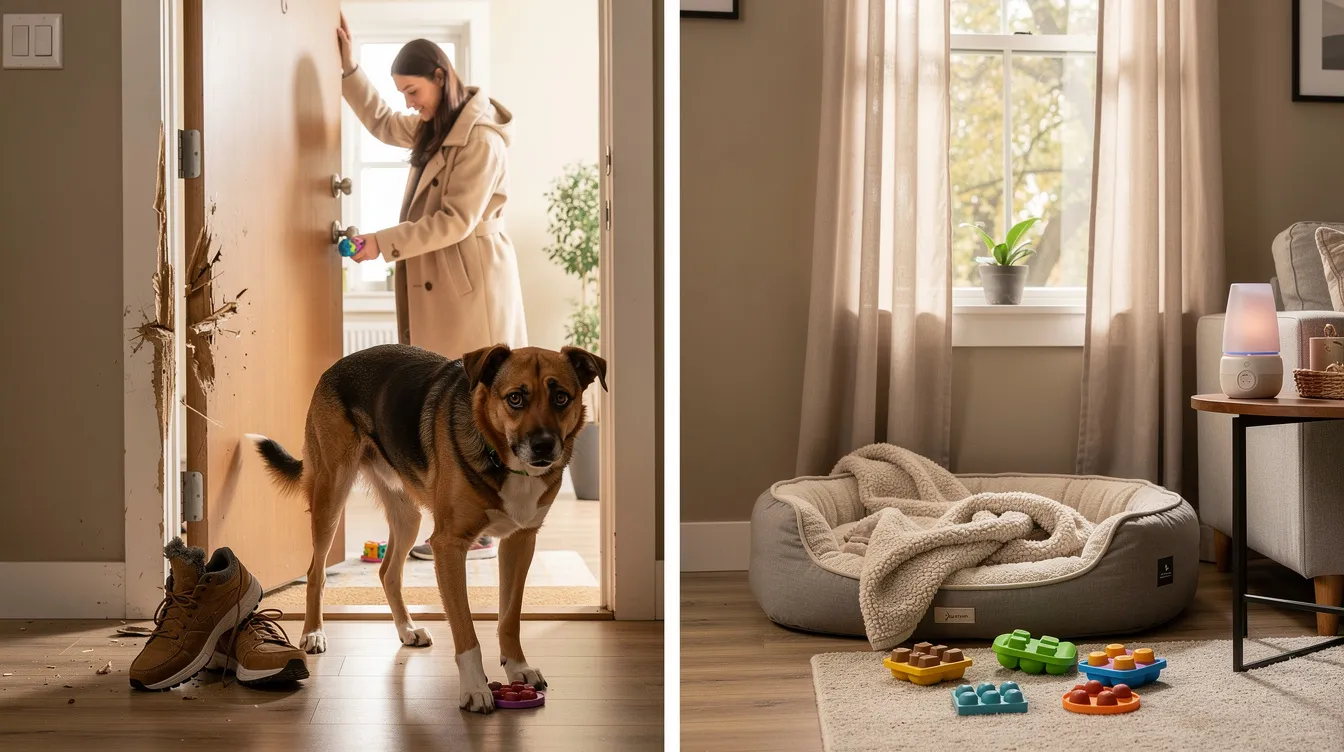
- Exercise your dog for 30 minutes before leaving and use puzzle toys to keep your dog occupied when alone. Provide mental stimulation to reduce anxiety levels throughout the day.
- Consult your veterinarian to rule out medical causes – especially if symptoms appeared suddenly or involve self-injury.
- Ignore your dog for 10 minutes after returning home to avoid reinforcing excited greetings that amplify the departure-return cycle.
- Gradually acclimate your dog to changes in schedule and slowly increase alone time. Use positive reinforcement to reward independent behaviors. Provide a safe space for your dog to feel secure.
- Contact a professional dog trainer for a behavior assessment if symptoms are moderate or severe. Puppies should learn to spend time alone early, and a trainer can help establish those foundations.
For Greenville, SC area dog owners, related training approaches like desensitization, counterconditioning, and crate training are core components of effective separation anxiety treatment. Dogs that also show fear-based or reactive behaviors may benefit from specialized behavior programs that address multiple anxiety-related issues simultaneously.
Additional Resources
Off Leash K9 Training in Greenville, SC offers behavior consultation services and training packages designed for dogs dealing with anxiety, reactivity, and other behavioral challenges. Whether you’re managing mild cases with a dog sitter and enrichment or pursuing structured separation anxiety treatment for severe cases, professional guidance can dramatically shorten the path to improvement.
For monitoring, affordable pet cameras (Wyze, Furbo, or a basic security camera) provide the video evidence you need to track your dog’s behavior objectively. Pair this with a simple behavior tracking sheet – date, departure time, behaviors observed, duration, intensity rating – to give your trainer or veterinarian the data they need for an accurate assessment. The AAHA’s guidelines on separation anxiety also provide a strong clinical reference for owners who want to spend time understanding the condition in greater depth.
